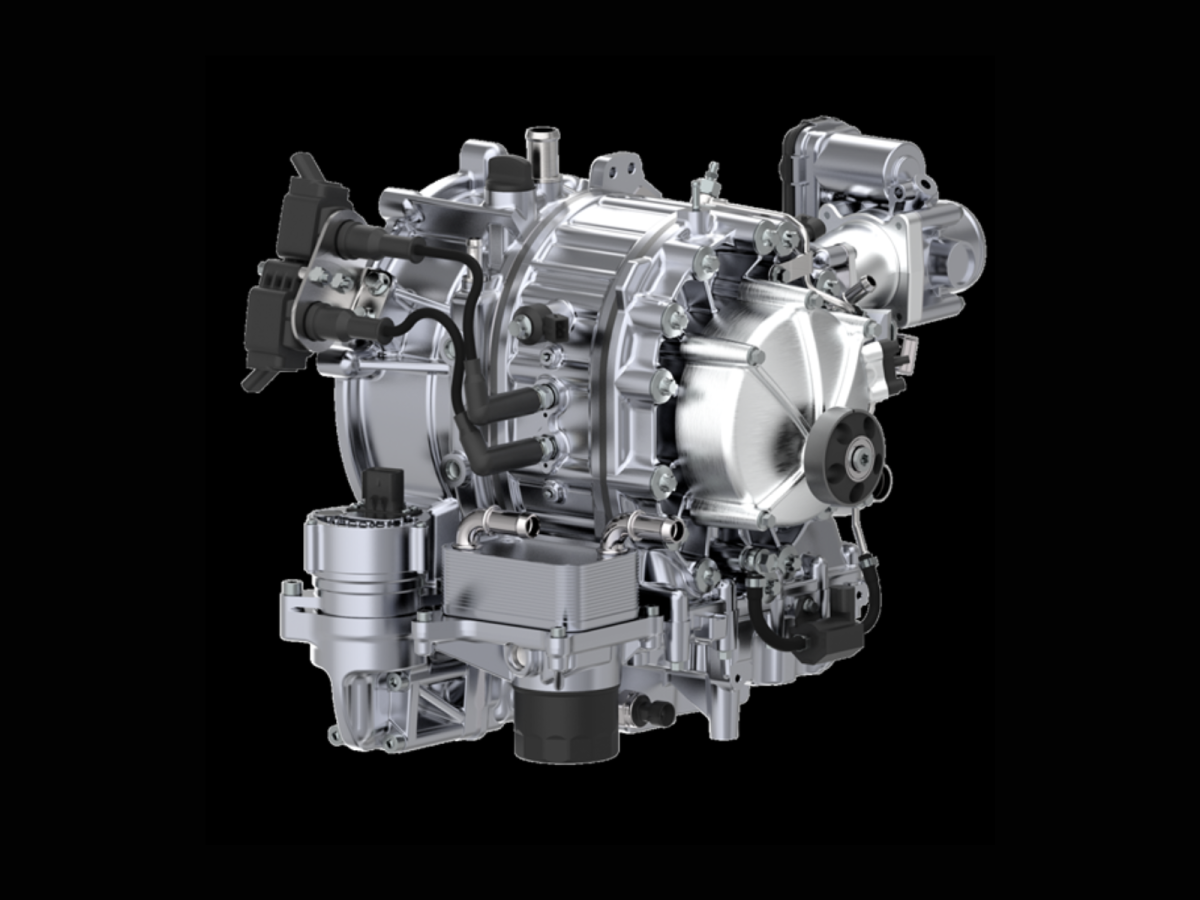
TECH – China’s automaker Changan is making bold moves beyond electric vehicles and into the heart of engine innovation with its latest rotary powerplant, signaling a fresh challenge to traditional engine makers and expanding the horizons of Chinese automotive engineering. Until now, rotary engines known for their unique triangular “piston” design and smooth high-revving character — have been almost exclusively associated with Mazda. But Changan’s latest development, the R05E rotary engine, represents China’s first high-power rotary engine and underscores the company’s effort to diversify and lead in advanced powertrain tech. The achievement was recently reported in the local press and reflects ambitions to compete with established Japanese automakers in areas where they’ve held sway for decades.
The R05E prototype, developed by Harbin Dongan Auto Engine — a subsidiary of Changan Automobile Group — has successfully completed its first ignition tests and is being prepared for refinement and eventual mass production targeted around 2027. The engine sticks to the classic Wankel-style configuration with a single rotor and curved triangular chamber, offering the compact size and power density that rotor designs are famous for. Its maximum rotation reaches about 6,500 rpm, with power output in the neighbourhood of 71 hp (about 53 kW), making it an intriguing candidate for niche automotive roles and other mobility platforms.
What sets the R05E apart from historical rotary units are modern engineering touches tailored to real-world performance and efficiency. Changan engineers equipped the engine with independent dual ignition circuits, a lightweight eccentric shaft for responsive behaviour, and advanced internal balancing systems to reduce vibration and improve stability.
Read More: From Prototype to Product: China’s GPU Challenge to Nvidia Begins
To combat the hallmark friction and sealing issues that once limited rotary longevity, innovative materials like nanodiamond composite (NDC) friction-reducing coatings and a cast aluminum housing were applied — choices that hint at a greater focus on durability and energy efficiency than past efforts.
Beyond passenger cars, Changan envisions the R05E powering a range of applications — notably those in low-altitude mobility, including drones and light electric vertical take-off and landing (eVTOL) aircraft, where compact size and exceptional power-to-weight ratio are critical. Such adaptability contrasts with traditional inline or V-type piston engines and reflects a strategic push to make rotary tech relevant for future transport ecosystems, not just automobiles.
This hard push into rotary power signals a broader shift in global automotive development: China, long dominant in electrification and affordability, is now investing in advanced powertrain diversity that could redraw competitive lines with Japanese engine makers famed for their internal-combustion expertise. Whether Changan’s rotary tech ultimately displaces or simply coexists with conventional engines remains to be seen, but the R05E’s arrival marks an unmistakable milestone in China’s quest to innovate on multiple mobility fronts.