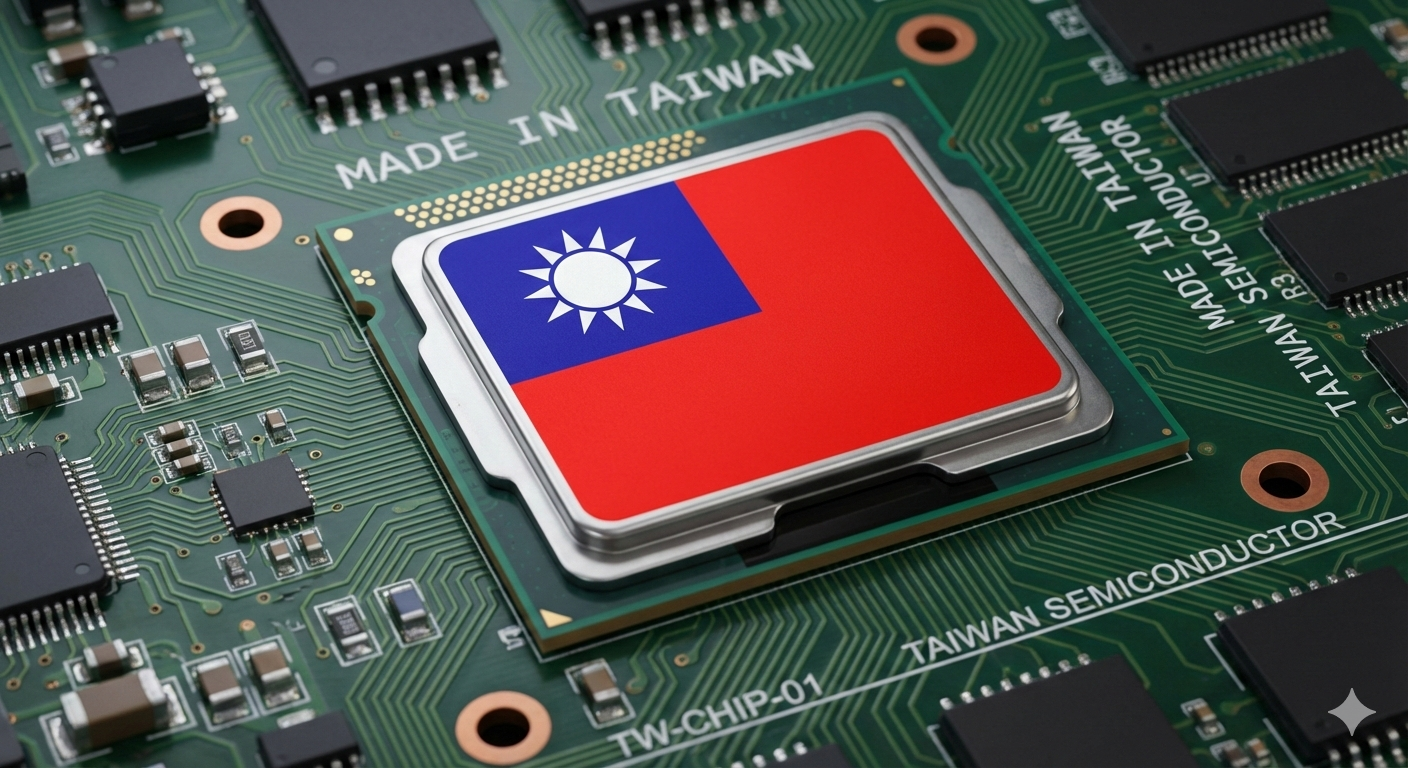
BUSINESS – In a dramatic turn of the global tech narrative, the United States and Taiwan cemented a new trade agreement on January 15 that aims to deepen their economic bond through the semiconductor industry, a sector at the heart of tomorrow’s technology and geopolitical rivalries. According to Reuters, the U.S. Commerce Department said the deal will cut reciprocal tariffs on Taiwanese goods from 20 % to 15 %, positioning Taipei more favorably alongside other major trade partners while linking tariff relief to huge pledges in U.S. investment.
Under the agreement, Taiwanese semiconductor and technology firms will invest at least $250 billion in U.S. production, channeling funds into semiconductors, energy and artificial intelligence sectors. Part of this commitment reflects promises already made — including a hefty $100 billion by Taiwan Semiconductor Manufacturing Co. (TSMC) in 2025 — but the scale of investment marks one of the most ambitious cross-Pacific industrial shifts in years. Taiwan will also supply credit guarantees of $250 billion to facilitate further capital flowing into American chipmaking capacity and supply chains, a move designed to anchor production and expertise stateside.
Read More: HDB Makes Budget Meal Scheme Optional at Coffee Shops
The Commerce Department framed the pact as a strategic realignment, one that could “drive a massive reshoring of America’s semiconductor sector” by encouraging companies to build and expand on U.S. soil rather than rely wholly on imports. Taiwanese Vice Premier Cheng Li-chiun, who led the talks for Taipei, emphasized the broader ambitions beyond mere tariff reduction, telling reporters that in this negotiation, “we promoted two-way Taiwan–U.S. high-tech investment, hoping that in the future we can become close AI strategic partners.”
The tariff changes go beyond chips: generic pharmaceuticals, aircraft components and certain natural resources will face zero tariffs, while other sectors like auto parts and wood products will be capped at 15 %. Moreover, Taiwanese firms that build U.S. fabs can import substantial volumes of semiconductors duty-free during approved construction phases, a boon for companies navigating the expensive and time-intensive process of erecting advanced manufacturing facilities.
While hailed in Washington and Taipei as a win for American competitiveness and bilateral cooperation, the deal arrives amid heightened tensions with Beijing, which views Taiwan as part of its territory and has decried closer U.S.-Taiwan economic ties. Beyond geopolitics, the pact signals a bold gamble by both sides: that unlocking tomorrow’s critical technologies depends as much on where chips are made as on what’s inside them.