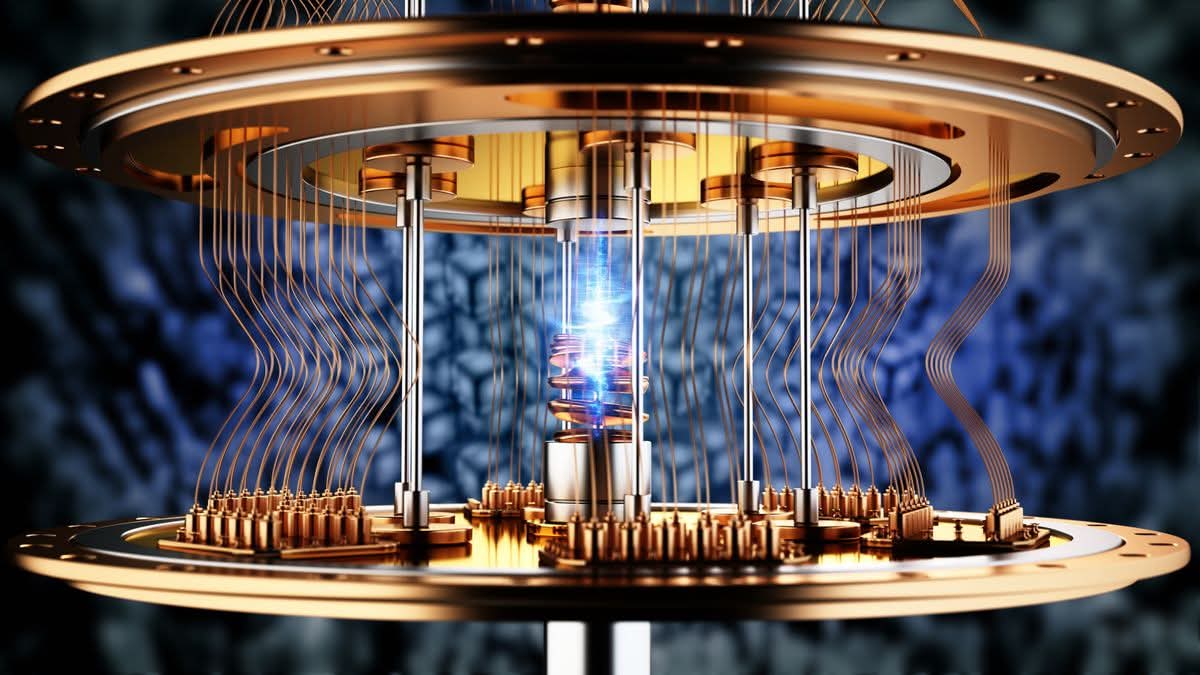
TECH – Russia has taken a significant stride in cutting-edge computing by unveiling a new ion-based quantum computer prototype that experts say delivers processing power roughly equivalent to a 72-qubit system, marking a rare and noteworthy advance in global quantum research. The system was developed through collaborations involving Lomonosov Moscow State University, Rosatom Quantum Technologies and other research groups, and is among a small group of Russian machines to surpass the 70-qubit processing threshold.
Unlike classical computers that use bits representing either a 0 or a 1, quantum machines leverage quantum bits or “qubits,” which can exist in a combination of states simultaneously — a property known as superposition. This allows quantum computers to process vast amounts of data in ways that are fundamentally different from conventional systems, potentially enabling solutions to problems that are intractable with today’s technology.
What sets the Russian prototype apart is its use of neutral rubidium atoms as the basis for qubits. Researchers built the system with a novel architecture that separates the machine into distinct zones for computation, quantum state storage and data readout. This functional segmentation is designed to make it easier to manage the delicate quantum states that underpin the computer’s operation and to improve overall performance stability.
Read More: Changan Unveils Breakthrough Rotary Engine to Rival Japan
According to TASS reporting, initial tests of the prototype showed promising two-qubit gate accuracy of about 94%, an important metric for assessing how reliably quantum logic operations can be carried out. While 72 qubits might sound modest compared with the loosely defined “noisy intermediate-scale quantum” (NISQ) systems that push into the hundreds or more, achieving high-accuracy operations at this level is still an intricate technical feat for any quantum platform.
The research team’s work builds on earlier Russian efforts — including cold atom and ion-trapped devices — and represents incremental progress toward a long-planned goal of fielding quantum computers with hundreds of “good” qubits capable of practical, error-corrected computation by the end of this decade. Such machines could one day underpin breakthroughs in materials science, cryptography, logistics optimization and other fields that demand computational power beyond current classical hardware.
Experts note that while widely publicized developments elsewhere — from superconducting processors in China to neutral atom approaches in the U.S. and beyond — often grab headlines, Russia’s achievement demonstrates that diverse technological paths to quantum computing are actively being pursued worldwide. Each architecture brings its own advantages and challenges, but collectively they underscore the rapidly evolving landscape of quantum research and the global race to harness this transformative form of computing.