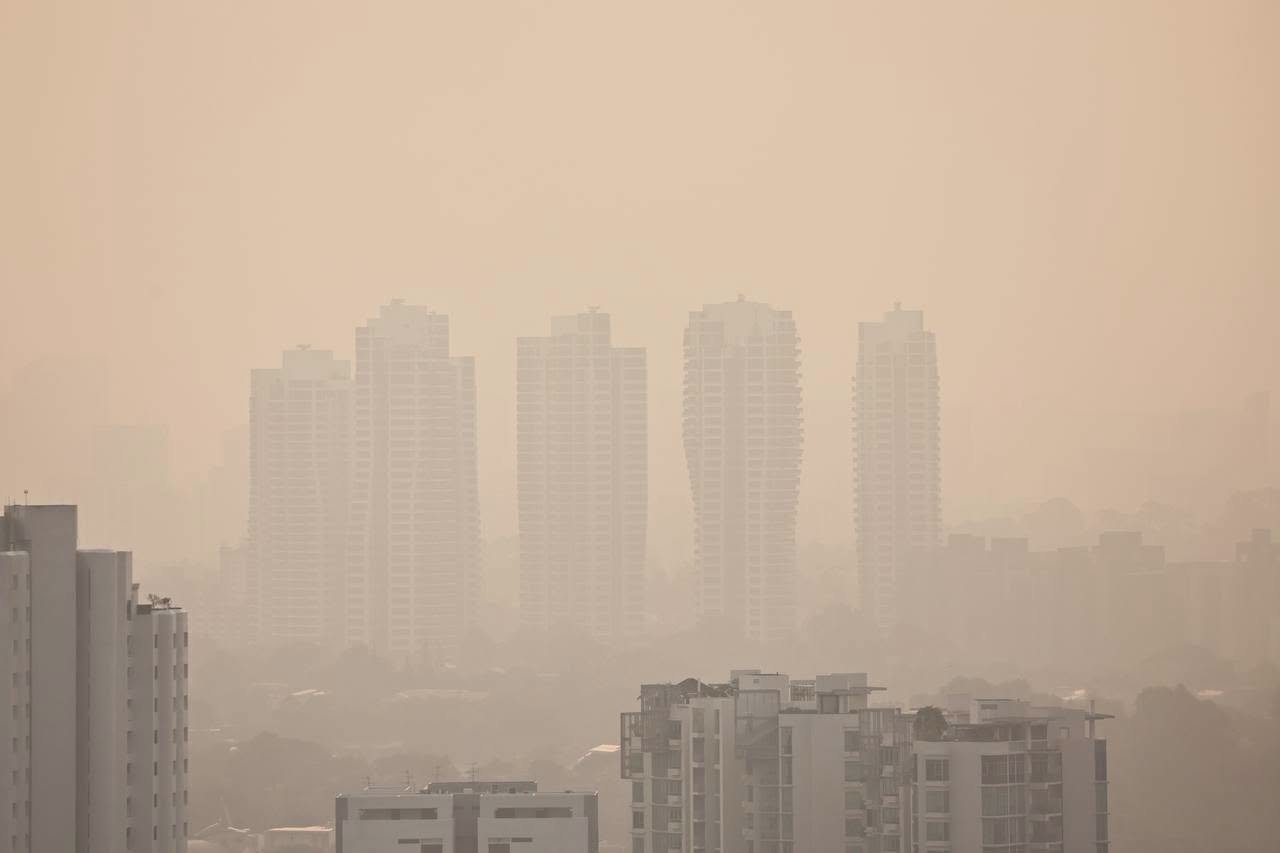
SINGAPORE – Singapore’s air quality has slipped back into the unhealthy range, with haze once again affecting parts of the city-state after several days of more moderate readings. According to Channel NewsAsia (CNA), the 24-hour Pollutant Standards Index (PSI) in central Singapore reached 102 at noon on Monday, September 14. Other parts of the island remained in the moderate range, with readings of 91 in the east and west, 82 in the south and 79 in the north.
The latest deterioration comes after Singapore experienced four consecutive days of moderate PSI levels. The National Environment Agency (NEA) said moderate to dense smoke plumes continued to be detected from fires in southern Sumatra and Kalimantan, with some of the smoke observed drifting toward Singapore. The agency has been issuing daily haze advisories since September 4, when the central region first crossed into unhealthy territory for the first time since 2023.
Under Singapore’s PSI system, readings from 101 to 200 are classified as unhealthy. The next categories are very unhealthy, covering 201 to 300, and hazardous for readings above 300. The index is intended to help residents understand pollution levels and plan outdoor activities accordingly, particularly when haze becomes more persistent.
Read More: Volcanic Ash Disrupts Changi-Jakarta Flights, Stranding Travelers
Weather conditions across the region are expected to play an important role in how the situation develops. NEA said showers are forecast over parts of central and northern Sumatra, which could help reduce some fire activity there. However, drier conditions are expected to continue across Kalimantan as well as central and southern Sumatra. If fires persist in those areas, Singapore could continue to experience haze carried across the region.
The return of unhealthy readings also follows a broader deterioration in Indonesia’s fire situation. Reuters reported that wildfires had contributed to a sharp increase in respiratory infections in affected Indonesian provinces, while smoke and haze had spread into neighboring countries including Singapore and Malaysia.
For Singapore residents, the immediate concern is whether the latest rise will remain localized or spread across more regions. NEA’s 24-hour forecast placed Singapore’s air quality between the moderate and lower end of the unhealthy range, leaving outdoor conditions dependent on both wind patterns and the persistence of fires across Sumatra and Kalimantan.