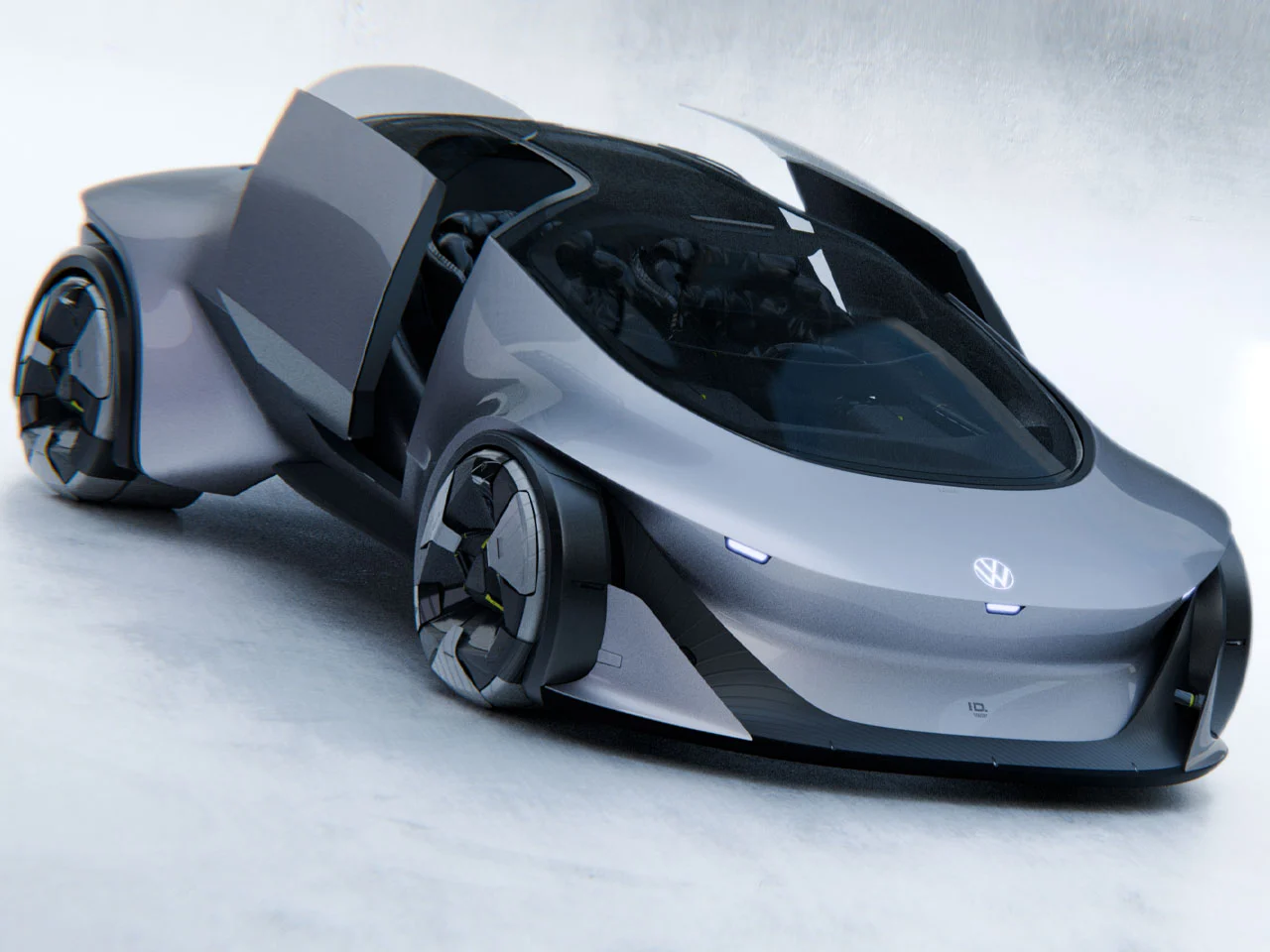
TECH – The Volkswagen Numa Concept offers a bold re-imagining of what a car could be — not merely a vehicle, but an integral piece of city life. Rather than following the usual route focused on performance or tech specs, Numa leans into spatial design: its clean, uninterrupted surfaces and calming geometry allow it to blend gently into urban surroundings — more like contemporary street furniture than a typical car.
Its aesthetic simplicity — monochromatic exterior, smooth lines, and absence of aggressive styling — makes it visually unobtrusive. The design seems to favor harmony and serenity over the usual automotive posturing. Numa’s rear compartment takes this philosophy even further: it’s imagined as a space that could host plants, inserting a little patch of nature into dense urban areas. In this way, the car becomes a mobile pocket of greenery, quietly bridging mobility, architecture, and ecology.
The concept doesn’t dwell on powertrains or performance — its goal isn’t to brag about speed or torque, but rather to spark a conversation: what if our vehicles complemented the city’s fabric, instead of dominating it? Numa turns a car into a city artifact: a blend of movement and stillness, of function and form.
Read More: Hangzhou Airport Deploys Robot to Repel Birds from Runway
More than just a design exercise, Numa challenges our expectations. By merging minimalism with biophilic elements, it whispers of a future where sustainability, urban planning, and human-scale design shape mobility. It nudges us to reconsider cars not just as machines of travel, but as components of a livable, breathing city.
In a world where urban density often clashes with the need for calm and green spaces, the Numa Concept suggests an alternative path — one where cars don’t just carry us from A to B, but help reshape how we live in, move through, and feel about our cities.