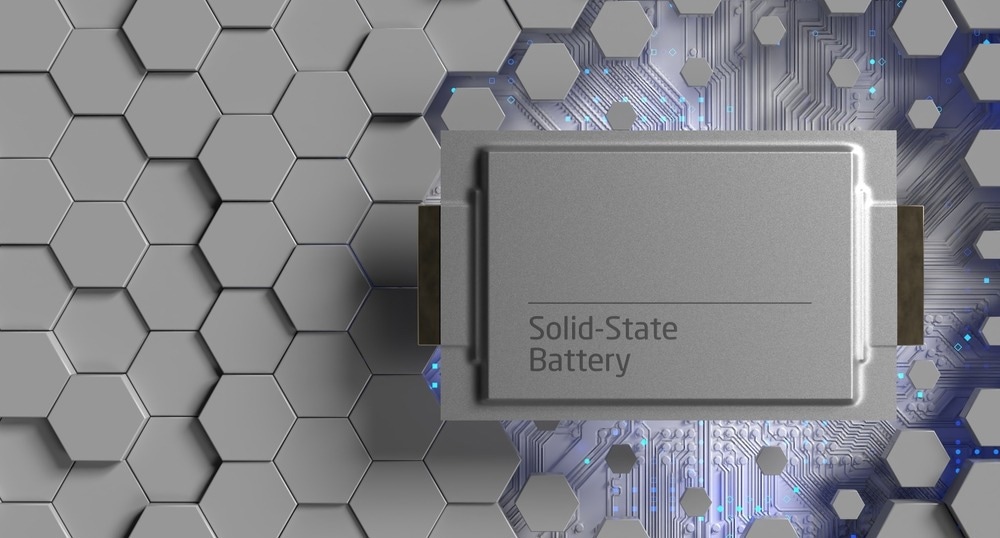
TECH – A major advancement in battery technology could soon reshape the aerospace and defense industries, as researchers and manufacturers unveil a next-generation solid-state battery cell designed to deliver higher energy density, improved safety, and greater reliability under demanding conditions. Cited from Interesting Engineering, the new battery technology is specifically aimed at applications where performance, durability, and operational security are critical, including aircraft, satellites, drones, and military systems.
Solid-state batteries have long been regarded as one of the most promising successors to conventional lithium-ion batteries. Unlike traditional batteries that use liquid electrolytes, solid-state designs employ solid materials to transport ions between electrodes. This approach reduces the risk of leakage, overheating, and thermal runaway, issues that have challenged battery-powered systems for years. As a result, solid-state technology has attracted significant attention from industries seeking safer and more efficient energy storage solutions.
The newly developed battery cell offers a combination of high energy density and enhanced resilience, making it particularly suitable for aerospace and defense environments where equipment must operate reliably under extreme temperatures, vibrations, and other harsh conditions. Engineers involved in the project believe the technology could provide longer operational endurance while reducing overall system weight, a crucial advantage in aviation and space missions where every kilogram matters.
Read More: China Unveils World’s First Consumer Wing-in-Ground Craft
The developers explained that the battery has been engineered to meet the rigorous requirements of advanced aerospace platforms and military equipment. By delivering more energy in a smaller footprint, the technology could enable longer flight times for unmanned aerial vehicles, extended mission durations for satellites, and improved performance for next-generation defense systems.
One representative associated with the project emphasized the importance of balancing energy capacity with safety. “Performance and reliability are equally important for mission-critical applications,” the spokesperson noted, highlighting the need for power systems that can withstand challenging operational environments without compromising safety standards.
Industry experts view the announcement as another sign that solid-state battery technology is moving closer to commercial deployment. While challenges related to manufacturing scale and production costs remain, recent breakthroughs suggest that the gap between laboratory research and real-world applications is narrowing. Governments and private companies around the world are investing heavily in the technology, hoping to unlock its potential across multiple sectors.
Viewed in a broader context, the new battery cell reflects the accelerating race to develop advanced energy storage systems. As aerospace and defense organizations seek lighter, safer, and more powerful solutions, solid-state batteries are increasingly emerging as a key technology that could help define the future of high-performance mobility and strategic operations.