SINGAPORE,- The Singapore Prison Service recognised 96 people in custody who completed the National Youth Achievement Award programme this year, up from 58 in 2025. The parts of the programme most relevant to reintegration were not the medals themselves. They were the opportunities to plan work with community organisations, take responsibility for a project and see how others responded to it.
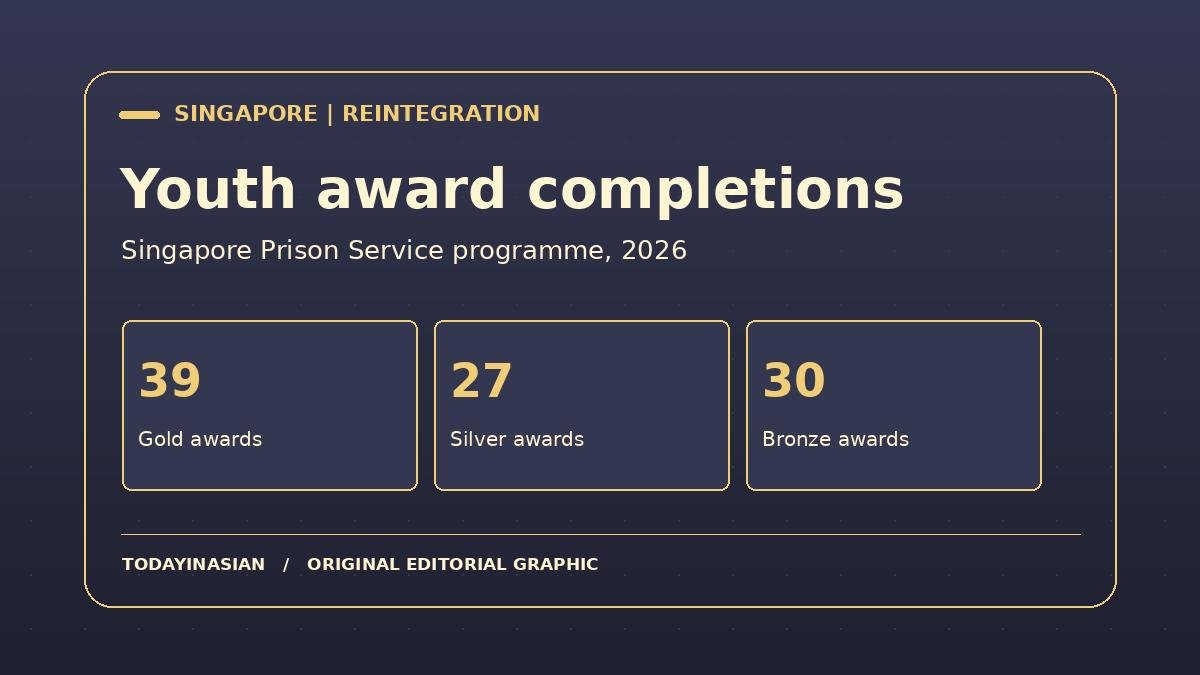
The Singapore Prison Service’s account of the ceremony records 39 gold, 27 silver and 30 bronze awards. Gold participants completed community leadership projects with partner groups. One team planned activities with an active ageing centre; another learnt to manage an indoor hydroponics system and donated produce to community beneficiaries. The projects gave participants a chance to practise cooperation and communication through a task with an identifiable outcome.
Why practising responsibility differs from taking a class
A lesson can teach participants how to plan an activity or manage a small system. Delivering the activity requires them to divide responsibilities, adjust if the plan changes and follow up when something does not work. In the gardening project, for example, the responsibility continued between sessions: growing plants requires regular checks rather than a one-off demonstration.
In his opening address, Law Minister and Second Minister for Home Affairs Edwin Tong credited the programme, its council and community partners. The partnership matters because outside organisations can connect the work to a real need. Maintaining such placements takes time and resources, so the number and range of projects may be worth tracking alongside the awards total.
What the completion figures cannot tell us
The higher award count documents a rise in programme completion. It does not establish that participants were more likely to find work, enter education or remain offence-free, nor does it say how people who did not participate fared. Credible evaluations would need to follow comparable people beyond the ceremony and distinguish the contribution of the programme from other support they received.
Useful measures could include whether participants have a place to pursue further training, a mentor they can contact and a realistic opportunity to apply what they learnt. Even if participants finish the same programme, they may face very different constraints around housing, employment and family support after release.
The projects highlighted at the ceremony show what it looks like to practise responsibility in a structured setting. The next question for partners is how to keep those opportunities open outside it. Programme completion is a starting point for that conversation, not a substitute for evidence of what happens next.
Original editorial graphic by TodayinAsian. Source: Singapore Prison Service, 25 November 2026. Counts refer to participants completing the programme, not post-release outcomes.