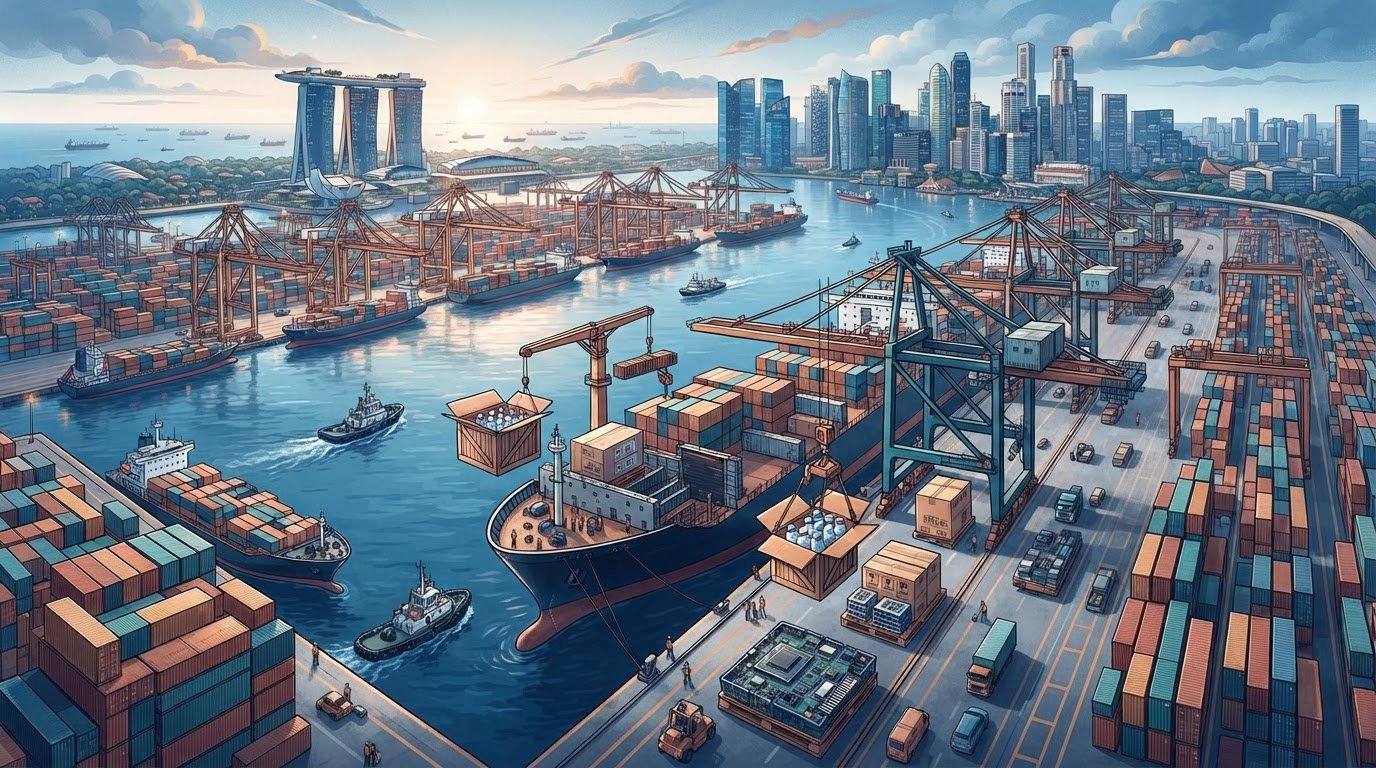
Singapore’s non-oil domestic exports surged 79.8 per cent from a year earlier in October 2026, a striking figure that appears to signal exceptional momentum in an economy heavily exposed to world trade. But the breakdown shows why headline growth alone is a poor guide to what businesses should expect next. Unusually large deliveries of ship and boat structures, pharmaceuticals and continued demand for AI-related electronics all contributed.
Enterprise Singapore released the figures on 17 November, following a revised 68.3 per cent increase in September. Exports over the first ten months of 2026 were 33.6 per cent higher than a year earlier. The breadth of the expansion is significant, but some individual product categories experienced unusually large transactions or comparisons with a weak period in 2025.
What made October so exceptional?
Non-electronic exports rose 81.9 per cent, with ship and boat structures adding S$4.8 billion to the year-on-year increase. Enterprise Singapore said the rate of growth in that category was exceptionally high because of a low base a year earlier. Pharmaceutical exports increased 253.1 per cent and specialised machinery also made a substantial contribution.
Electronics exports expanded 73.9 per cent, below September’s 107.6 per cent increase but still rapid by normal standards. Disk media products grew by about 189 per cent, integrated circuits by 53.1 per cent and personal computers by 81 per cent. The agency linked this momentum to sustained artificial intelligence demand.
This distinction matters because shipbuilding structures and pharmaceutical shipments can be concentrated in relatively few deliveries. A single large order completed this month does not necessarily recur next month. Electronics demand, by contrast, may reflect a broader investment cycle, although even AI-linked markets are vulnerable to export restrictions and changing corporate spending.
Why the destination breakdown matters
Non-oil exports to the United States increased 214.6 per cent compared with October 2025, while those to China rose 144.9 per cent. The European Union also recorded a substantial increase. Yet shipments to India, Indonesia and Thailand declined in the same reporting period. Singapore’s trading partners are therefore not moving in one direction at the same speed.
For businesses that sell components across borders, the figures suggest pockets of opportunity in technology and specialised production. They do not prove that every Singapore exporter is expanding, or that employment and wages will rise by the same percentage. Merchandise export data capture transactions, not a complete picture of company profitability or household incomes.
The timing also coincides with tighter US controls on advanced chips going to Singapore and several neighbouring markets. That introduces uncertainty over future supply chains, even if existing electronics orders remain strong. It would be premature to quantify the effect on exports before businesses report how the rules are implemented.
What to monitor in the months ahead
Economists cited by local business media have cautioned that unusually large shipment effects could fade. Future readings should be examined for whether growth remains broad-based after the ship structures component is excluded and whether electronics orders maintain their pace.
Month-to-month changes, price movements and re-exports will also help clarify the picture. Re-exports are goods brought into Singapore and shipped out again with little transformation, unlike domestic exports, and can reflect the city’s role as a logistics and distribution hub. They should not be confused with locally produced export growth.
For policymakers and business leaders, October is encouraging evidence of strong demand in several industries, particularly AI-linked electronics and pharmaceuticals. Its main lesson, however, is about interpretation. A record-looking growth rate can coexist with considerable uncertainty about the next quarter. Looking beneath the aggregate numbers provides a more useful basis for decisions.
Sources and further reading
Sources: CNA: Enterprise Singapore export figures, 17 November; The Business Times: October export breakdown; The Straits Times: economist expectations.