TECH,- Singtel and Singapore’s Government Technology Agency plan to connect autonomous robots and building systems at One Comcentre, the telco’s future headquarters in the Orchard Road district. A memorandum of understanding announced on 26 November sets out plans to deploy the Open Digital Platform and explore smart-building uses. The development is due for completion by the end of 2028, so this is a plan to test and deploy the technology, not a report of robots already at work in the building.
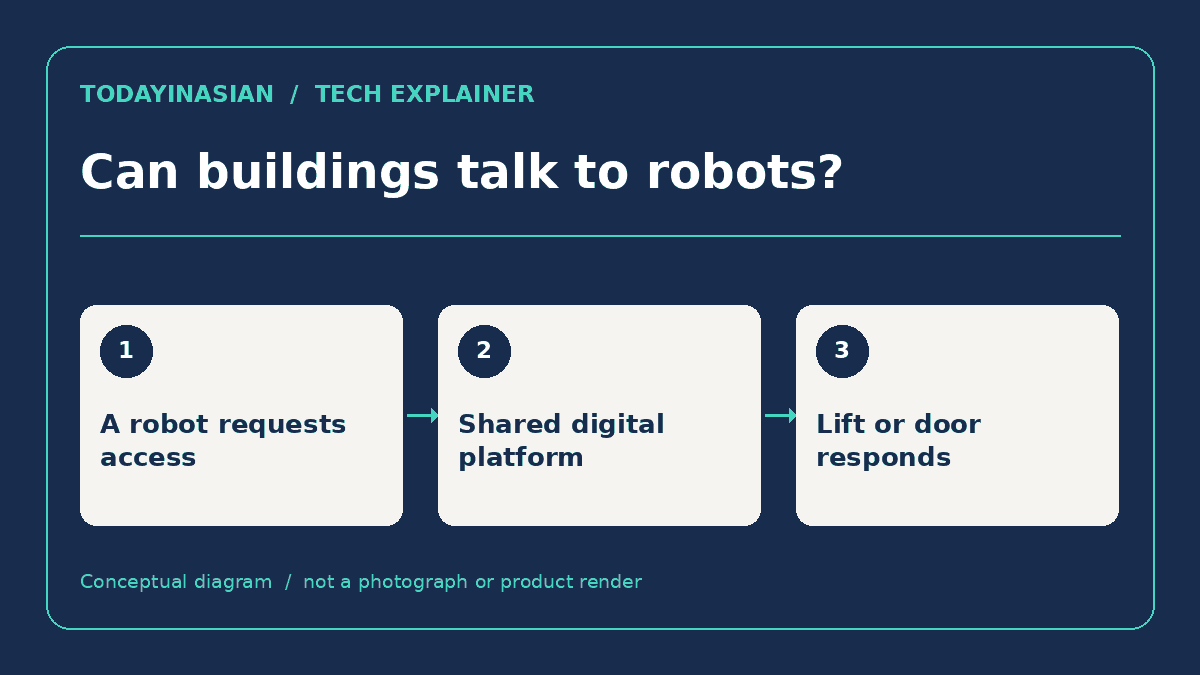
A robot may navigate a corridor on its own but still need another system to let it onto a different floor. If the lift, access doors and robot fleet all use separate software, every new combination can become a separate integration job. That is the challenge the project is intended to address, and it matters more to building operators than the number of robots on display.
What the shared platform does
The platform, developed by GovTech and JTC Corporation, gives otherwise separate systems a way to exchange information through defined interfaces. It can bring building equipment, sensors and robots into a common operational view without replacing their underlying controls. GovTech’s overview of its smart-city work describes its use at Punggol Digital District. The new project is meant to test an enhanced version that combines the platform with Singtel’s connectivity and network capabilities.
“Open” does not mean the public can access building data or control a lift. The platform is designed to accommodate authorised systems. It is not itself an AI model or an independent decision-maker. That distinction matters: a robot asking for access and a building deciding whether to grant it should remain separate actions, each with an accountable owner.
What building operators should watch
A convincing test would show that a new device can be added without bespoke work for every door or lift. It would also show what happens when a connection drops, a device loses authorisation, or staff need to take over. Routine work orders, downtime and help-desk calls would tell operators more about the business case than a choreographed demonstration. The projects’ stated efficiency or sustainability aims should not be read as measured savings.
The Straits Times reported that earlier deployments were in government settings. The question at One Comcentre is whether the approach transfers to a commercial building with different vendors and operating demands. If it does, owners elsewhere in Southeast Asia may have an integration model to assess. Retrofitting an occupied building with older equipment, however, would be a different test from designing for the technology from the start.
The two deployments would also offer different ways to assess portability. A district operator can coordinate several buildings and amenities under one estate manager; a commercial tower has to work with tenant requirements and equipment maintenance contracts. How easily responsibilities can be divided between the building owner, operator and technology vendors will be part of the test.