TECH,- Singapore’s port authority and shipping group CMA CGM plan to turn lessons from two shipboard trials into a pilot for digital port clearance in the first quarter of 2027. The goal is to reduce repeated manual work when ships exchange clearance information with port authorities. The most useful output would not be a new portal on its own, but evidence that the same information can move between systems without being keyed in again.
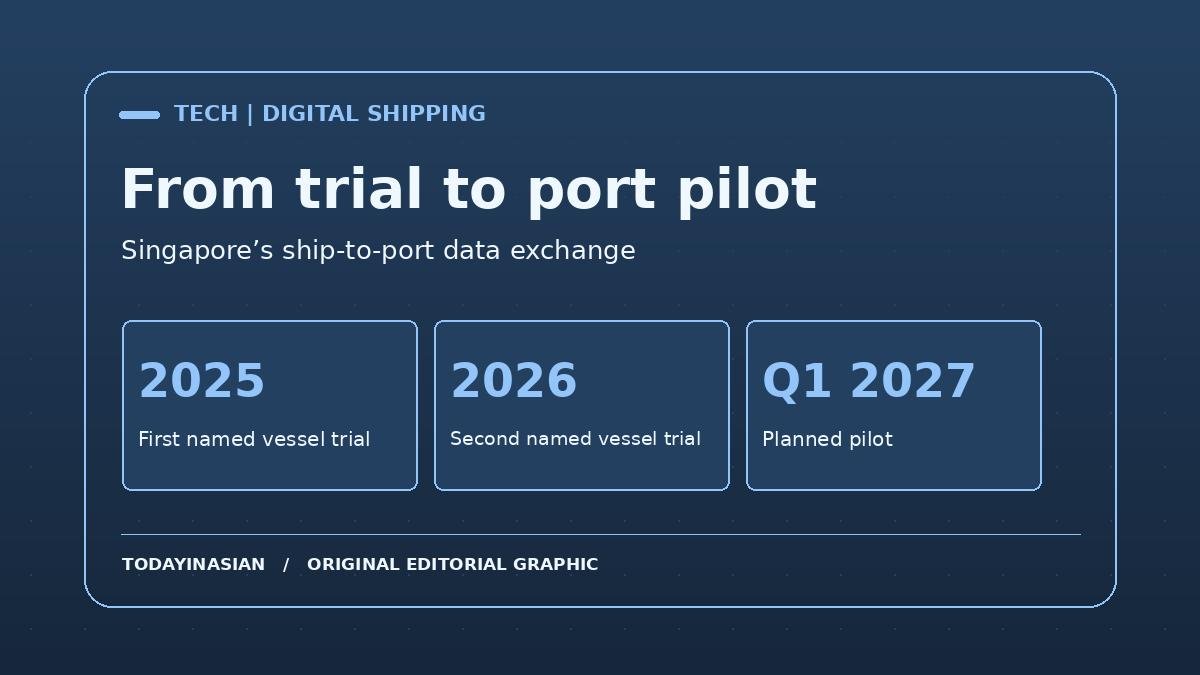
The Maritime and Port Authority’s joint announcement describes a trial involving the APL Singapura in 2025 and another involving CMA CGM Grand Palais this year. Officials said the findings would inform the planned pilot. The release does not announce a port-wide rollout, quantify time savings or say that the authorities will remove clearance checks. Shipping publication UANWORLD separately reported the pilot timetable as part of the wider Singapore partnership.
Why data quality matters more than replacing paper
A clearance process often involves people checking information that originates in another system. Turning a form into an electronic form can make it easier to send, but leaves teams copying details between interfaces if the records do not match. Structured exchange can reduce that copying when the receiving system knows what each field means and which version is current. It also makes responsibility for correcting a bad or late submission more important.
The cases worth testing are not just routine arrivals. A ship might send a revised entry after a change in arrival time or transmit a record with a field missing. A useful pilot would show that the port can identify a change, route it to the right reviewer and keep an auditable record of what was actually accepted. Otherwise, a fleet can end up running both old and new procedures, preserving the duplication that the pilot is meant to address.
What the partnership does, and does not, promise
The same announcement covers a new maritime talent agreement and work with start-ups, alongside possible trials of alternative fuels. These are separate efforts; none is needed to claim the success of digital clearance. For shippers following the port pilot, more useful indicators would include the share of submissions needing manual correction, the time to resolve exceptions and whether multiple vendors can use the same data format.
Ports across Southeast Asia do not operate identical clearance systems. If Singapore’s trial demonstrates reliable exchange between independent systems, other ports and operators may have a practical example to assess against their local requirements. If it only works because one fleet uses one bespoke interface, it will be less transferable. The planned 2027 test is where that distinction starts to become measurable.
Original editorial graphic by TodayinAsian. Source: the Maritime and Port Authority of Singapore’s joint release with CMA CGM, 26 November 2026. Dates show trials and a planned pilot, not a general launch.