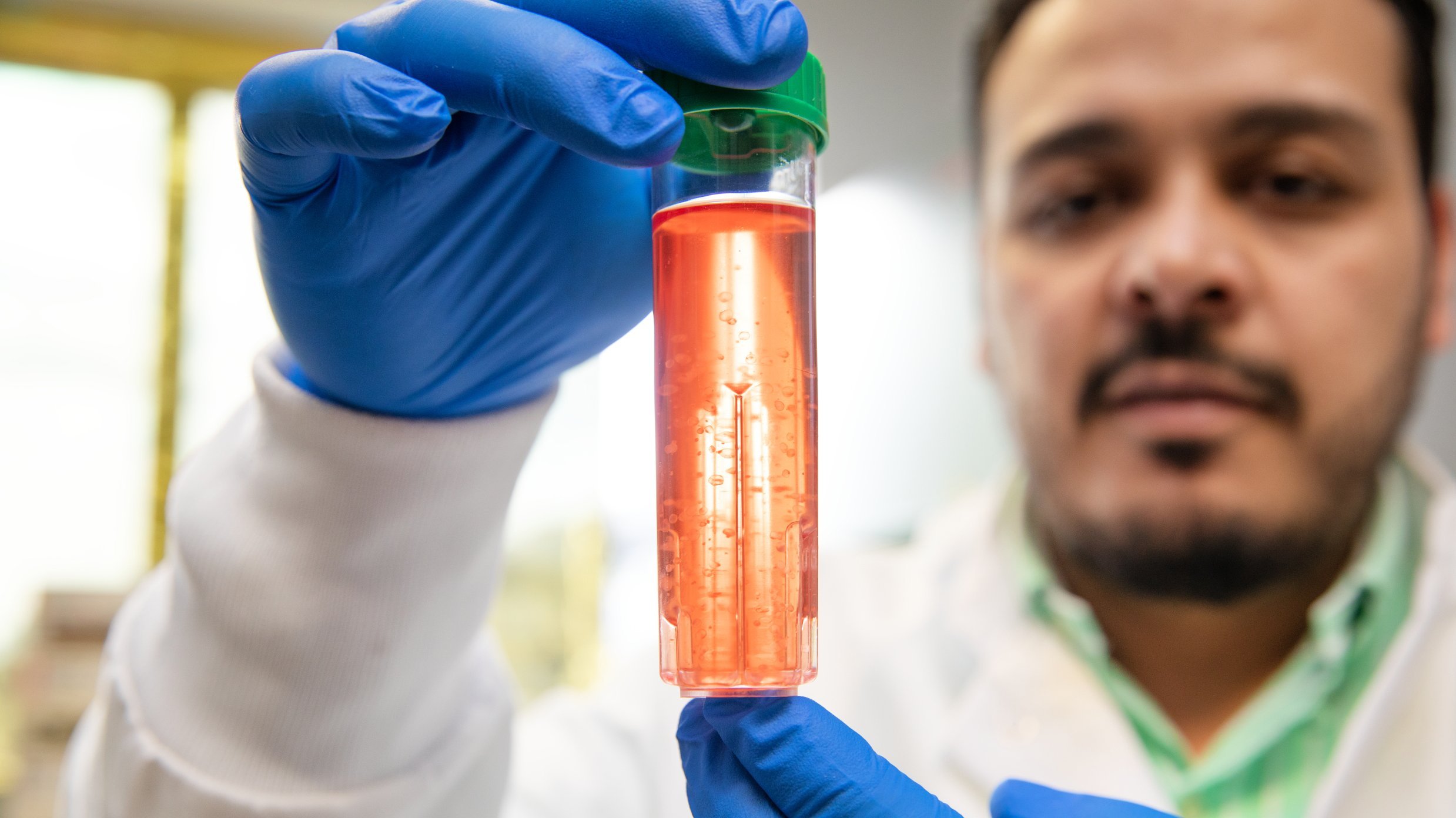
TECH – In the world of regenerative medicine, scale has always been the stubborn gatekeeper. Scientists can create remarkable cells in the lab, but producing them in meaningful quantities is another matter entirely. Now, researchers at Hannover Medical School have taken a major step toward changing that equation. Cited from Phys.org, they have developed a new intermediate-scale bioreactor capable of generating up to 40 million human macrophages every week—a breakthrough that could accelerate research and transform future therapies.
Macrophages are one of the immune system’s most essential defenders. Often called the body’s “scavenger cells,” they hunt down pathogens, clear away cellular debris, and help repair damaged tissue. Their medical potential extends even further, with scientists exploring their use in treating liver disease, infections, cancer, fibrosis, and neurodegenerative conditions such as Alzheimer’s. The challenge has never been their usefulness; it has been making enough of them.
The new system begins with induced pluripotent stem cells, or iPSCs—adult cells reprogrammed to return to a flexible, embryonic-like state. These cells can become virtually any cell type in the human body, making them a cornerstone of modern biotechnology. Inside the bioreactor, the iPSCs develop into organoid-like structures that mimic human bone marrow, effectively creating a miniature immune-cell factory. After roughly two weeks, these structures begin continuously releasing macrophages.
Read More: Quantum Dots Send Unhackable Keys Over 120 km Fiber
Professor Nico Lachmann, who led the research, described the system’s impressive output: “We can harvest up to 40 million immune cells per bioreactor every week over a period of 10 weeks.” That kind of consistency is a game-changer, especially for preclinical studies where researchers need large, reliable batches of human cells.
Unlike small laboratory cultures or massive industrial systems, this medium-scale platform hits a sweet spot. It is efficient, cost-effective, and manageable, making it particularly attractive for research institutions and biotech developers. Four bioreactors can even operate together in a single device, boosting productivity without adding excessive complexity. Think of it as the “just right” bowl of porridge in cell manufacturing—Goldilocks would approve.
The implications are enormous. With a dependable supply of macrophages, scientists can better test new drugs, model diseases, and refine cell-based therapies. It also brings the field closer to scalable treatments that could one day be produced on demand.
Viewed through a broader lens, this innovation is more than a laboratory upgrade. It represents a shift from handcrafted biology to precision manufacturing, where living cells can be cultivated with the consistency of modern engineering—and perhaps one day, delivered with equal reliability.