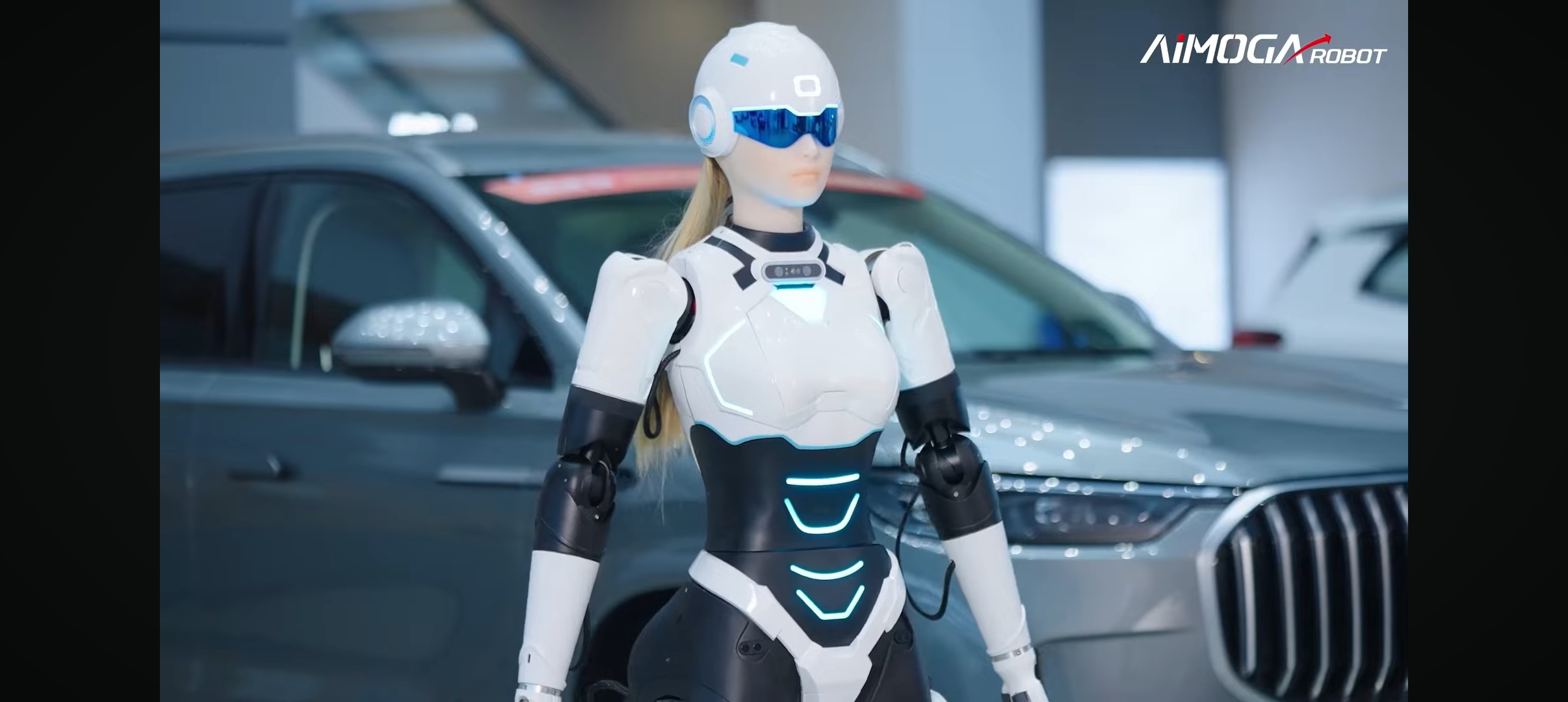
TECH – In a move that feels like a quiet crossing from fiction into everyday life, China’s automotive giant Chery has taken a bold step beyond cars, placing humanoid robots directly into the hands of consumers. According to reporting by CnEVPost, the company’s robotics arm, Aimoga, has officially begun selling its humanoid robots through an online platform, marking a rare moment when advanced robotics shifts from showcase to checkout.
The robot, priced at around 285,800 yuan (roughly $41,800), is not positioned as a distant prototype or experimental machine—it is a product, available for purchase much like any other consumer device. Buyers can order it through Aimoga’s flagship store on JD.com, signaling a deliberate attempt to lower the barrier between cutting-edge innovation and everyday ownership.
This humanoid system is designed with capabilities that hint at a versatile future. Equipped with multimodal perception and the ability to perform autonomous tasks, the robot can navigate complex environments and interact with its surroundings in a way that mirrors early-stage human adaptability. Its development draws heavily from Chery’s existing expertise in smart vehicle systems, including electronic architecture and human-machine interaction technologies.
Read More: Robotic Birds Help Revive Endangered Grouse Populations
Alongside the humanoid model, Aimoga is also offering a robotic dog at a significantly lower price point, suggesting a layered strategy that targets both high-end adopters and broader consumer segments. The company is not stopping at online sales; it is actively building an offline retail network, including specialty stores and showroom-style experiences, to bring these machines closer to everyday life. More than 300 dealers have already signed on, reflecting growing interest in what could become a new consumer category.
There is a quiet ambition beneath this rollout. Aimoga envisions a gradual expansion—from initial deployments in automotive-related environments to retail spaces, and eventually into private homes. Flexible purchasing models, including leasing and installment plans, have been introduced to make the technology more accessible, as if inviting curiosity rather than demanding commitment.
Although the original report carries no direct dialogue, the company’s direction speaks with clarity: robots are no longer confined to factories or laboratories—they are stepping into the marketplace, ready to coexist with human routines.
In essence, this development signals more than a product launch; it marks the beginning of a new consumer frontier, where machines are not just tools of industry, but companions in daily life, quietly learning the rhythm of the human world.