TECH – The iFLYTEK AINOTE 2 presents a groundbreaking fusion of paper-like input and artificial-intelligence capability, positioning itself as “the world’s first GPT-5 paper tablet” according to a review by NotebookCheck.
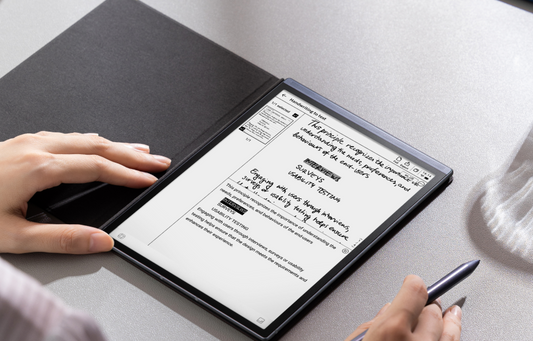
Crafted for productivity and smart document interactions, the device features an ultra-thin form factor (just 4.2 mm thick) and a weight of only 295 grams. These dimensions make it exceptionally portable while still supporting a large E-Ink display running at 22 Hz for smooth scrolling and writing responsiveness.
Under the hood, the AINOTE 2 integrates a GPT-5-level AI engine, enabling users to generate meeting summaries from audio, convert handwritten notes into editable text, and perform intelligent search by circling words on the screen. It supports real-time transcription in 15 languages, translation across 10 languages, and handwriting recognition in 133 languages.
The tablet runs on Android and offers access to Google Play Store, allowing installation of third-party productivity apps. It supports a wide range of file formats PDF, EPUB, MOBI as well as Microsoft Office files (Word, Excel, PowerPoint) facilitating integration into standard workflows.
Read More: China’s Elf V1 Robot Mirrors Human Skin & Emotion
From a hardware perspective the AINOTE 2 is quite capable for a paper tablet: it reportedly includes 4 GB RAM, 64 GB storage, and uses an RK3576 octa-core processor optimized for AI workloads. Its battery is rated at 4,000 mAh, allowing standby times of up to 90 days or light-use operation for up to 14 days, per early disclosures.
The stylus experience is optimized for handwritten workflows: low latency, precise stylus input, and E-Ink responsiveness create a writing feel close to traditional paper. The thin profile, lightweight build, and paper-like writing surface help position the tablet as an ideal device for professionals who take notes, mark up documents or manage meetings across languages.
In essence, the AINOTE 2 bridges the gap between paper and digital workflows. By combining ultra-thin hardware, large E-Ink display, robust AI features and full mobile OS flexibility, it aims to redefine what a “paper tablet” can do. While true real-world performance (battery life, AI responsiveness under heavy use) will depend on further independent reviews, the product already signals a shift: tablets that write like paper and think like AI assistants.