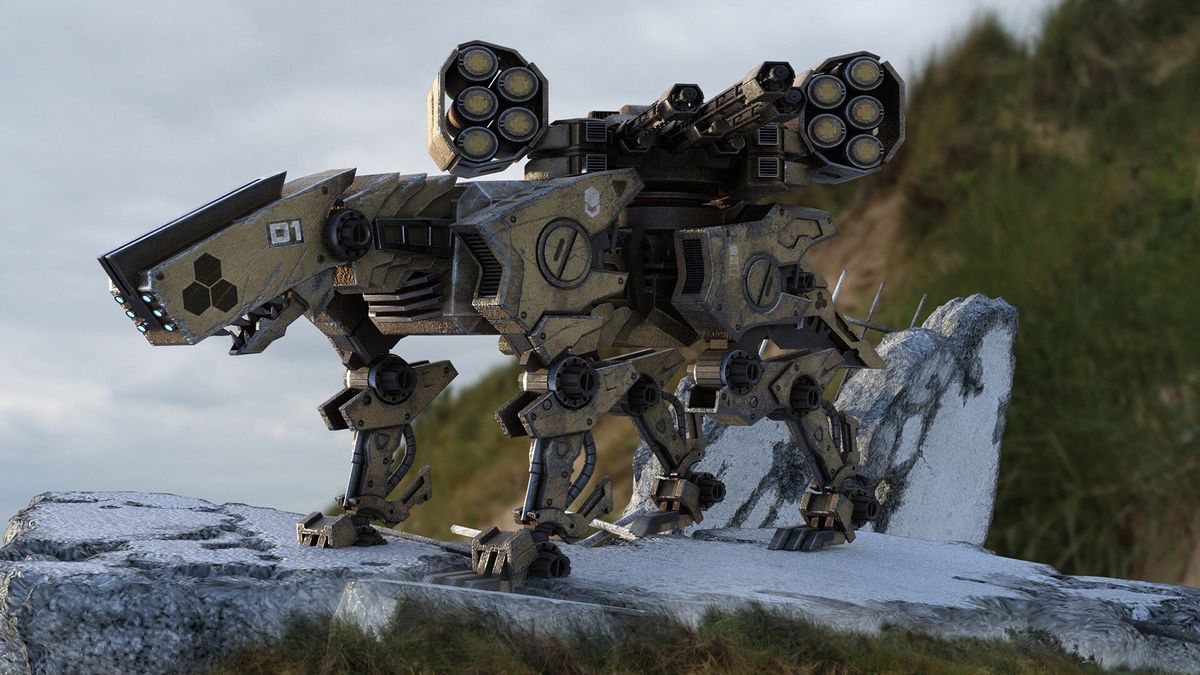
TECH – In a spectacle that feels pulled from the pages of science fiction, China has once again pushed the boundaries of modern warfare technology, this time unveiling robotic dogs designed not for companionship, but for combat. According to reporting by JagatReview, the demonstration highlighted how these quadruped machines are being positioned as part of the country’s evolving military strategy, where automation and artificial intelligence begin to walk—quite literally—alongside human soldiers.
The robotic dogs, agile and eerily lifelike in motion, are not just mechanical curiosities. They are built to navigate complex terrain urban ruins, narrow alleys, and uneven landscapes—where traditional vehicles struggle. Equipped with advanced sensors and cameras, these machines can function as reconnaissance units, venturing into high-risk zones while keeping human troops at a safer distance. In this role, they become silent scouts, gathering data before a single boot touches the ground.
But the demonstration did not stop at observation. As noted by JagatReview, some variants of these robotic systems have been fitted with weapons, transforming them into mobile combat units capable of supporting frontline operations. This aligns with broader developments in China’s military technology, where robotic platforms have been tested with machine guns, grenade launchers, and even missile systems, signaling a clear shift toward unmanned ground warfare.
Read More: Samsung Medical Center Sets Pace for AI Smart Hospitals
One of the most striking aspects of these machines is their potential for coordinated action. Military analysts have pointed out that such robotic units could operate in groups, communicating with one another in real time, much like a pack. This “swarm” capability allows a single operator to control multiple units simultaneously, increasing efficiency while reducing human exposure to danger.
Although no direct dialogue was prominently featured in the original report, the message conveyed through the demonstration was clear and almost unspoken: the battlefield of the future will not belong solely to humans. Instead, it will be shared with intelligent machines capable of decision support, precision movement, and relentless endurance.
Seen through a wider lens, this development reflects a global race toward military automation, where nations are investing heavily in technologies that redefine how wars are fought. China’s robotic dogs, both unsettling and fascinating, stand as a symbol of that transformation—machines that blur the line between tool and teammate, reshaping not only tactics, but the very nature of combat itself.