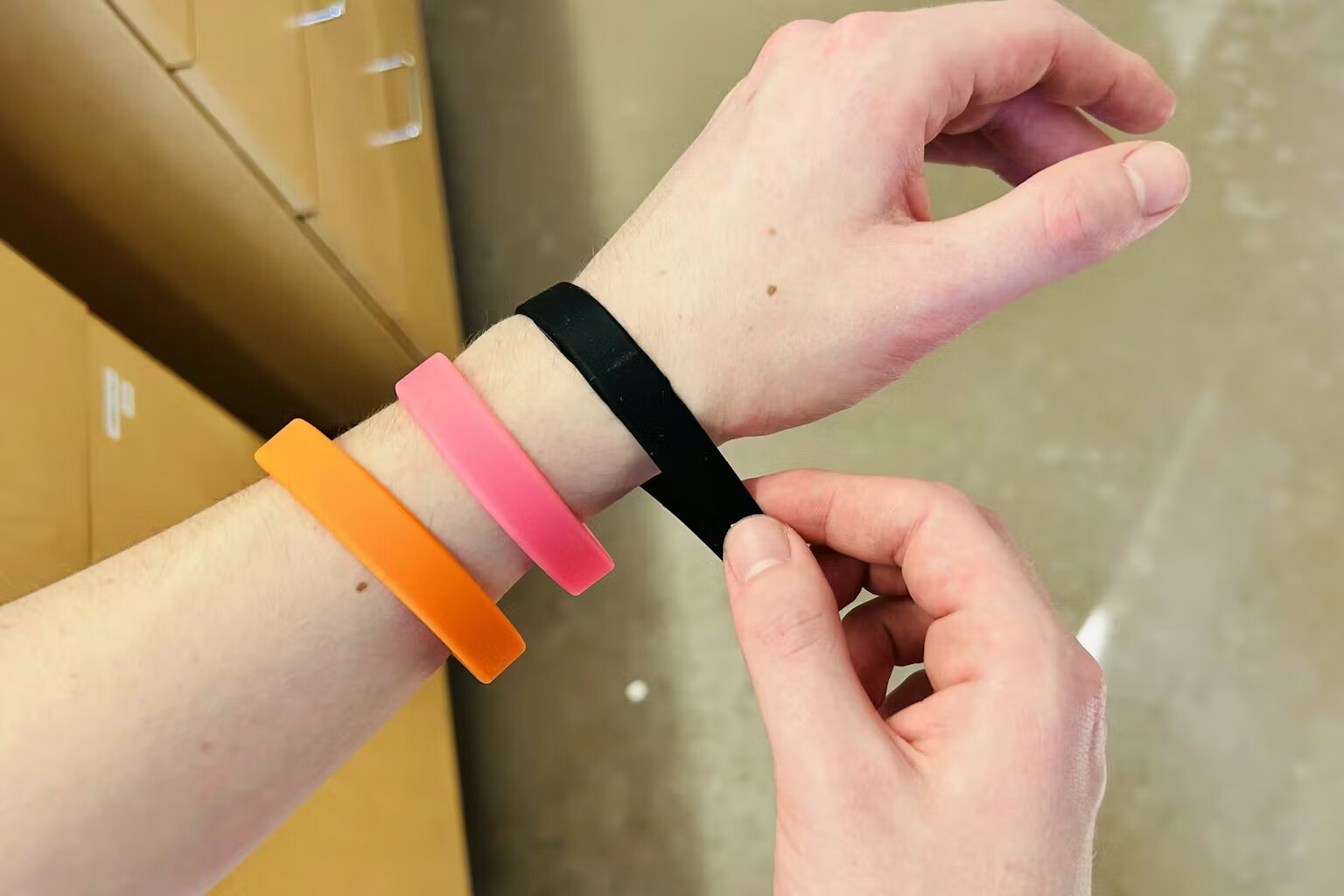
TECH – Every morning, people slip on a bracelet and step out the door, completely unaware of the invisible chemical hazards drifting through the air, settling on surfaces, and clinging to dust particles around them. Many of these exposures carry no smell, no taste, and no warning — yet they accumulate silently in the body over time. As reported by The Conversation, scientists are now turning to a surprisingly simple solution: silicone wristbands.
PFAS — perfluoroalkyl and polyfluoroalkyl substances — are widely known as “forever chemicals” because of how extraordinarily long they persist in the environment without breaking down. Tracking exposure to these substances has long been a challenge for researchers. Traditional methods such as blood draws are not only costly but can discourage people from participating in studies altogether.
Conventional environmental monitoring has largely relied on snapshots — a water sample collected on a single day, a blood draw at one moment in time — but exposure is not a single moment. It unfolds gradually as people move through different environments, touching surfaces, breathing air, and interacting with everyday products. That gap in understanding is what pushed researchers toward passive, noninvasive monitoring tools.
Read More: Dolphin-Shaped Robot Could Revolutionize Ocean Oil Spill Cleanup
Silicone wristbands are made of polydimethylsiloxane (PDMS), a polymer with a strong capacity for absorbing a wide range of organic chemicals. As the band sits on the wrist, compounds from air, dust, and nearby surfaces slowly diffuse into the silicone material. After days or weeks of wear, scientists can extract and analyze those compounds to map out a person’s exposure patterns.
Researchers have already applied this approach in community studies involving adolescent girls in agricultural areas, firefighters, and office workers — groups with potentially high but underexplored chemical exposures.
The wristbands have also been adapted for wildlife research, helping scientists assess chemical accumulation in animals without causing them physical stress.
Moving at even a walking pace can enhance a wristband’s chemical uptake rate by as much as 3.2 times, making everyday movement itself a factor in the quality of data collected.
It is a remarkable intersection of ordinary life and cutting-edge environmental science — proof that sometimes the most powerful research tools are the ones people are willing to actually wear.