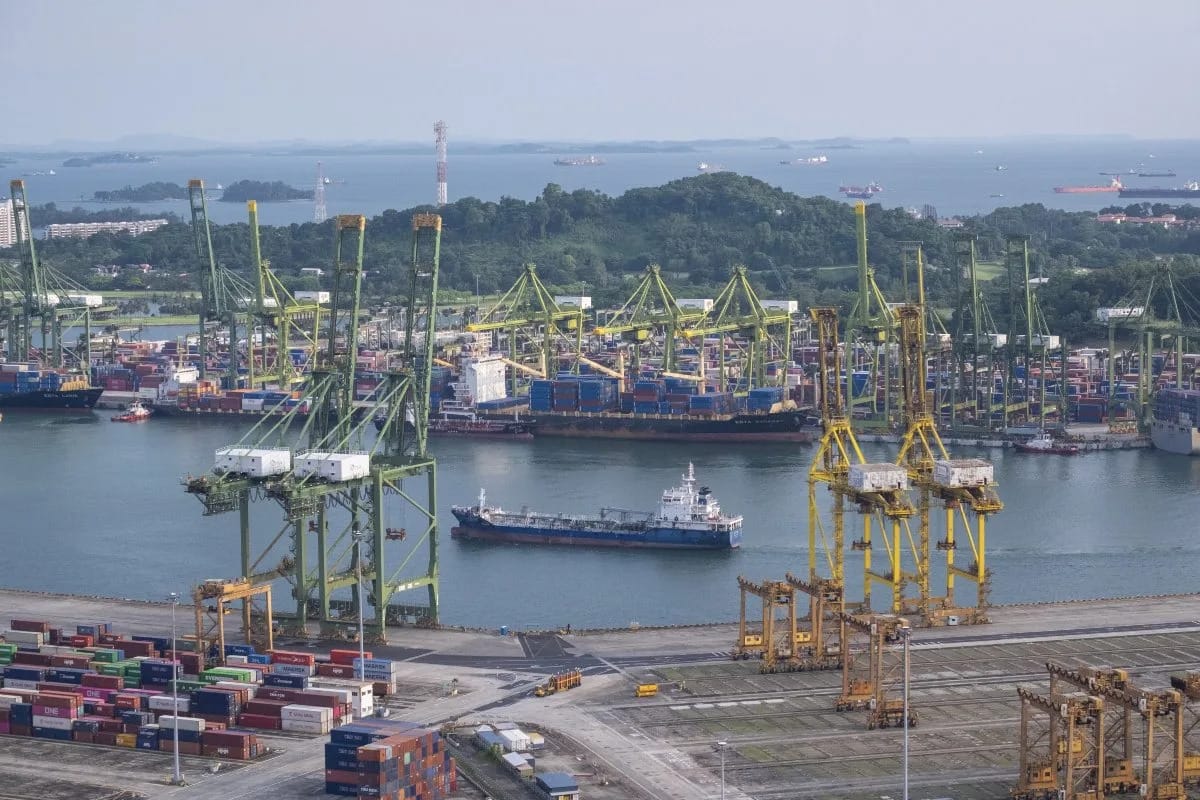
BUSINESS – Global trade tensions have intensified after the United States launched a sweeping investigation into several major economies, including China and Singapore, over alleged unfair trade practices and excess manufacturing capacity. The move, reported by The Business Times, forms part of Washington’s broader strategy to revive tariff measures and scrutinize global industries believed to be flooding markets with oversupply.
The investigation was announced by the Office of the United States Trade Representative (USTR) under Section 301 of the Trade Act of 1974, a powerful legal tool that allows the U.S. government to impose tariffs on countries it believes engage in unfair trade practices. U.S. Trade Representative Jamieson Greer said the probe would examine whether excessive industrial capacity in several economies has distorted international competition and harmed American industries.
According to USTR filings, the investigation targets 16 economies, including China, the European Union, India, Japan, South Korea, Mexico, Taiwan, Singapore, and several Southeast Asian countries such as Vietnam, Malaysia, Thailand, Cambodia, and Indonesia. The inquiry focuses on sectors suspected of overproduction, including aluminum, automobiles, batteries, electronics, semiconductors, machinery, steel, ships, solar modules, and robotics. Officials argue that such industries have grown rapidly overseas while U.S. manufacturing capacity has weakened in comparison.
Read More: Singapore Orders Meta to Block Offensive Quran Video Posts
The American filing suggested that China’s large trade surplus stems from rising production capacity across many sectors. It also cited examples of companies expanding aggressively abroad, including Chinese electric-vehicle maker BYD. In Washington’s view, these developments could distort global trade flows and undermine domestic industries.
Singapore, however, quickly pushed back against parts of the U.S. claim. In a statement, the country’s Ministry of Trade and Industry (MTI) disputed the assertion that Singapore enjoys a massive trade surplus with the United States. The USTR document had claimed the city-state recorded a bilateral surplus of about US$27 billion in 2024. MTI countered this figure, saying official data from the U.S. Bureau of Economic Analysis shows the opposite.
“On the contrary,” MTI explained, “Singapore had a bilateral goods trade deficit of US$1.7 billion and a services trade deficit of US$25.1 billion with the U.S. in 2024, amounting to a total trade deficit of about US$27 billion.”
Read More: Asia Markets Waver as Oil Prices Swing on Iran Tensions
The ministry also rejected suggestions that Singapore continues expanding manufacturing capacity despite declining industrial occupancy rates. Officials emphasized that industrial space usage remains “very healthy” at around 90 percent, noting that land constraints in the city-state actually limit large-scale industrial expansion.
Looking ahead, USTR plans to hold public consultations and a hearing around early May before deciding whether corrective actions—potentially including tariffs—are warranted. The investigations may take several months, but they already signal a new phase of global trade friction as governments reassess industrial competition and economic policy in an increasingly protectionist environment.
Seen through a broader lens, the dispute highlights how data interpretation and trade policy have become powerful instruments in the evolving contest over global manufacturing dominance.