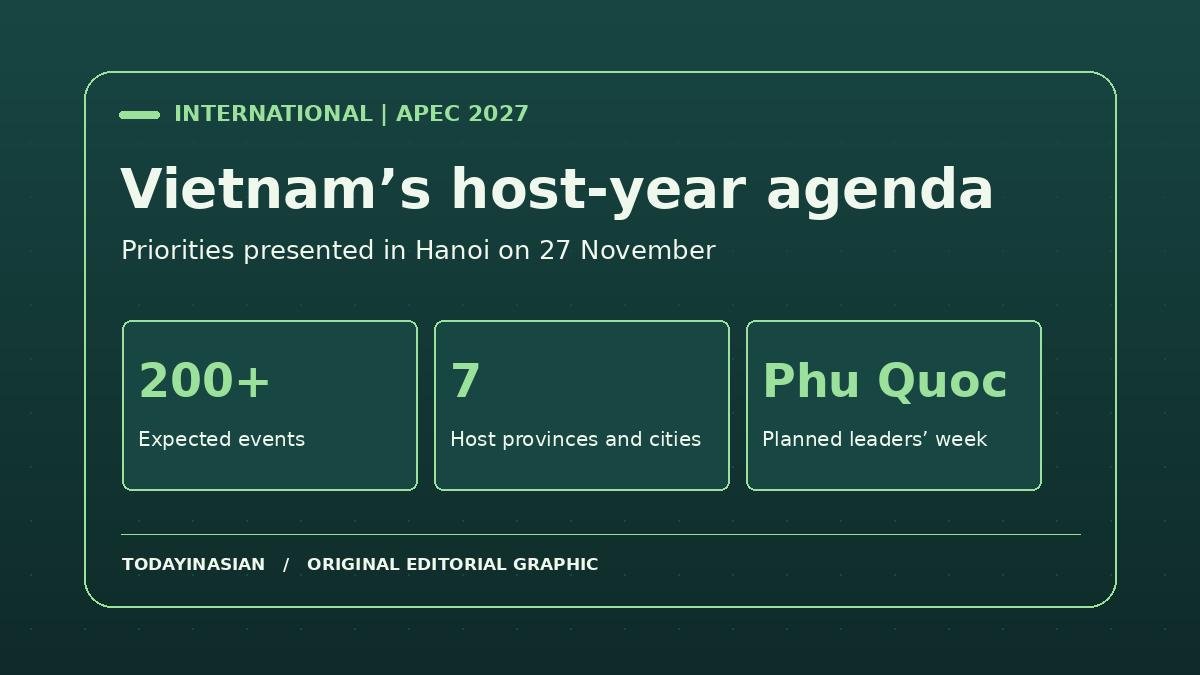
INTERNATIONAL,- Vietnam expects to host more than 200 meetings and events during its 2027 Asia-Pacific Economic Cooperation host year, culminating in a leaders’ week in Phu Quoc next November. Its plans place regional trade and investment alongside productivity and living standards. For Singapore and its neighbours, the question is whether the programme yields commitments that make it easier to do business across borders.
The Vietnamese Government Portal’s account of the Hanoi briefing said venues are planned across seven provinces and cities, with the leaders’ meeting in Phu Quoc, An Giang province. It described three broad priorities: economic productivity; trade, investment and economic resilience; and improving quality of life. Voice of Vietnam’s coverage reported the schedule and the same host-year themes. The planned meetings and opening proposals are not commitments already adopted by the participating economies.
Where the productivity agenda could become practical
For a small exporter, productivity gains may come from reducing the hours staff spend assembling similar paperwork for multiple markets, not just from investing in new technology. Sharing a standard or accepting a digital document can make a measurable difference if the relevant authorities and businesses both adopt it. The detail to watch is which forms or processes change, and whether changes apply to smaller firms as well as large traders.
Trade is not the same thing as a tariff negotiation. The forum gives members a setting to work through shared issues, but a workshop or leaders’ declaration does not itself cut a tax or change an import rule. Singapore businesses should look for a timetable, a lead agency and evidence of pilots before expecting any change in the way they ship goods or offer services.
What will be visible before leaders meet
An agenda spread across multiple Vietnamese cities also creates opportunities for firms and specialists to attend sector meetings without waiting for the main summit. The outcomes to compare are the public documents and working-group decisions that explain what participants will actually try, how success will be measured and what happens after the host year.
Vietnam’s proposed emphasis on resilience is most relevant when it confronts the costs of disruption directly. For a regional supplier, a predictable clearance process or common data requirement can make it easier to use alternate routes when one market faces delays. Those are examples of practical progress, not predictions about what every member will adopt.
The Hanoi briefing established a direction and a calendar. The best way to follow the 2027 programme is to separate that ambition from the smaller steps that can actually be checked before and after the leaders gather.
Original editorial graphic by TodayinAsian. Source: Viet Nam Government Portal, 27 November 2026. Locations and events are as planned.