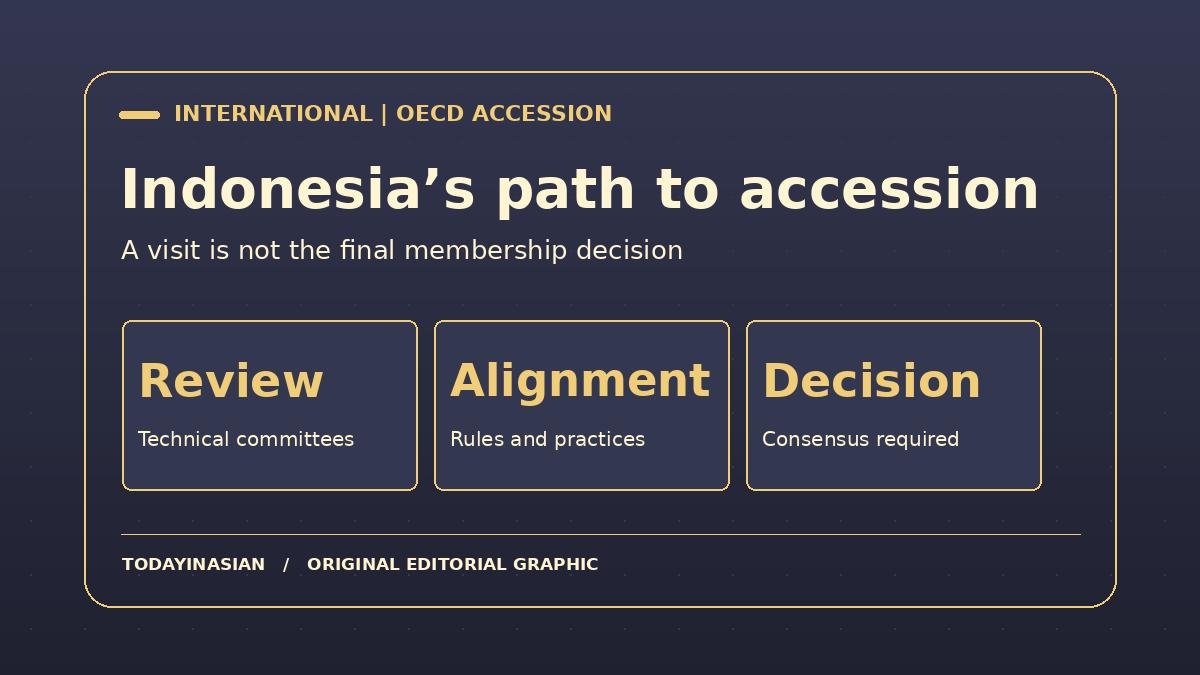
INTERNATIONAL,- A November visit to Indonesia by the OECD Secretary-General has brought the country’s effort to join the group back into focus. The visit can sustain work on the application, but it does not set a membership date. The harder stages are technical: committees have to understand how Indonesia’s laws and practices compare with OECD standards, and agreement among members is needed before an invitation can be issued.
Indonesia’s Coordinating Ministry for Economic Affairs described the visit as part of its push to accelerate full membership. The OECD’s description of accession sets out a review process that evaluates both policy frameworks and their implementation before the final decision. Diplomatic momentum can help agencies organise that work, but cannot substitute for evidence submitted to the committees.
Where the practical work happens
For a business, the policy effects often show up well before membership, if agencies decide that applying a standard requires changes to reporting, governance or public administration. An announced review is not itself a rule change. Firms watching the process should distinguish technical recommendations, proposed Indonesian rules and instruments actually adopted and put into force.
Day-to-day implementation also matters. A reporting requirement can be passed on paper without a reliable form, information channel or appeal process. Consistent application, accessible guidance and the ability to resolve ambiguities are better evidence of a change taking hold than the announcement of a committee meeting. What matters to regional firms is how rules are applied when they invest, employ people or exchange data across borders.
How to tell whether accession is moving forward
More useful milestones than visits alone include the release of technical findings where available, published consultations, adoption of a reform and evidence that the relevant agency has put it into operation. Tracking those steps can reveal how different areas are moving instead of treating the process as a single deadline.
For Singapore and other ASEAN economies doing business in Indonesia, convergence with international practices could make some compliance processes easier to compare. But the benefits depend on exactly which measures change and how they are implemented. The November visit is a sign that accession work remains on the agenda; the next evidence will come from the review and reform process itself.
Original editorial graphic by TodayinAsian. Sources: Indonesia’s Coordinating Ministry for Economic Affairs and the OECD accession process overview.