INTERNATIONAL,- Philippine President Ferdinand Marcos Jr has called for faster work on an Iloilo bulk water project as authorities prepare for El Niño. The announcement puts the focus on new treatment capacity, but the effect on households will depend as much on the timing and reliability of delivery as on the amount the plant can process.
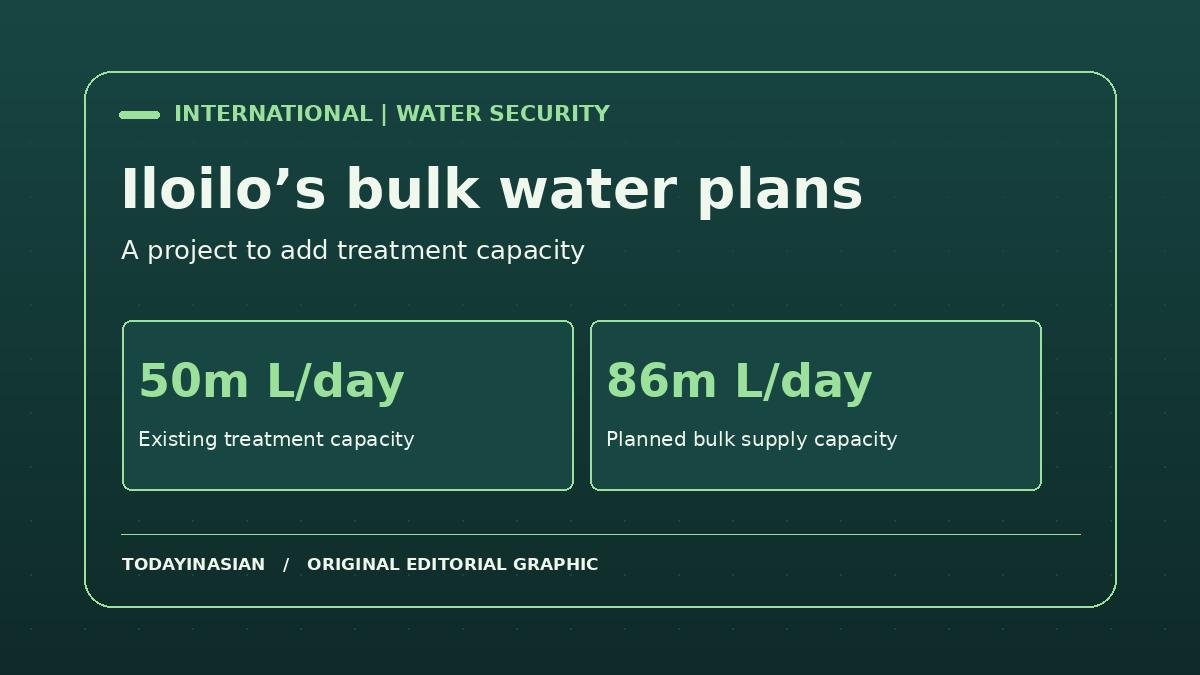
The Philippine Information Agency said officials inspected an existing treatment facility with a capacity of 50 million litres a day and began work on an 86-million-litre-a-day bulk project to supplement it. The Philippine News Agency’s report said the president was seeking prompt completion and cited declines in water levels at three irrigation systems in Iloilo earlier in November. The figures are not confirmation that the new plant is already operating.
Bulk capacity is not the same as a reliable household tap
A bulk facility treats water for supply into a network. Consumers are served only if sufficient raw water reaches the plant, the treatment works operate, and the network can move the water where it is needed. Published design capacity is therefore useful for comparing projects, but not enough to forecast a household’s service hours or the pressure at its address.
El Niño makes the supply side particularly important. Reduced flow can affect the intake long before a new facility is finished, while water users may need short-term contingency measures. In its description of its mitigation measures, the Metro Iloilo Water District said its distribution partner had prepared by coordinating bulk supply, disinfecting static tanks and simulating valve adjustments. Those are preparations for interruptions, not evidence that interruptions can all be avoided.
What to track after the announcement
Useful milestones include completion of treatment works, the start of testing, connection to the distribution network and regular delivery data. The relevant public test is whether the areas facing restrictions see more stable supply, not whether the new plant can reach its maximum output under favourable conditions. Reporting service levels separately from installed capacity would help households see when the project makes an actual difference.
The issue is familiar to other parts of Southeast Asia exposed to long dry spells. Permanent assets and emergency operating plans solve different problems: one raises the system’s potential capacity; the other determines how much service can be protected while new works are built or source water is scarce. In Iloilo, both will matter before residents can judge the outcome.
Original editorial graphic by TodayinAsian. Source: Philippine Information Agency reporting on 27 November 2026. Figures are capacity, not water already delivered to households.