TECH – Nvidia’s Vera CPU is demonstrating its potential in the rapidly growing agentic artificial intelligence market after a performance test showed it could bring 2,000 software environments online in less time than competing AMD EPYC processors needed to prepare just 1,000. The results highlight the growing importance of CPU performance as AI systems increasingly perform tasks independently.
According to Wccftech, the demonstration was conducted by Daytona, a company specializing in infrastructure for AI agents. The test examined how quickly processors could launch isolated software environments, known as sandboxes, where coding agents can access files, execute commands, install dependencies and run tests without interfering with other tasks.
Daytona reported that Nvidia Vera brought 1,000 sandboxes online in 10.8 seconds and scaled up to 2,000 in 27.4 seconds. By comparison, AMD’s EPYC 9575F required 32.3 seconds to launch 1,000 sandboxes, while the EPYC 9755 took 88.4 seconds. These results came from Daytona’s own testing rather than an independently verified industry benchmark.
The differences extended beyond startup speed. Daytona measured a peak throughput of 13.3 completed agent jobs per second on Vera. At 2,000 concurrent sandboxes, the processor sustained approximately 12.7 jobs per second. The EPYC 9755 managed 10.9 jobs per second, while the EPYC 9575F reached 8.1 jobs per second under the reported conditions.
Read More:
Daytona co-founder and CEO Ivan Burazin highlighted the difference with an automotive comparison: “It’s like a Rimac Nevera hitting 200 km/h before a Porsche Carrera clears 100.”
The results matter because AI agents increasingly need their own isolated computing environments. As developers deploy thousands of agents simultaneously, infrastructure must launch environments quickly and sustain workloads without significant performance degradation.
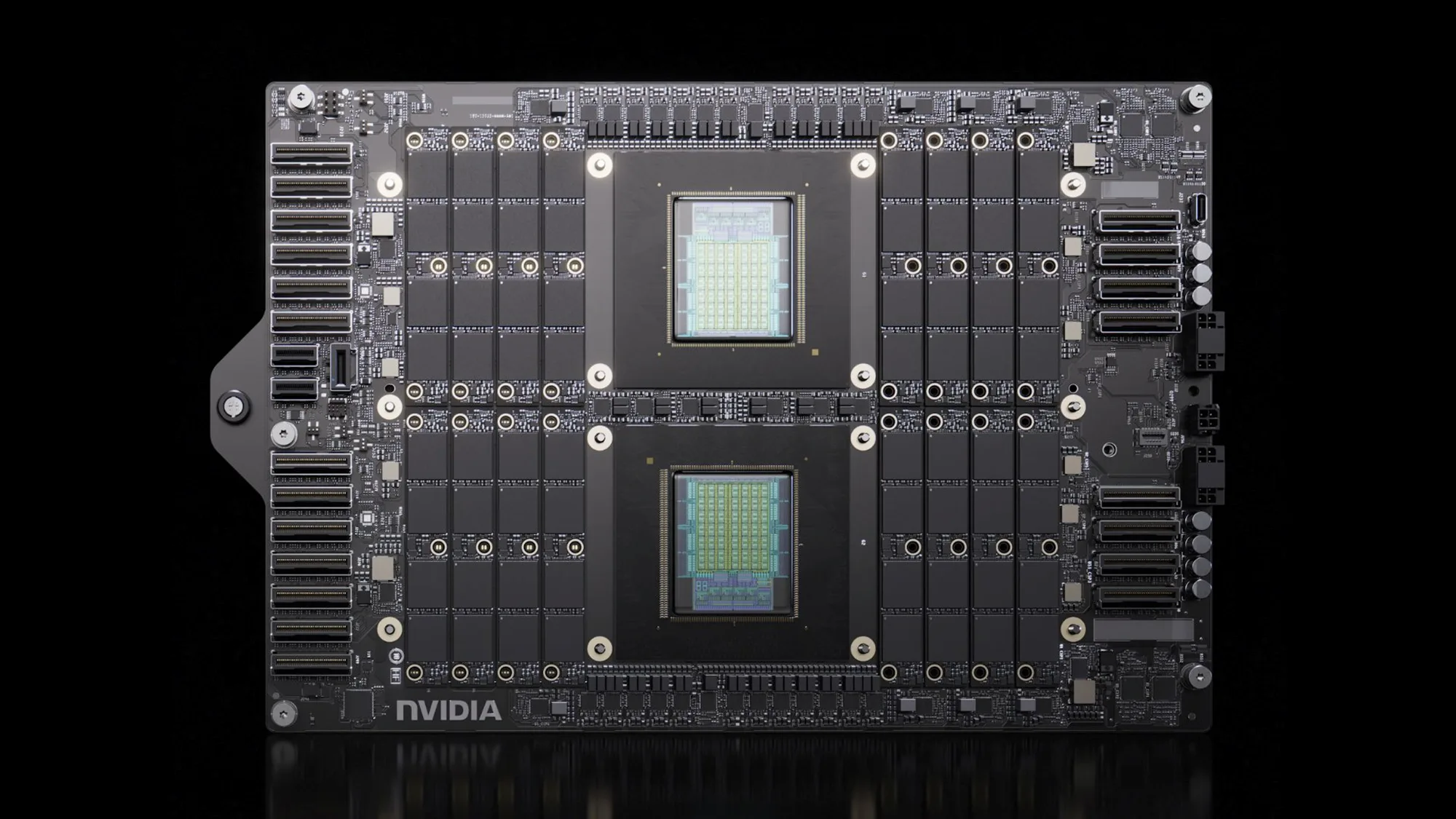
Nvidia designed Vera specifically for demanding data-center workloads, including agent orchestration, tool execution and other CPU-intensive tasks that complement GPU-based AI processing. Its architecture features 88 custom Olympus CPU cores and high-bandwidth LPDDR5X memory.
However, the comparison should be interpreted carefully. Performance can vary with processor configuration, memory allocation, software and testing methodology, so Daytona’s findings do not establish that Vera will outperform every AMD server in every workload.
With AI agents becoming more sophisticated, the competition between Nvidia and AMD is expanding beyond accelerators to the processors responsible for keeping increasingly complex AI systems running efficiently.