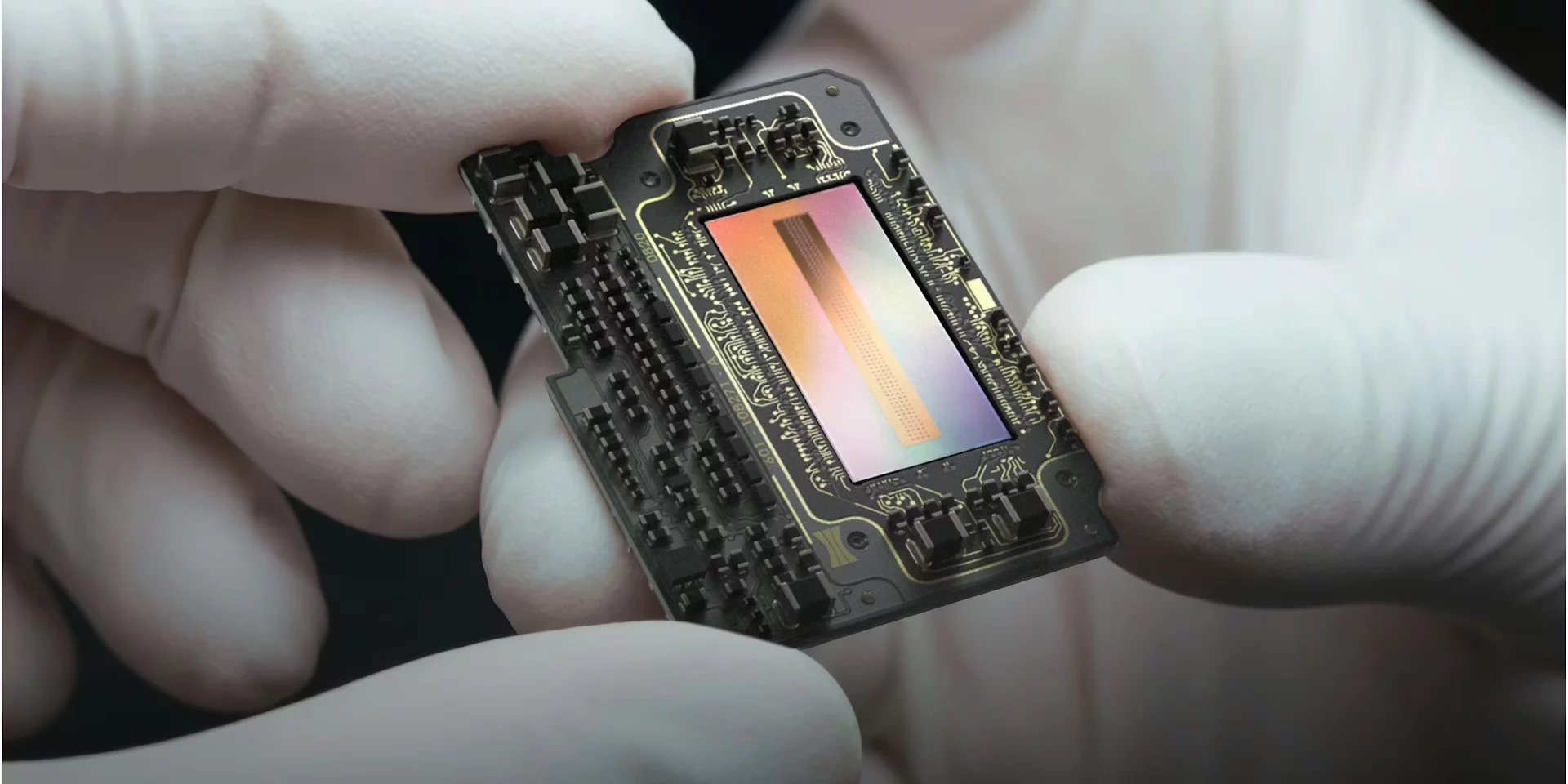
TECH – Machines are getting a little closer to seeing the world the way humans do, and this time, the breakthrough comes in color. U.S.-based technology company Ouster has introduced what it calls the world’s first native color lidar sensors, a system designed to help robots, vehicles, and industrial machines interpret their surroundings with far greater detail and accuracy. According to Interesting Engineering, the newly launched Rev8 OS digital lidar family combines high-resolution 3D mapping with integrated color perception, eliminating the need for separate camera systems.
Traditional lidar systems typically generate detailed 3D maps by bouncing laser pulses off surrounding objects, but they often lack visual context. To compensate, manufacturers usually attach external cameras to provide color information. Ouster’s new approach changes that equation entirely by embedding color sensing directly into the lidar hardware itself. In simpler terms, the machine no longer needs “extra eyes” bolted onto its head to understand what it is looking at.
Read More: New Catalyst Turns CO2 Into 110 Pounds of Fuel Daily
The sensors are powered by Ouster’s new L4 digital lidar architecture, which dramatically boosts both range and resolution. The flagship OS1 Max model can detect objects up to 500 meters away while processing more than 10 million points of data every second. That is enough information to give machines an incredibly detailed understanding of roads, buildings, pedestrians, and surrounding environments. Even more impressive, the system reportedly captures up to 20 trillion photons per second. Somewhere, physics teachers are smiling proudly.
What makes the technology particularly important is the way it merges geometry and visual context in real time. Because color data is captured directly during sensing rather than added later through software, the system reduces latency and avoids calibration problems common in camera-lidar combinations. Machines can immediately recognize road signs, brake lights, lane markings, and environmental features with improved precision.
Read More: Figure Helix02 Enables Humanoid Robots to Work 8-Hour Shifts
The sensors also perform across an enormous range of lighting conditions, from dim nighttime streets to intense sunlight. Ouster claims the hardware functions between one lux and two million lux, giving it the flexibility needed for autonomous driving, robotics, smart infrastructure, and industrial automation.
Chief Executive Angus Pacala described the technology as a major leap forward for physical AI systems. “We are delivering on the promise of our digital architecture,” he said, adding that the native color lidar provides “3D human-like sight for the next era of Physical AI.”
Beyond transportation, the company believes the technology could reshape how robots interact with people and environments in warehouses, factories, and public spaces. The idea is simple yet powerful: if machines can understand the world more naturally, they can move through it more safely and intelligently.