TECH – Deep beneath Germany’s surface, a long-buried problem is finally getting a high-tech solution. Engineers are developing advanced robotic arms to recover around 126,000 barrels of radioactive waste from the notorious Asse II salt mine, a site so unstable and hazardous that sending humans inside would be like volunteering for the world’s worst basement inspection.
The project is being led by German engineering giant Bilfinger in partnership with the Fraunhofer Institute for Optronics, System Technologies, and Image Exploitation. Commissioned by Germany’s Federal Company for Radioactive Waste Disposal, the mission aims to safely extract waste that was stored decades ago under conditions now considered deeply problematic. Over the years, moisture, salt, and time have corroded many of the containers, while the mine itself has become increasingly unstable.
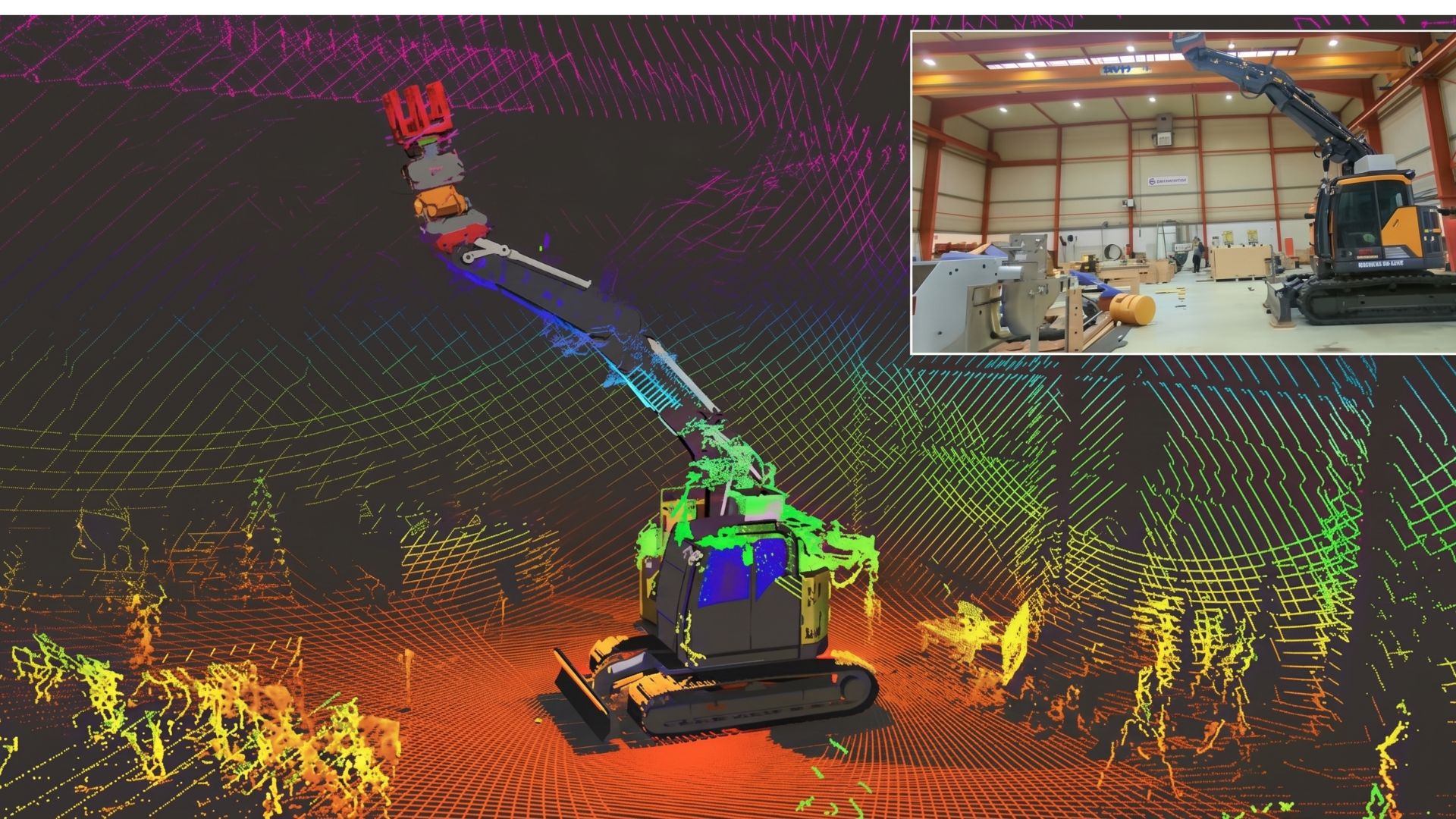
To tackle this challenge, engineers are building a tele-operated robotic excavator equipped with specialized tools, including grapples, cutters, and buckets. These machines must be both delicate and powerful—strong enough to lift damaged barrels, yet precise enough to avoid rupturing them. In a radioactive salt mine, “oops” is not an acceptable engineering term.
Read More: Leiden’s Sensor-Free Microrobots Mimic Living Cells
Fraunhofer is supplying the brains behind the brawn. Its system uses advanced sensor fusion, 3D perception, and inverse kinematics, allowing operators to control the robots remotely from a secure location. Rather than relying solely on camera feeds, technicians will work with a real-time digital model of the mine, making operations safer and far more efficient.
A digital twin will also play a critical role. Engineers can simulate every movement before the real machine even twitches, testing load limits, positioning, and potential hazards. This virtual rehearsal minimizes risk in an environment where mistakes can have serious consequences. It’s a bit like practicing piano—except the piano is radioactive and buried underground.
According to Interesting Engineering, the technology could become a model for nuclear cleanup efforts worldwide. Similar legacy waste challenges exist in countries like the United States and Japan. If successful, Germany’s robotic rescue mission could help redefine how humanity cleans up its most dangerous leftovers. Some messes, after all, require more than a broom.