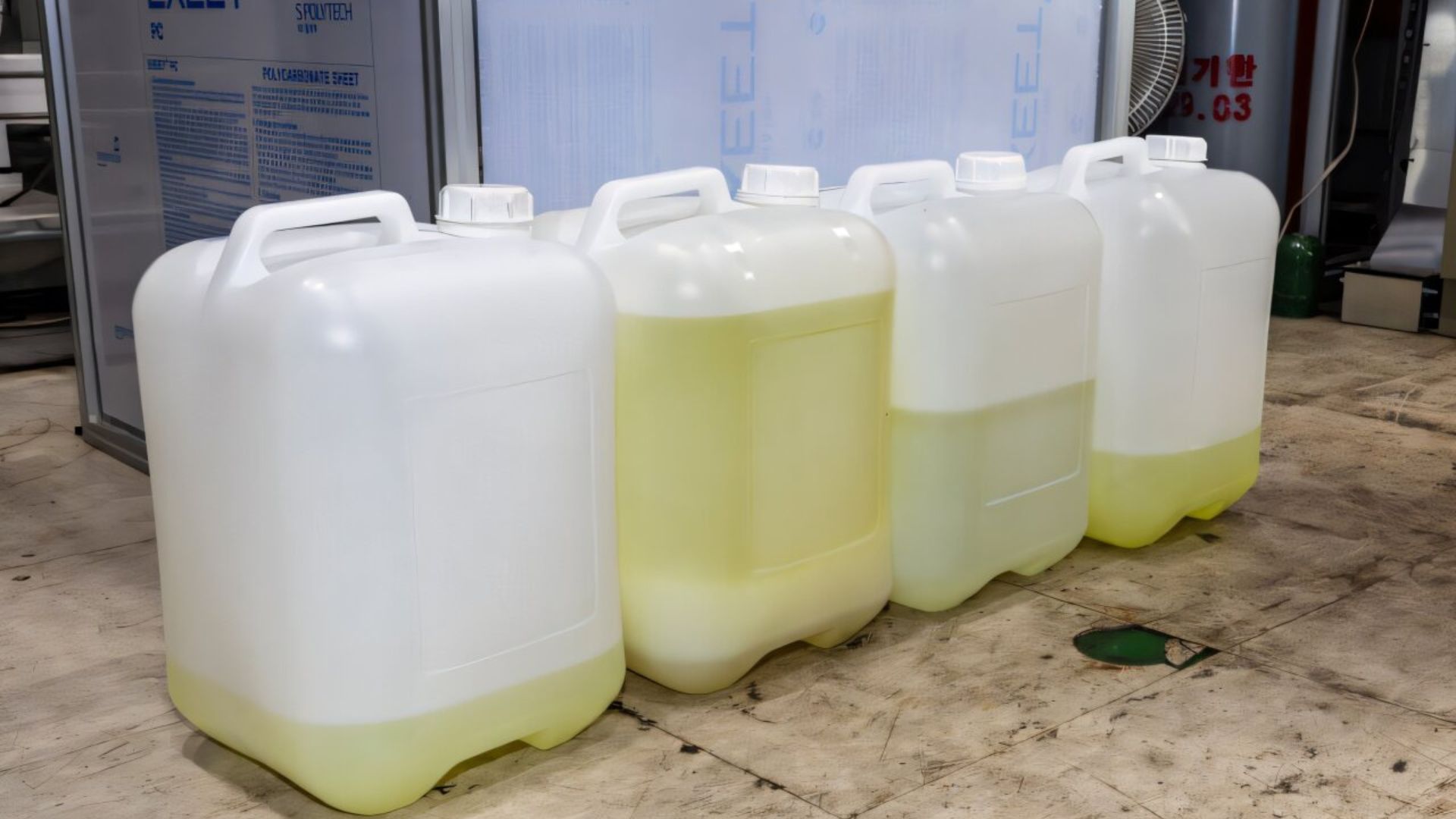
TECH – In a world rattled by energy uncertainty and rising oil prices, scientists in South Korea may have found a way to pull fuel from thin air—literally. Researchers at the Korea Research Institute of Chemical Technology (KRICT) have developed a breakthrough catalyst system capable of converting carbon dioxide and hydrogen directly into liquid fuel, producing around 110 pounds, or 50 kilograms, every day. According to Interesting Engineering, the technology transforms captured CO2 into high-grade gasoline and naphtha using a streamlined process that skips several costly industrial steps.
Traditional CO2-to-fuel conversion usually requires a complicated two-stage process involving extremely high temperatures and pressure. First, carbon dioxide must be converted into carbon monoxide through the reverse water-gas shift reaction. Then, the carbon monoxide undergoes Fischer–Tropsch synthesis to become liquid fuel. The method works, but it consumes enormous amounts of energy and requires large, expensive facilities. The new Korean system dramatically simplifies that process.
Using a proprietary catalyst, the researchers developed a direct hydrogenation method that converts carbon dioxide and hydrogen into liquid hydrocarbons in a single stage at temperatures around 330°C. That may still sound hot enough to roast a dragon, but in industrial chemistry, it is surprisingly moderate. The streamlined design reduces complexity, lowers energy consumption, and achieves roughly a 50% liquid hydrocarbon synthesis yield.
Read More: Figure Helix02 Enables Humanoid Robots to Work 8-Hour Shifts
The pilot plant currently produces enough fuel daily to fill about three 20-liter containers. Researchers believe this is only the beginning. After successfully scaling up from an earlier five-kilogram prototype, the team is now planning a commercial facility capable of producing 100,000 tons annually. The project also involves major industrial partners, including GS Engineering & Construction and Hanwha TotalEnergies.
One statement from the research team captured the broader significance of the development: “Successful commercialization could substantially reduce dependence on imported petroleum and strengthen national energy security.” The timing is especially notable as global shipping disruptions and geopolitical tensions continue affecting oil supply chains.
Read More: Quantum Dot Emitter Produces 40M Telecom Photons Record
The technology also aligns with the growing concept of “Power-to-Liquids” systems, where renewable electricity, green hydrogen, and captured carbon emissions combine to create synthetic fuels. In theory, the carbon released when the fuel is burned could later be captured again, creating a more circular energy cycle.
Not everyone is fully convinced, however. Online discussions among energy observers have raised questions about efficiency and scalability, with some arguing that direct electrification may remain more practical in many sectors. Still, even skeptics acknowledge that transforming waste carbon into usable fuel represents a remarkable scientific achievement.