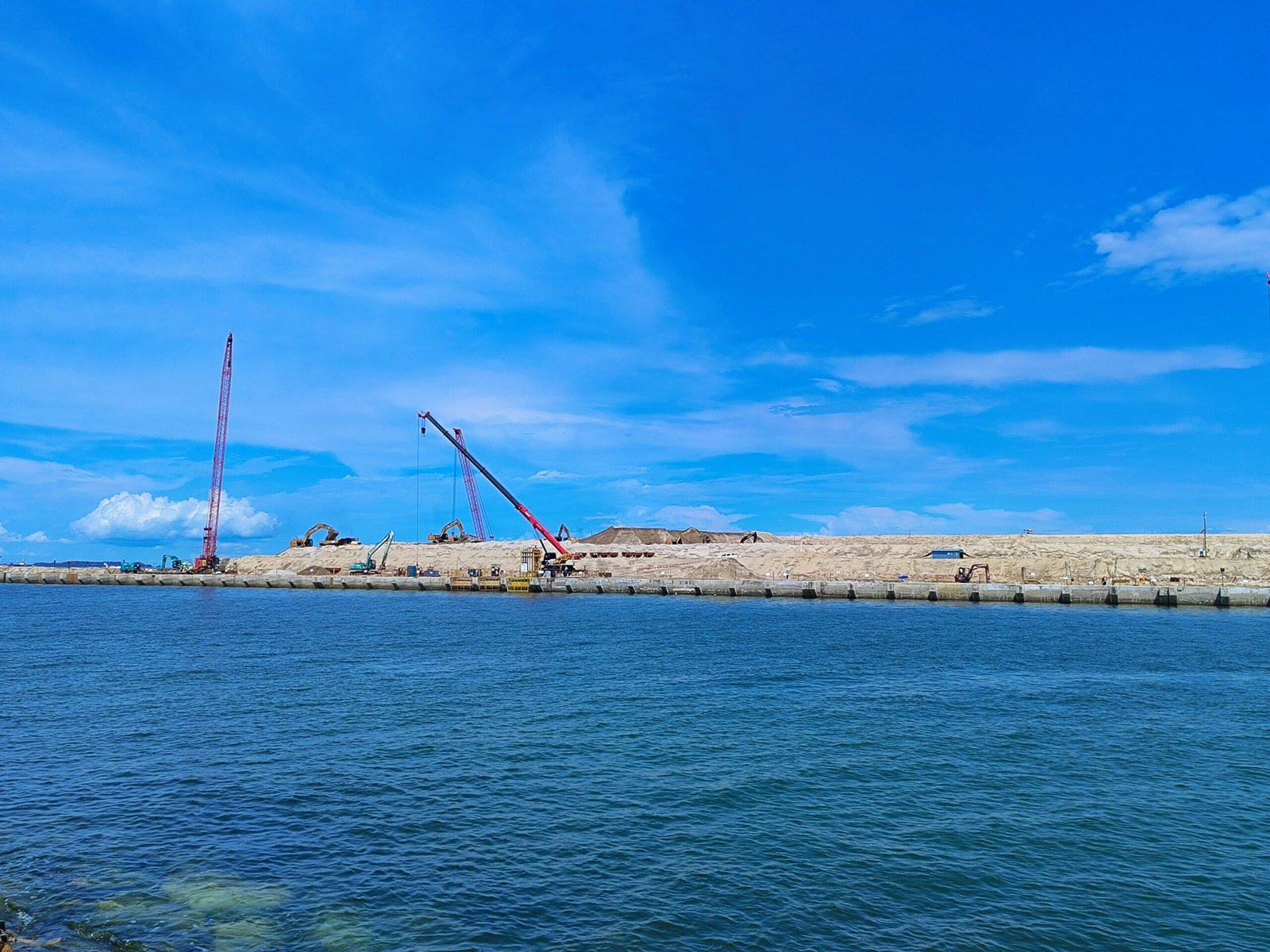
SINGAPORE,- Singapore has begun work on the largest expansion phase of Tuas Port, an investment that could reshape the country’s maritime industry over the coming decade. At the 20 November groundbreaking ceremony, Transport Minister Jeffrey Siow said the first operations would start in 2028, with all 21 planned deepwater berths expected to be available by the mid-2030s.
The scale is substantial. PSA Singapore says the new phase will cover nearly 400 hectares of reclaimed land, with 8.6 kilometres of wharf and water depths of 23 metres. These specifications are intended to accommodate exceptionally large container vessels, allowing Singapore to remain an important transhipment hub as shipping networks change.
Why the work is being carried out in stages
The 2028 target refers to the beginning of operations, not the completion of all 21 berths. Maritime infrastructure takes years to construct, equip and integrate with existing operations. PSA’s announcement sets out the phased plan, while Singapore expects the overall port development to continue into the 2040s.
When completed, the broader Tuas facility is designed to accommodate 65 million twenty-foot equivalent units (TEUs) each year. A TEU is a standard measure of container capacity. This is a long-term design figure, not a prediction that 65 million containers will immediately pass through the port or an indication of current throughput.
Singapore’s location gives it an advantage as a hub where goods are transferred from one vessel to another. That role depends not just on available space but also on efficient connections, shipping schedules, customs processes and the reliability of digital systems. Expanding berths may reduce capacity constraints, yet global trade fluctuations will continue to shape actual demand.
Why automation changes the workforce
The planned port makes extensive use of automated handling equipment, digitally controlled operations and systems for moving containers without conventional drivers. Such technology can improve consistency and make better use of space, provided it is maintained and protected against technical and cybersecurity failures.
The minister said Singapore’s coming maritime master plan would pay attention to capacity, technology and workforce skills. This reflects the need to train staff in remote operations, maintenance and data-driven logistics. New infrastructure should be assessed not only by the number of cranes installed but also by its ability to support sustainable, skilled employment.
For logistics operators, the practical benefits may include predictable vessel turnaround and stronger connections to regional destinations. But business customers must still consider freight costs, customs requirements and disruptions outside Singapore, such as bottlenecks at overseas ports or changes to trade policy.
What residents and businesses should watch
Companies supplying engineering, equipment and maritime services may see opportunities during construction and deployment. The scale of actual contracts and employment effects will depend on procurement and the project’s implementation. It would be premature to assign a precise number of new jobs to the expansion based solely on the groundbreaking.
Neighbouring ports are also investing in capacity, and shipping lines can alter routes when economics or geopolitics change. Singapore’s competitive advantage will depend on service quality as much as size.
The next meaningful milestones are the opening of initial operations in 2028, completion of further berths and evidence that the technology performs efficiently in day-to-day use. The groundbreaking is an important step, but the project’s long-term value will ultimately be measured in reliability and trade connectivity.