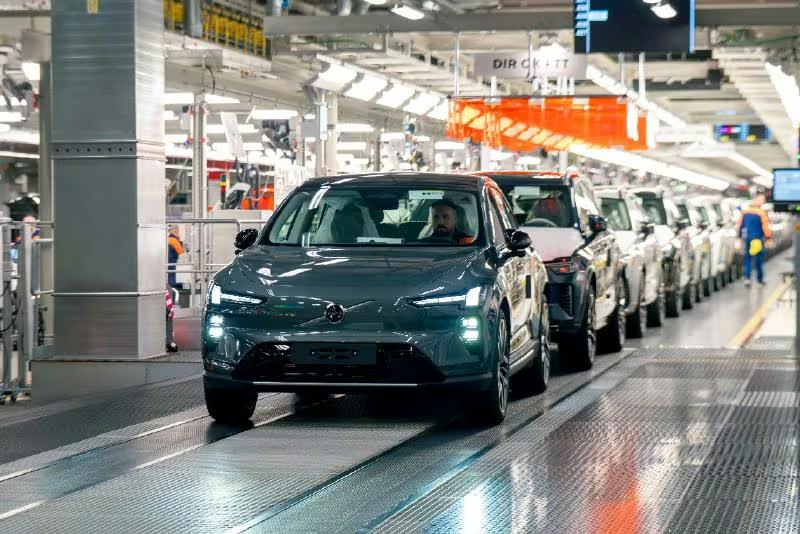
BUSINESS – Volvo Cars is preparing to eliminate 2,500 jobs worldwide after reporting a disappointing third quarter, as intensifying competition in China and mounting pressure in the United States threaten its financial recovery. The Swedish automaker announced the workforce reductions alongside plans to cut costs by an additional 5 billion Swedish kronor, equivalent to approximately $500 million. According to CNBC’s October 23, 2026, report, the announcement followed a sharp deterioration in the company’s financial performance and a dramatic decline in its share price.
The automaker recorded an operating loss of 5.6 billion kronor, or approximately $564 million, during the third quarter, reversing an operating profit of 6.4 billion kronor in the previous quarter. Revenue also declined to 66.9 billion kronor from 86.4 billion kronor a year earlier. Investors reacted negatively to the results, sending Volvo Cars shares tumbling by around 27% in early trading.
China emerged as one of the company’s biggest challenges. Revenue in the country fell by almost 50% year-on-year as domestic manufacturers strengthened their positions with competitively priced vehicles, sophisticated technology, and locally tailored features. Although Volvo is majority-owned by China’s Geely Holding, the Swedish brand has struggled to keep pace with rapidly changing consumer preferences.
Read More: 2027 BYD Qin Plus Reveals Premium Interior and 2,290 km Range
“It’s really a lot about the Chinese market, of course, where the change has come faster than we thought,” CEO Håkan Samuelsson told CNBC. He explained that developing global vehicles in Europe and expecting them to succeed in China was no longer a viable strategy for Western automakers.
Samuelsson said Volvo needs a more regional approach, giving local operations greater authority and developing vehicles specifically suited to Chinese buyers. He also emphasized the importance of integrating locally relevant infotainment and driver-assistance technologies to remain competitive.
Meanwhile, conditions in the United States have created additional difficulties. Tariffs and the removal of consumer incentives for electrified vehicles have put pressure on margins, making it harder for Volvo to maintain profitability while pursuing its ambitious transition toward electric mobility.
The restructuring will eliminate approximately 2,000 positions in Sweden, with the remaining reductions spread across other markets. Volvo plans to achieve the cuts through ending consultant contracts, natural employee turnover, and targeted exit packages rather than relying exclusively on immediate layoffs. The company expects its additional savings to be fully realized by the end of 2027, helping reduce overheads and strengthen cash flow.
Read More: Indian Rupee Could Fall to 100 per Dollar Amid Oil Pressures
Samuelsson acknowledged the urgency of the situation, stating that the company must reinforce its turnaround plan with decisive measures to lower its break-even point and improve financial resilience. The company is also reorganizing regional operations and accelerating the development of vehicles designed for different markets.
Despite the setbacks, Volvo intends to continue investing in its product lineup. It plans to introduce 13 new models by the end of 2030, including vehicles tailored specifically for China, Europe, and the United States. Greater cooperation with Geely will also help Volvo share technology and reduce development costs.
The coming quarters will test whether these measures can restore investor confidence without weakening Volvo’s premium identity. With Chinese rivals advancing rapidly and trade policies creating fresh uncertainty, the automaker faces a difficult balancing act between protecting its finances, developing competitive vehicles, and maintaining its long-term electrification ambitions.