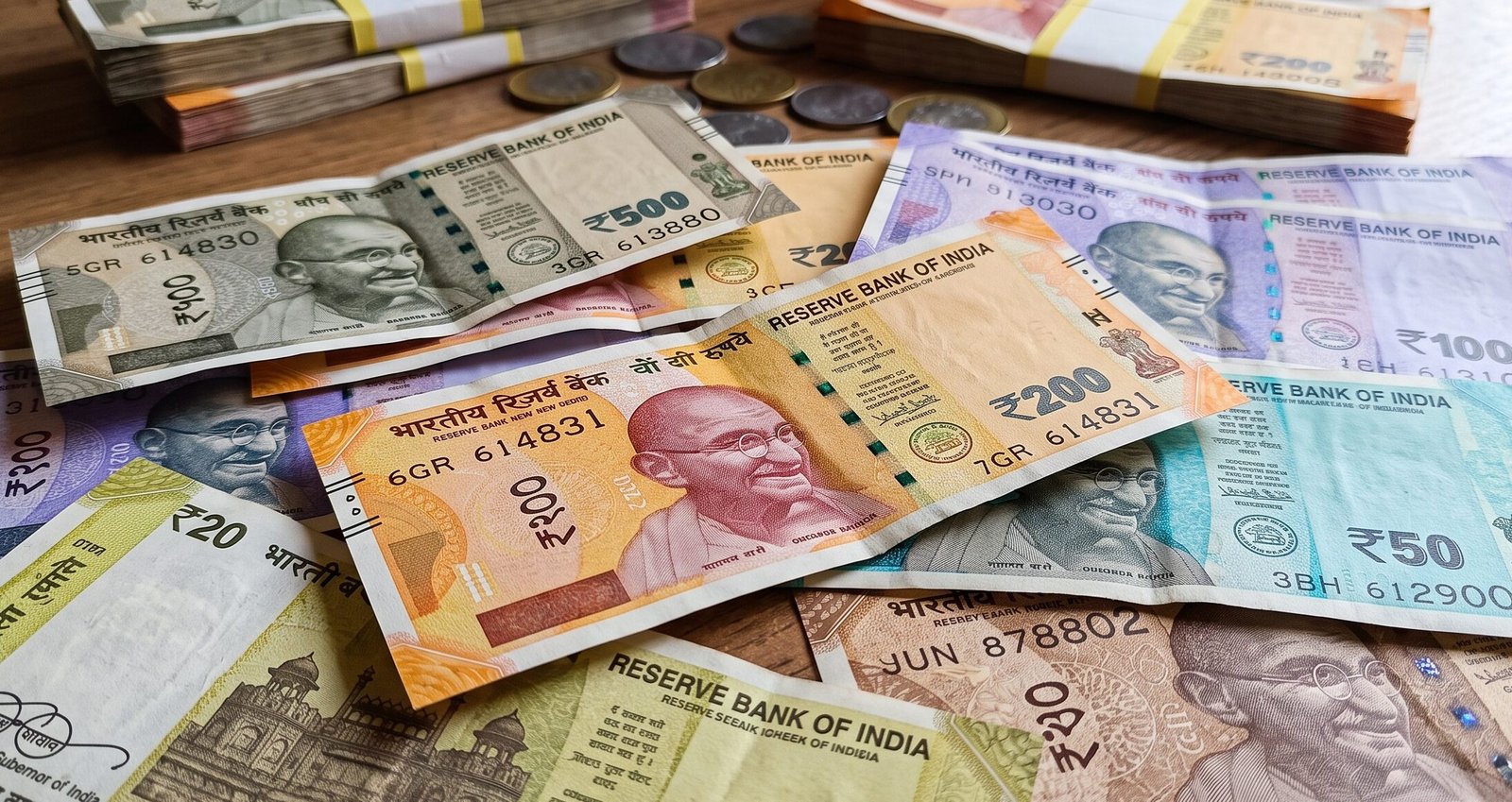
BUSINESS – India’s rupee has regained some ground against the US dollar after the Reserve Bank of India (RBI) introduced measures to support the currency. However, economists warn that the recovery may prove temporary as elevated oil prices, investment outflows and global financial uncertainty continue to weigh on the Indian economy.
According to CNBC’s October 16 report, the rupee recently recovered from a record low of 96.79 per dollar to around the 95-per-dollar level following the central bank’s latest interventions. Although the measures have helped ease immediate pressure, market strategists caution that the currency could weaken further in the coming months. A rate of 100 rupees per dollar cannot be ruled out.
Hanna Luchnikava-Schorsch, head of Asia-Pacific economics at S&P Global Market Intelligence, told CNBC that the RBI’s actions could slow the currency’s depreciation but would not “fully offset the fundamental pressures stemming from elevated oil prices, a wider current account deficit, and a challenging global capital flow environment.”
S&P Global Market Intelligence expects the rupee to trade at approximately 97 per dollar by the end of 2026 and weaken further to 98 by mid-2027. These projections reflect concerns that India’s import costs and external financing needs could remain elevated even if central bank intervention continues.
Read More: Microsoft Plans $10 Billion Gulf Investment Through 2030
The conflict involving Iran has added another layer of uncertainty. Higher energy prices increase the cost of importing oil for India, one of the world’s major energy consumers. A larger oil import bill can widen the country’s current account deficit and increase demand for dollars, placing additional downward pressure on the rupee.
The RBI has responded with steps designed to limit dollar demand and curb speculative positions against the domestic currency. Its interventions have helped stabilize trading in the near term, but analysts say monetary measures cannot permanently eliminate underlying economic pressures.
Foreign investment flows are another concern. When overseas investors withdraw money from Indian financial markets, demand for dollars can rise as funds are converted and moved abroad. Combined with expensive energy imports, these outflows could make sustained currency recovery more difficult.
For Indian businesses, a weaker rupee can increase the cost of imported fuel, equipment and other dollar-priced goods. Consumers may also face higher prices if businesses pass those expenses along. Policymakers therefore face a difficult balance: defending the currency while avoiding measures that unnecessarily restrict economic growth.