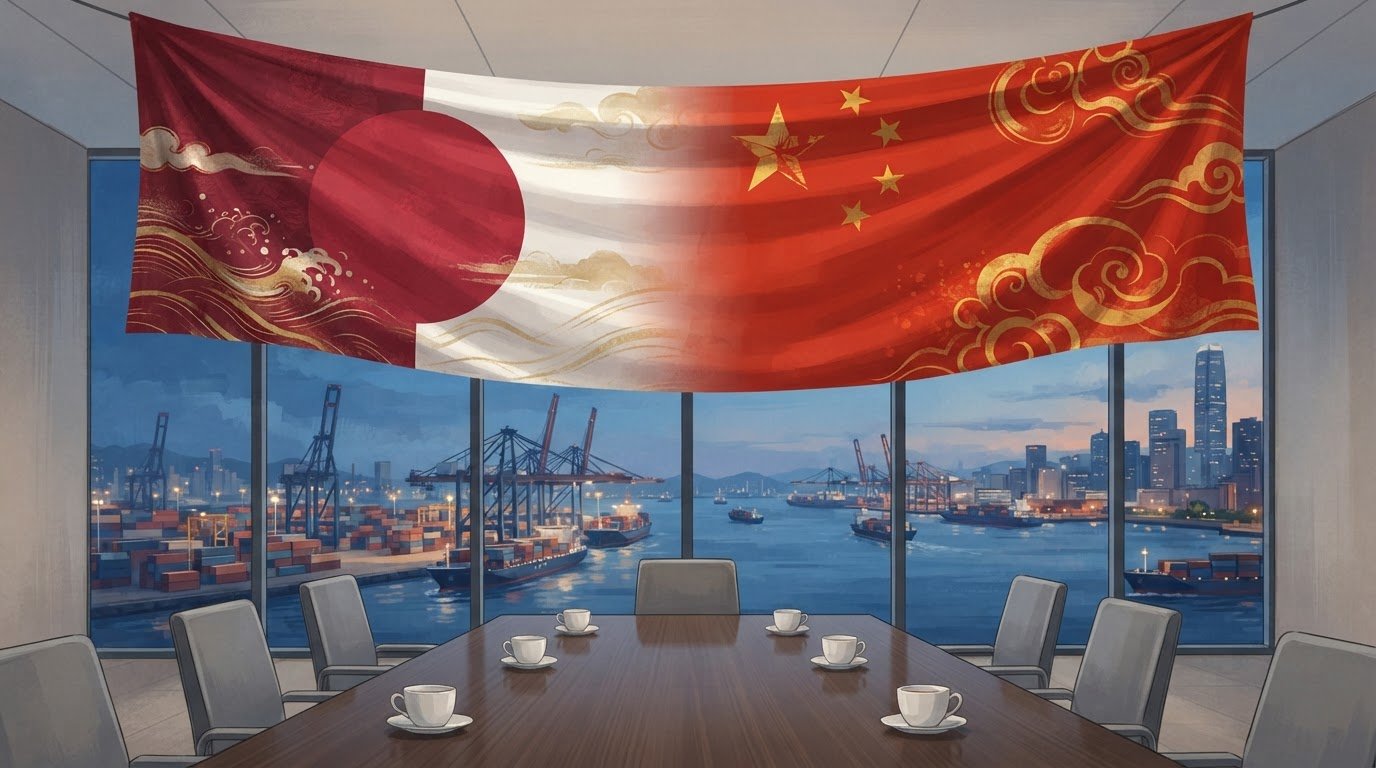
A brief diplomatic greeting between Chinese President Xi Jinping and Japanese Prime Minister Sanae Takaichi at the APEC summit in Shenzhen has done little to resolve a year-long dispute over Taiwan. The two leaders shook hands at a reception on 18 November, according to The Straits Times, but their governments remain divided over comments by Takaichi on the possibility of a regional security crisis.
The encounter illustrates a common feature of diplomacy: ceremonial contact may lower the temperature of public relations without changing underlying positions. For businesses and residents across East Asia, the critical questions concern whether the dispute begins to affect travel, trade, access to sensitive materials and regional security arrangements.
How the disagreement began
The confrontation dates to November 2025, when Takaichi discussed circumstances in which a crisis involving Taiwan could be treated as a threat to Japan’s survival under its security legislation. Beijing viewed the remarks as an unacceptable position on an issue it considers internal. Tokyo has maintained that it seeks a peaceful resolution and has not changed its longstanding official position.
China claims Taiwan as its territory and has not ruled out the use of force. Taiwan’s government rejects Beijing’s claim and operates its own democratic institutions. Japan, geographically close to Taiwan, worries that any serious confrontation could disrupt its security and essential sea routes. These different positions make even carefully worded statements politically consequential.
Over the past year, tensions have spilled into public messaging and economic relations. Reporting has described restrictions affecting Japanese cultural products and critical-material trade, as well as official warnings about travel and safety. The precise scope of any measure should be assessed against current government notices rather than assumed to cover all trade between the countries.
Why an APEC handshake is not a reset
Regional summits create opportunities for officials to exchange greetings even when formal negotiations remain difficult. A handshake does not reveal whether both sides are prepared to adjust policy. Substantive improvement would require meetings with a defined agenda, changes in rhetoric and evidence that disputed measures are being reviewed or removed.
Recent reports indicate Beijing continues to demand that the Japanese leader retract her Taiwan-related comments, while Tokyo has resisted doing so. That disagreement concerns national security principles, not merely diplomatic etiquette. It is therefore unlikely to be resolved by a single public appearance.
The timing is sensitive because APEC is also hosting high-level encounters involving the United States, China and Russia. Washington’s security relationship with Japan and its involvement in regional technology and trade policy add another layer to the diplomatic calculations. But no outcome from those separate discussions should be imputed to the Japan-China relationship without evidence.
The importance for Singapore and ASEAN
China and Japan are major economic partners for Southeast Asia. Sustained friction can complicate investment decisions, tourism expectations and the management of supply chains that rely on both economies. The extent of any impact depends on which measures are implemented and how long they persist; broad claims of regional economic damage would require data not yet established by this episode.
ASEAN countries also have an interest in preserving predictable channels for dialogue over Taiwan, given their dependence on maritime trade and regional stability. That does not mean ASEAN members share identical security positions or intend to mediate the dispute.
For now, the most reliable reading of the APEC greeting is narrow: senior leaders interacted publicly while serious differences remained. The next important evidence will be formal diplomatic engagement and any verifiable changes to restrictions or official positions. The spectacle may make a headline, but policy is what will determine whether relations improve.
Sources and further reading
Sources: The Straits Times: APEC reception, 18 November; CNA: Japan-China diplomatic exchanges; The Japan Times: background to the rift.