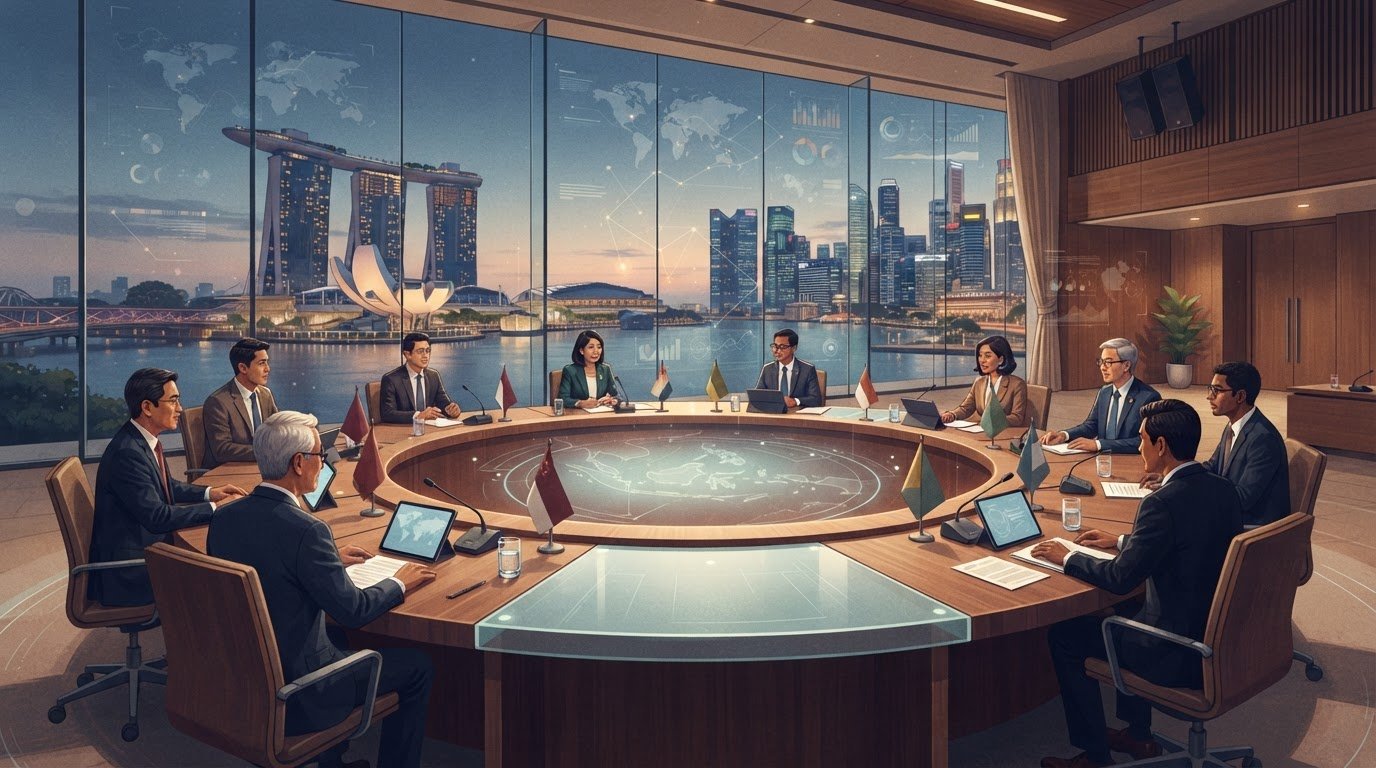
Singapore will take the rotating chair of ASEAN in 2027 with a promise to deepen economic integration and strengthen the region’s relationships beyond Southeast Asia. The Philippines formally handed the chairmanship over at the close of the 49th ASEAN Summit in Manila on 17 November. For regional governments and businesses, the handover signals a fresh opportunity to tackle familiar barriers in trade, energy and digital cooperation — but not a transfer of authority to Singapore over other members.
Prime Minister Lawrence Wong has set “Deeper Integration, Wider Partnerships” as Singapore’s chairmanship theme. The language speaks to an increasingly fragmented global economy, where Southeast Asian countries must maintain ties with both major powers and pursue their own commercial interests. The challenge will be to turn that diplomatic formulation into measures members can implement.
What integration would look like in practice
ASEAN is often described as a large combined market, yet firms still navigate different regulations, border procedures and technical standards when expanding from one member economy to another. Progress towards a more connected regional marketplace could lower friction for exporters and smaller businesses. However, a chairmanship speech does not itself change tariff schedules, data rules or licensing requirements.
Singapore has highlighted cooperation in finance, digital technologies and energy. Cross-border digital services can require compatible standards for identity, payments and data protection. Regional electricity trading, meanwhile, depends on physical transmission links, commercial arrangements and the willingness of governments to manage energy-security risks together.
These are not purely technical obstacles. Countries differ in income levels, regulatory capacity, electricity systems and industrial priorities. An initiative that benefits a highly connected financial centre may need modifications before it can serve a smaller developing economy. Finding workable compromises is therefore central to ASEAN’s consensus-based approach.
Why external partnerships are equally important
The second part of the theme recognises that Southeast Asia cannot insulate itself from global economic shifts. Investment, technology, tourism and security cooperation involve partners including China, the United States, Japan, India, Australia and the European Union. ASEAN’s value to those partners partly depends on its ability to act as a credible convening platform without being absorbed into one geopolitical camp.
During the Manila meetings, leaders discussed the digital and green economies, energy resilience and cooperation with dialogue partners, according to Singapore’s Prime Minister’s Office. The Philippines said commitments made during its 2026 chairmanship, including work on migrant protection, maritime cooperation and online safety, should carry into the next year.
That continuity matters. A rotating chair can set priorities and organise discussions, but many regional projects depend on work that extends beyond a single year. Governments and businesses should judge the new chairmanship by whether negotiations advance, pilots begin and existing commitments receive follow-through.
What to watch in 2027
ASEAN marks its 60th anniversary in 2027, giving the chair an unusually visible moment. Specific indicators of progress could include more concrete steps towards regional power connectivity, interoperable digital systems and improvements in cross-border business procedures. The South China Sea and wider strategic tensions will also test the group’s ability to maintain a common diplomatic position.
No single ASEAN country can guarantee those outcomes. Singapore can convene, propose and broker discussions, while decisions remain with the member governments collectively. It will also have to balance ambitious economic language with the slower reality of negotiation and implementation.
For Singapore, deeper links offer potential opportunities for investment and firms operating across the region. For its neighbours, the test is whether integration becomes tangible and inclusive. The ceremonial handover is complete; the substantive record of the chairmanship will emerge in the agreements and actions that follow.
Sources and further reading
Sources: Singapore PMO: ASEAN summit and 2027 theme; Philippine News Agency: handover; CNA: Wong’s integration priorities.