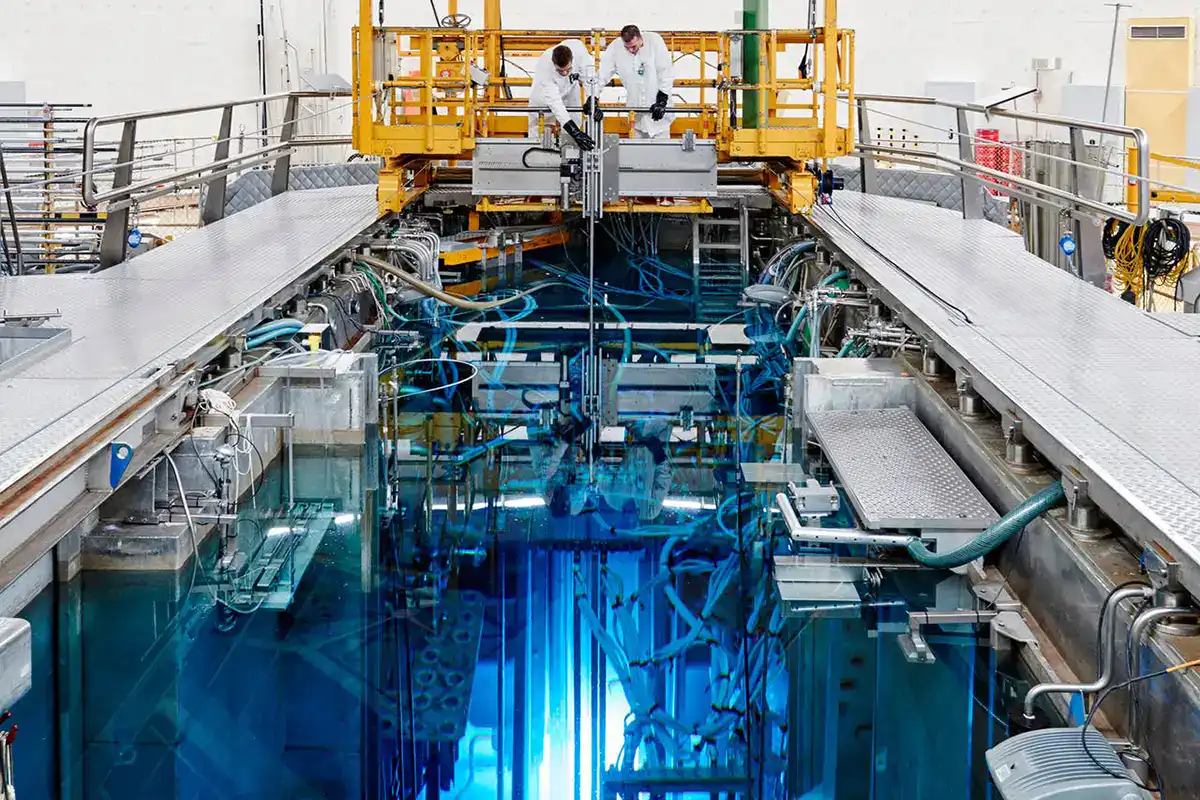
TECH – Deep beneath the vast and isolated landscape of China’s Gobi Desert, a groundbreaking nuclear project is drawing global attention. According to AutoNoción, China has successfully advanced the development of the world’s first operational thorium molten salt reactor, a technology many scientists have viewed as one of the most promising alternatives to conventional uranium-powered nuclear plants. The achievement places China at the forefront of a field that had remained largely experimental for decades.
Unlike traditional nuclear reactors that rely on uranium and water cooling systems, this reactor uses thorium dissolved in molten salt. Experts believe the design offers several advantages, including improved safety, lower operating pressure, and significantly reduced production of long-lived radioactive waste. The experimental facility currently generates about 2 megawatts of thermal power, serving primarily as a research platform rather than a commercial power station.
One of the project’s most remarkable accomplishments was the successful refueling of the reactor while it continued operating, a milestone rarely achieved in nuclear engineering. According to reports, this breakthrough demonstrates the stability of molten salt reactor technology and could pave the way for larger commercial reactors in the future. Chinese researchers reportedly plan to construct a much larger demonstration reactor before eventually scaling the technology for wider energy production.
Read More: Robot Dog Thrives in Extreme Cold at Minus 22 Degrees
The project also revives an idea that was first explored in the United States during the 1960s before research gradually shifted toward uranium-based reactors. Speaking about China’s achievement, the project’s chief scientist, Xu Hongjie, remarked, “The US left its research publicly available, waiting for the right successor.” He then added a memorable comparison: “Rabbits sometimes make mistakes or grow lazy. That’s when the tortoise seizes its chance.” His comments reflected China’s determination to continue developing technologies that others had set aside.
Thorium itself is considerably more abundant than uranium and is generally regarded as less suitable for producing nuclear weapons, making it an attractive option for future civilian energy systems. While significant engineering challenges remain before widespread commercialization becomes possible, researchers believe the technology could help provide cleaner, safer, and more sustainable nuclear energy for decades to come. Looking ahead, as highlighted by AutoNoción and supported by additional reporting, China’s steady progress in the Gobi Desert signals that thorium reactors may become an increasingly important part of the global search for reliable low-carbon energy solutions.