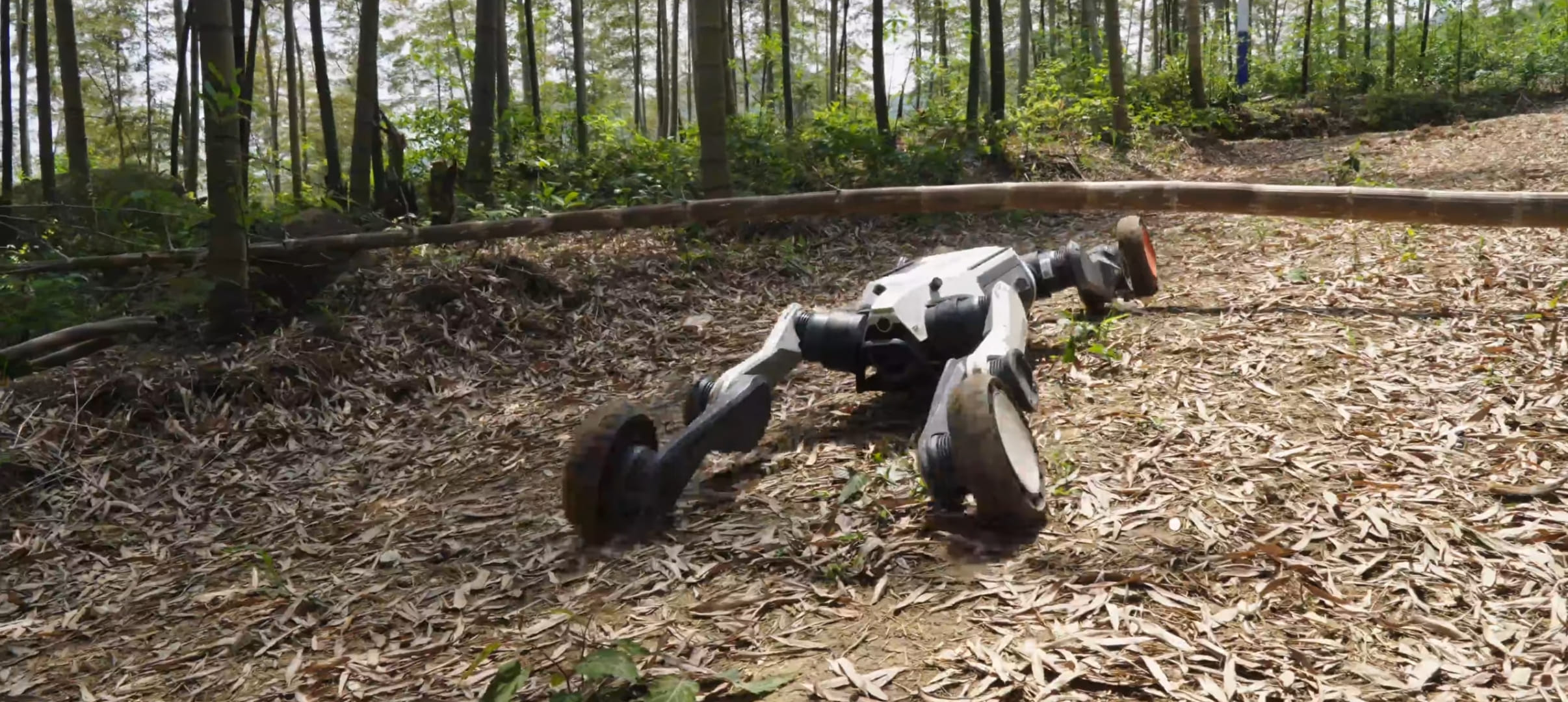
TECH – Chinese robotics company Deep Robotics has unveiled a new version of its quadruped robot capable of operating in some of the harshest environments on Earth, demonstrating reliable performance in temperatures as low as -22°F (-30°C). According to a report by Interesting Engineering, the robotic dog was recently tested in freezing outdoor conditions, where it successfully navigated snow-covered terrain, icy surfaces, and rugged landscapes that would challenge many conventional machines.
The company showcased footage of the robot moving confidently across deep snow while maintaining balance and stability despite the extreme weather. Engineers designed the machine to withstand low temperatures that can often interfere with batteries, sensors, motors, and electronic systems. Such conditions typically reduce the efficiency of robotic equipment, making cold-weather performance a significant technical challenge.
Read More: Quantum Theory May Work Without Complex Numbers, Study Finds
According to Interesting Engineering, the robot incorporates advanced mobility systems and intelligent control algorithms that allow it to adapt to changing terrain in real time. The machine continuously analyzes its surroundings and adjusts its gait accordingly, helping it maintain traction even on slippery surfaces. During testing, the robot was seen climbing slopes, crossing uneven ground, and recovering quickly from disturbances that might otherwise cause a fall.
Deep Robotics believes the technology could be valuable for a wide range of applications. Potential uses include industrial inspections, emergency response operations, scientific research missions, and infrastructure monitoring in remote regions where harsh weather conditions can make human access difficult or dangerous. By deploying robotic systems in these environments, organizations may be able to improve safety while reducing operational costs.
The demonstration also reflects the rapid pace of development in the robotics industry. Companies around the world are investing heavily in legged robots capable of operating beyond controlled laboratory settings. Unlike wheeled machines, quadruped robots can traverse obstacles, rough terrain, and natural environments with greater flexibility, making them suitable for tasks in locations where traditional vehicles struggle.
Read More: Europe Unveils Ruta Block 3 Deep-Strike Missile System
One company representative highlighted the importance of environmental adaptability, explaining that robots intended for real-world deployment must be capable of functioning reliably under challenging conditions. The successful cold-weather trials suggest that robotic systems are becoming increasingly resilient and practical for field operations.
Taken in a broader context, the achievement illustrates how advances in artificial intelligence, mobility engineering, and battery technology are pushing robots closer to becoming dependable partners in industries that operate far beyond the comfort of climate-controlled environments.