TECH – High above a field in Yibin, Sichuan, a new kind of wind machine not a tower with spinning blades but a giant helium-filled airship, rose through the clouds and sent clean energy back down to earth. In a test that feels like science fiction made real, China’s world’s first megawatt-level airborne wind system climbed to about 6,560 feet and successfully delivered electricity to the grid, generating 385 kilowatt-hours during its maiden flight, according to Interesting Engineering’s report.
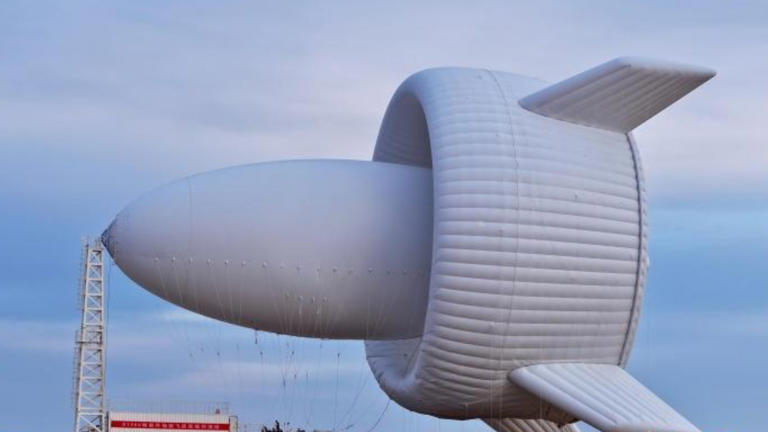
This floating marvel, known as the S2000 Stratosphere Airborne Wind Energy System (SAWES), resembles a futuristic dirigible more than a conventional turbine, with a vast envelope tethered to the ground and an integrated power-generation mechanism. Measuring roughly 197 feet long by 131 feet wide and tall, it harnesses stronger and steadier winds high above the surface — a realm where traditional turbines can’t easily reach. When it reached its target altitude, the machine didn’t just hover; it began feeding electricity straight into the local power network, marking a milestone in airborne wind energy.
Behind this feat is Beijing Linyi Yunchuan Energy Technology, which sees this airborne generator as a new frontier in clean power. Weng Hanke, the company’s chief technology officer, explained how the system uses helium to lift the lightweight wind arrays into the upper winds, where they capture energy that would otherwise slip past grounded turbines. The tether that carries the generated electricity also doubles as a stabilizing anchor — a lifeline between sky and soil.
Read More: Kawasaki’s Rideable Robot Horse Corleo Heads for Production
Weng spoke to the broader vision for the technology, describing two promising roles for the airship “One is for off-grid settings like border outposts, where it can serve as a relatively stable conventional energy source. The other is to complement traditional ground-based wind power systems, creating a three-dimensional approach to energy supply.” The language paints a picture of a layered energy grid that doesn’t just spread across landscapes but rises skyward as well.
The design cleverly boosts efficiency with a ducted airflow system formed between the main envelope and a ring-shaped wing. This structure guides and compresses wind before it meets the turbines — 12 in total — capturing air currents with a kind of aerodynamic embrace. Weng put it simply, the geometry “wraps the wind from all sides,” drawing more energy into every rotation.
With a maximum rated capacity of up to 3 megawatts, this airborne system may still be in its infancy, but pilots for coastal cities and highland regions are already lining up. Meanwhile, production of specialized materials to scale the technology is gearing up in Zhejiang Province. That said, the company candidly acknowledges that long-term reliability, safety and costs remain areas for future proofing, even as this airborne windmill points toward a sky-kissed chapter in renewable energy.