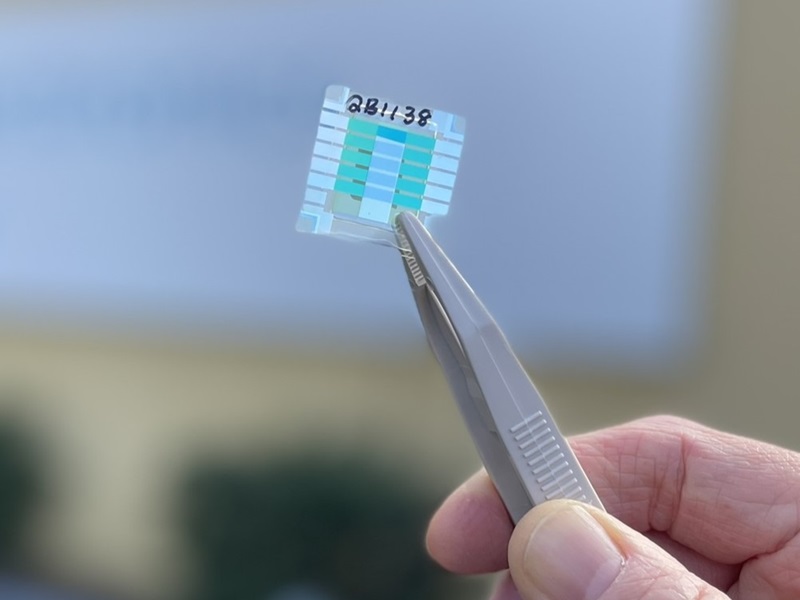
TECH – A new chapter in energy technology is quickly unfolding, one that feels almost poetic in its defiance of conventional limits. Scientists have unveiled what is being described as the world’s first functional prototype of a quantum battery, a device that not only stores energy but charges faster as it grows larger. According to Interesting Engineering, this breakthrough challenges one of the most familiar frustrations of modern life: the longer you wait, the bigger the battery, the slower the charge.
Unlike traditional batteries that rely on chemical reactions, this new system harnesses the strange, almost magical rules of quantum mechanics—particularly phenomena like superposition and collective interaction between particles. In conventional devices, adding more cells usually means longer charging times. In contrast, researchers demonstrated that quantum batteries behave in the opposite way: the more cells they contain, the faster they charge, thanks to what scientists call a “collective effect.”
The prototype, developed by a team of Australian researchers, is the first to successfully complete the full energy cycle—charging, storing, and discharging power. As one researcher explained in findings cited by Interesting Engineering, the device proves that “a quantum battery can go through a full cycle,” marking a critical step beyond earlier theoretical models.
Read More: China’s Robot Horse by Deep Robotics Redefines Mobility and AI,
Even more striking is the speed involved. The battery can charge in extremely short timeframes—measured in femtoseconds—while maintaining energy long enough to demonstrate practical functionality, though still far from real-world use. Its current storage capacity remains tiny, only a few billion electron volts, meaning it cannot yet power everyday devices.
Still, the implications stretch far beyond the lab. Scientists envision future applications ranging from powering quantum computers to enabling wireless energy transfer over distance. One researcher noted that the goal is to “extend storage time,” hinting at a future where devices could charge almost instantly and hold that energy reliably.
Seen from another angle, this innovation feels like a quiet rebellion against time itself. If energy can be stored faster as systems grow larger, the entire logic of battery design could be rewritten. While commercial applications remain distant, the trajectory is clear: a future where charging may no longer be measured in minutes or hours, but in fleeting moments almost too small to perceive.