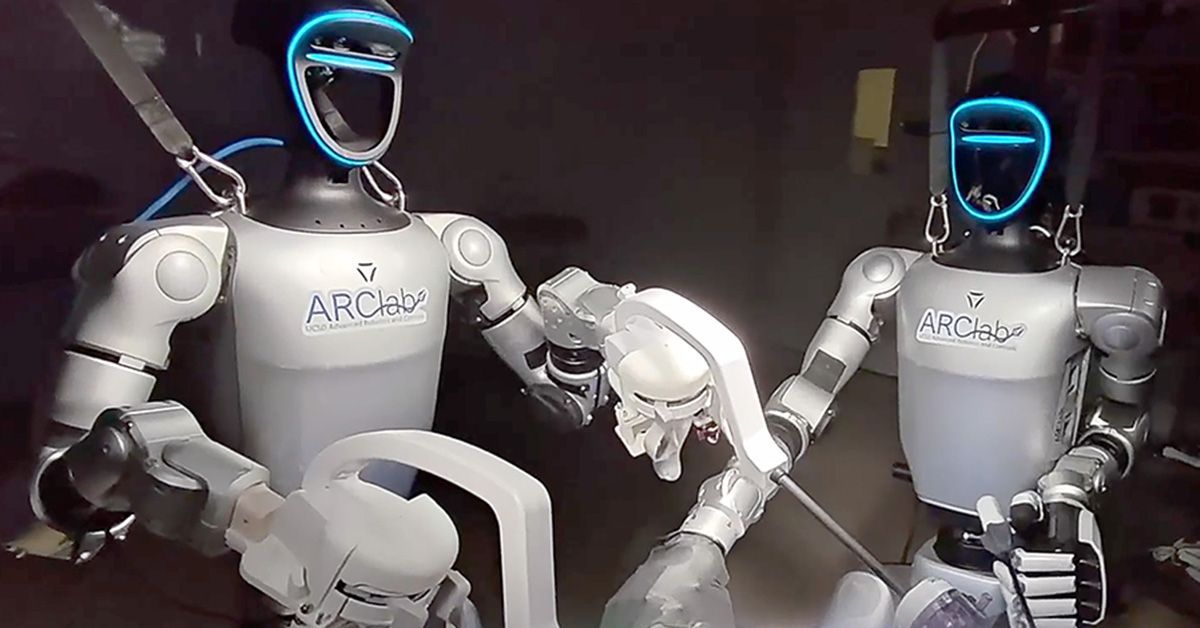
TECH – A major milestone in medical robotics has been achieved as humanoid robots successfully carried out a live surgical procedure under the direct control of a human surgeon. According to New Atlas, the demonstration marks the first time teleoperated humanoid robots have been used in a real surgical setting, highlighting the growing potential of advanced robotics to transform healthcare and expand access to specialized medical expertise across long distances.
Unlike conventional surgical robots, which are typically designed for specific procedures and remain fixed beside the operating table, the new humanoid system closely resembles the movements of a human medical professional. Equipped with two dexterous robotic arms, articulated joints, high-definition cameras, and precision force feedback technology, the robots are capable of manipulating surgical instruments with remarkable accuracy while replicating the surgeon’s hand movements in real time.
During the operation, the surgeon controlled the robots remotely through an advanced teleoperation interface that translated every movement into precise actions inside the operating room. According to New Atlas, the system also provided visual and tactile feedback, allowing the operator to feel resistance while performing delicate surgical tasks. This capability helps improve precision and reduces the risk of accidental tissue damage, making remote procedures safer and more effective.
Read More: New Fluidic Tech Boosts Soft Robots and Wearables’ Power
The successful operation demonstrates how humanoid robots could eventually support healthcare systems facing shortages of highly trained surgeons, particularly in remote or underserved regions. Instead of requiring specialists to travel long distances, experienced surgeons could perform complex procedures from centralized medical centers while robotic assistants execute their commands with exceptional precision.
Researchers involved in the project emphasized that the achievement represents an important technological milestone rather than a replacement for human doctors. The original report did not include direct dialogue from the surgical team, but the researchers explained that future development will focus on improving responsiveness, reducing communication delays, and expanding the range of procedures the system can perform. They also expect artificial intelligence to play an increasingly important role by assisting with routine tasks while leaving critical medical decisions entirely under human supervision.
Looking ahead, as reported by New Atlas, the breakthrough illustrates how robotics, telecommunications, and medical engineering are converging to reshape modern surgery. Although widespread clinical adoption will require additional testing, regulatory approval, and extensive physician training, the successful live demonstration provides compelling evidence that teleoperated humanoid robots may one day enable expert surgical care to reach patients regardless of geographical distance, helping bridge critical gaps in global healthcare access.