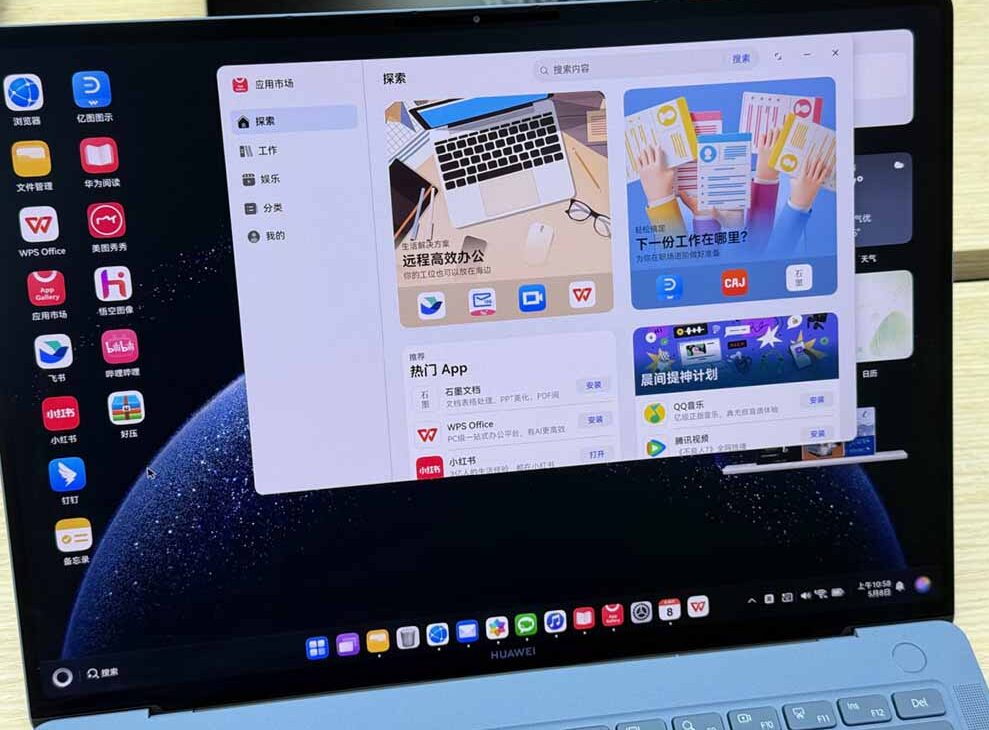
TECH – Huawei has officially introduced its first laptop powered by HarmonyOS, marking a significant shift in its software strategy. According to a report by DetikInet, the unveiling follows the expiration of Huawei’s Windows license in March 2025, prompting the company to develop its own operating system for PCs.
The new laptop, which remains unnamed, operates on HarmonyOS 5, also known as HarmonyOS Next. This version represents a complete departure from Android and Linux foundations, featuring a custom microkernel designed for enhanced performance and security. Notably, HarmonyOS Next does not support Android or Windows applications, instead relying on its own ecosystem of native apps.
A standout feature of the HarmonyOS laptop is the integration of Huawei’s AI assistant, Celia. Celia offers capabilities such as creating presentation slides, summarizing meeting notes, and retrieving information from stored documents, aiming to boost productivity for users.
The laptop also supports mobile applications designed for HarmonyOS smartphones, including social media platforms like RedNote, video streaming services like Bilibili, and collaboration tools such as ByteDance’s Feishu. This cross-device compatibility underscores Huawei’s commitment to a unified ecosystem across its product range.
Read More: US-China Chip War Threatens Nvidia’s Future
Huawei plans to release the HarmonyOS-powered laptop in China on May 19, 2025. The company has been developing HarmonyOS since 2015, initially for smartphones and tablets. The expansion to laptops signifies Huawei’s efforts to reduce reliance on foreign software and establish greater control over its technology stack.
The introduction of HarmonyOS laptops is part of Huawei’s broader strategy to create an integrated ecosystem, enabling seamless interaction between devices. With HarmonyOS, users can expect a consistent experience across smartphones, tablets, and now, laptops.
This move also reflects Huawei’s response to geopolitical challenges, particularly restrictions imposed by the U.S. government. By developing its own operating system, Huawei aims to mitigate the impact of such constraints and continue offering innovative products to its customers.
As Huawei continues to invest in HarmonyOS, the company is encouraging developers to create native applications for the platform. With a growing number of apps being ported to HarmonyOS, Huawei is positioning itself to compete more effectively in the global tech market.
Source: DetikINET