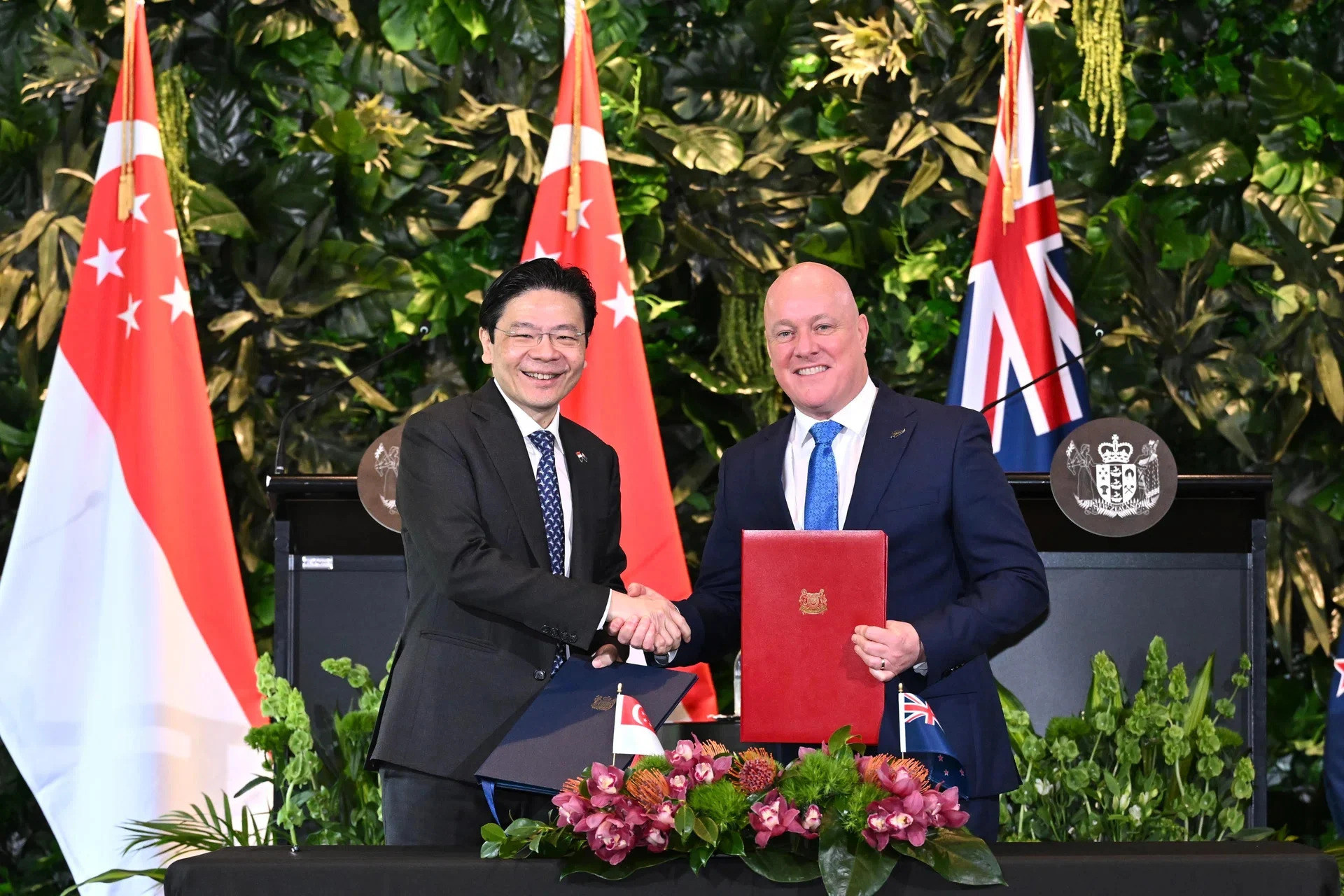
SINGAPORE – In a world where supply chains can snap like brittle threads under pressure, Singapore and New Zealand have chosen a different path—one built on trust, cooperation, and a quiet refusal to panic. The two nations have signed what is being described as the world’s first legally binding bilateral agreement to ensure the uninterrupted flow of essential goods, even during times of crisis, as reported by Channel News Asia.
The pact, formally known as the Agreement on Trade in Essential Supplies, covers critical items such as food, fuel, healthcare products, and construction materials. These are not luxuries; they are lifelines. Under the agreement, both countries commit to avoiding unnecessary export restrictions, a move designed to prevent the kind of shortages that often ripple through global markets when uncertainty strikes.
The signing took place during the Singapore–New Zealand Annual Leaders’ Meeting, witnessed by Prime Minister Lawrence Wong and his counterpart Christopher Luxon. Their presence underscored the weight of the moment, as both nations signaled a shared belief that resilience is not built in isolation but in partnership.
Read More: Singapore Airlines Flight Delayed After Catering Truck Hit
Speaking at a joint press conference, Wong emphasized the deeper meaning behind the agreement, stating, “It means that even in times of crisis or shortages, we will keep essential goods flowing… we will not shut each other out.” His words carried a gentle defiance against the instinct many countries feel when resources tighten—turning inward. He added, “When that happens, supply chains break down and everyone ends up worse off.”
Luxon echoed this sentiment with a tone of reassurance, noting that the agreement reflects a relationship where both countries “have each other’s backs.” The phrase feels simple, almost casual, yet it captures a profound commitment between two trade-dependent economies navigating an increasingly uncertain global landscape.
Beyond promises, the agreement also establishes a practical framework. Both sides will cooperate closely by sharing information, consulting one another during disruptions, and facilitating the movement of goods to maintain stability for businesses and consumers alike.