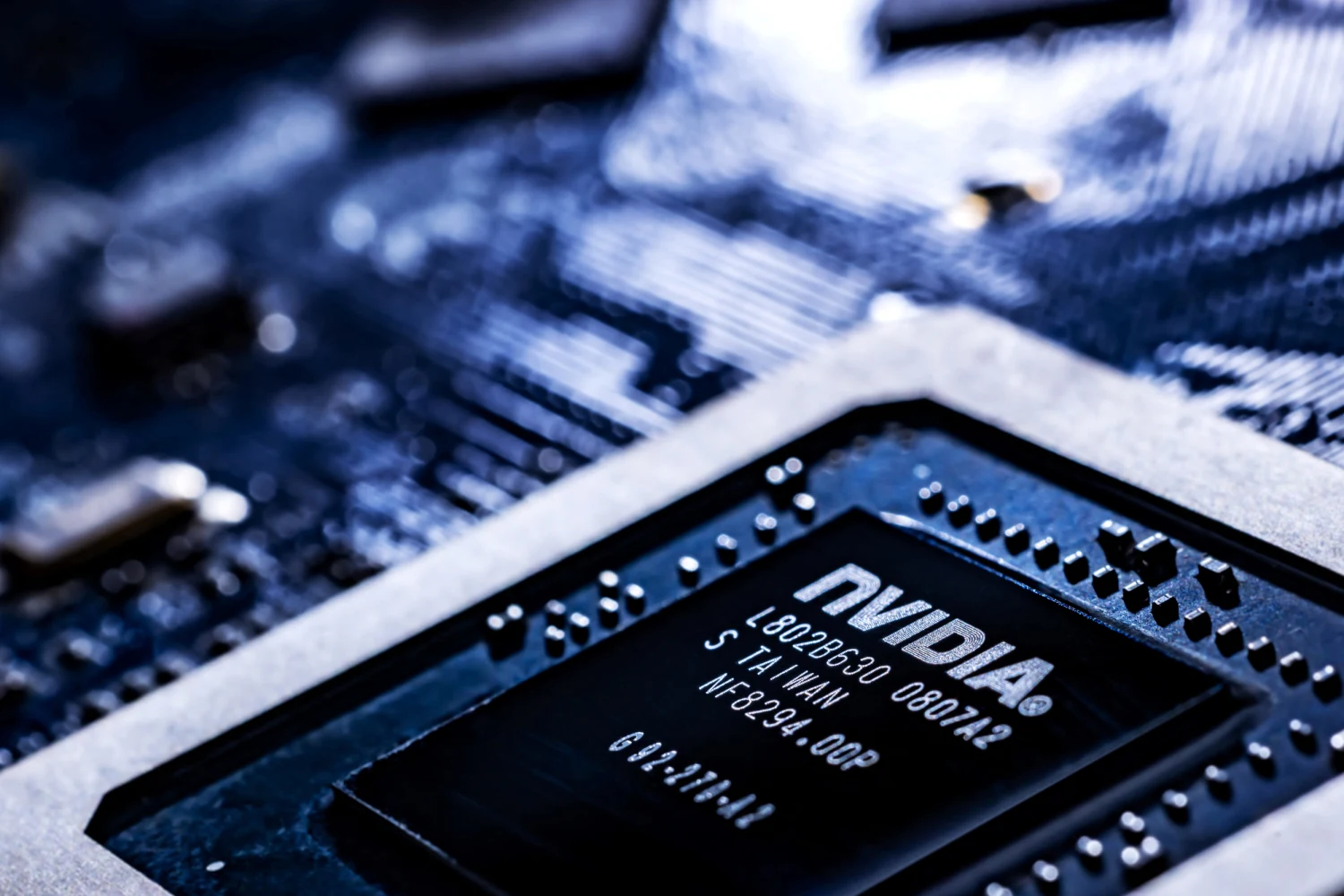
INTERNATIONAL – The escalating technology conflict between the United States and China has intensified with Washington’s latest export restrictions on advanced AI chips, posing significant challenges for Nvidia. The U.S. government has expanded its licensing requirements, effectively barring the sale of high-performance chips like the A100, H100, and even the China-specific A800 to Chinese entities without special approval.
Nvidia’s Chief Financial Officer, Colette Kress, expressed concerns over the long-term implications of these restrictions, stating, “Over the long term, restrictions prohibiting the sale of our data centre graphic processing units to China… would result in a permanent loss of opportunities for the US industry to compete and lead in one of the world’s largest markets.”
The impact of these measures is already evident. Nvidia’s stock experienced a 1.8% decline following the announcement. While the company has attempted to navigate previous restrictions by introducing the A800 chip tailored for the Chinese market, the new rules threaten even these adaptations.
Read More: Huawei Challenges Nvidia Amid US Export Bans
In response to the tightening U.S. export controls, Chinese tech giant Huawei has accelerated the development and deployment of its own AI chips. The company recently unveiled the CloudMatrix 384 AI chip cluster, which, despite higher energy consumption and operational costs, offers a domestic alternative to Nvidia’s offerings.
The U.S. government’s rationale for these restrictions centers on national security concerns, aiming to prevent China’s military from leveraging advanced AI capabilities. Commerce Secretary Gina Raimondo emphasized the potential risks, stating, “AI can do tremendous and profound harm if it’s in the wrong hands and in the wrong militaries.”
As the U.S.-China tech rivalry intensifies, Nvidia faces the challenge of adapting to a rapidly shifting landscape. The company’s future in one of its largest markets remains uncertain, with broader implications for the global semiconductor industry.
Source: CNBC