INTERNATIONAL – Indonesia’s parliament has unanimously approved amendment to the nation’s military law, permitting active-duty military officers to occupy a broader range of civilian government positions without resigning from service. This legislative change has ignited concerns among civil society groups and pro-democracy activists, who fear a potential regression to the authoritarian practices of the past.
The revised law extends the scope of roles that misitions within the Attorney General’s Office, the Supreme Court, and the Coordinating Ministry for Political and Security Affairs. Previously, military officers were limited to roles in the defense ministry and the president’s office. Critics argue that this expansion blurs the lines between military and civilian domains, reminiscent of the era under former President Suharto, when the military exerted significant influence over civilian affairs.
Defense Minister Sjafrie Sjamsoeddin defended the amendments, asserting that they are essential for the military to adapt to evolving geopolitical and technological landscapes. He emphasized that the integration of military expertise into various government sectors is crucial for addressing contemporary challenges.
Read More: International Escalation in Gaza, Global Reactions Intensify
However, human rights organizations and political analysts caution that this legislative shift could undermine democratic principles and lead to potential abuses of power. They highlight that the rapid passage of the law, with minimal public consultation, raises transparency and accountability concerns. Moreover, the law increases the retirement age for officers, which some analysts believe could impact the military’s professionalism and delay leadership renewal.
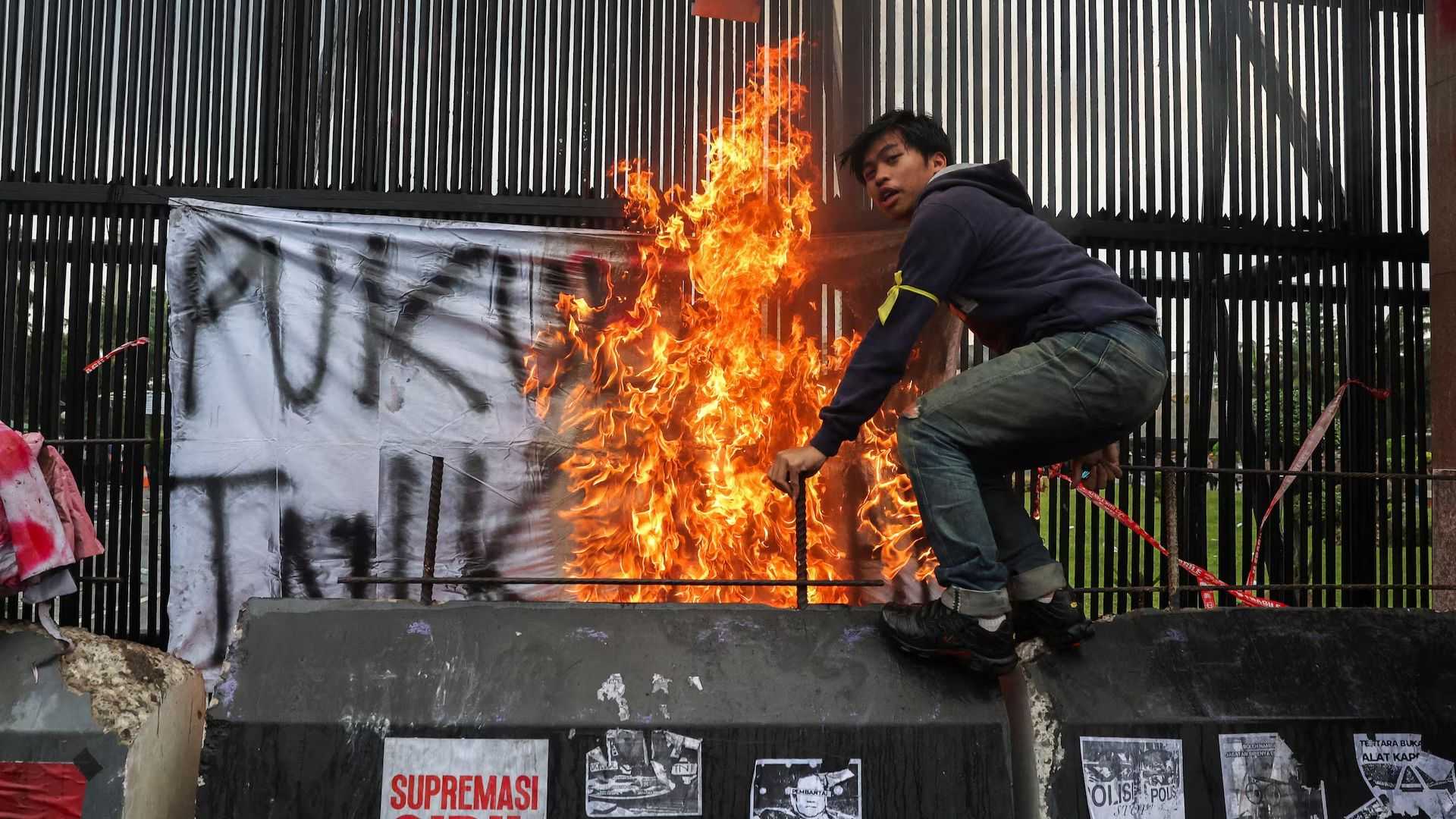
The law’s passage has sparked public outcry, with hundreds of students and activists staging protests outside the parliamentary building in Jakarta. Demonstrators called for the military’s withdrawal from civilian roles, chanting slogans advocating for the preservation of democratic values and civilian supremacy over the military. Despite these protests, the government maintains that the amendments are in line with democratic principles and necessary for national development. The administration argues that military involvement in certain civilian sectors can enhance efficiency and bolster national security.
The swift enactment of this law, coupled with limited public discourse, has intensified fears of a potential shift towards increased militarization in Indonesia’s governance. Observers are concerned that such a move could erode the democratic reforms achieved since the end of Suharto’s regime in 1998.
As Indonesia navigates this contentious transition, the balance between military involvement in governance and the preservation of democratic integrity remains a focal point of national debate. The long-term implications of these legal amendments will depend on their implementation and the government’s commitment to upholding democratic norms.