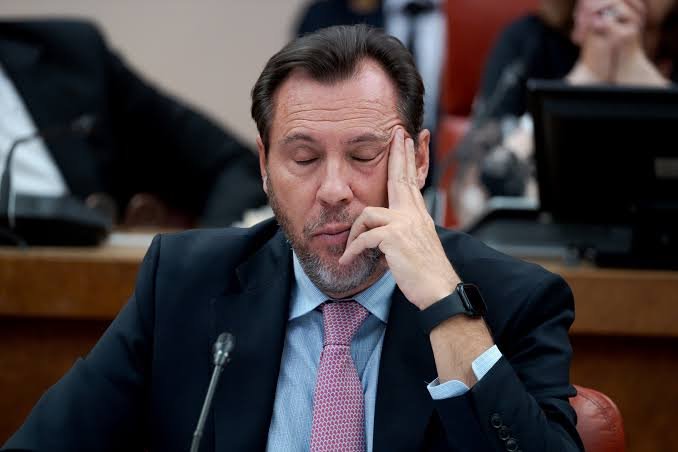
INTERNATIONAL – Spain’s Transport Minister Óscar Puente has announced his resignation following two deadly railway accidents within a single year, including a devastating high-speed train collision that killed 69 people and injured more than 200 others. His departure comes amid mounting public anger, political pressure, and growing questions about the safety of the country’s railway infrastructure. According to CNN, the announcement was made on November 3, 2026, six days after the latest disaster near Urda, in central Spain.
Puente announced his decision while addressing lawmakers in Madrid, explaining that remaining in office would be inappropriate given the severity of the incidents. “I made the decision about my future in the first few minutes after the tragedy,” he said. He added, “A transport minister in a country like Spain cannot remain in office after two accidents of this severity in less than a year, however different they may be and regardless of whether or not they bear direct responsibility for them.”
The October 28 disaster occurred when a high-speed train operated by Spain’s state-owned Renfe collided with a stationary train belonging to private operator Iryo. Preliminary investigations indicated that a failure in the railway’s automatic safety and signalling system contributed to the sequence of events. Despite the system malfunction, controllers authorised the Renfe train to continue travelling along the Madrid-Seville route, where the stationary train remained ahead.
The collision reportedly occurred at an estimated speed of between 160 and 200 kilometres per hour, causing extensive damage to both trains. Authorities confirmed 69 fatalities, while more than 200 people suffered injuries. Investigators are examining the technical failures and decisions made by railway personnel before the crash.
Read More: Record Arab Voter Turnout Threatens Netanyahu’s Grip on Power
The tragedy was particularly alarming because another deadly accident had occurred in January near Adamuz, killing 46 people. Both disasters involved the Madrid-Seville railway corridor, raising concerns about whether maintenance, staffing, and safety systems have kept pace with increasing passenger traffic.
Puente had previously faced criticism for suggesting that a controller’s decision contributed to the October collision. Railway unions argued that focusing on individual mistakes could overlook deeper institutional problems, including excessive workloads and deteriorating working conditions.
The growing controversy has also intensified pressure on Prime Minister Pedro Sánchez’s government, particularly with Spain’s early parliamentary elections scheduled for November 29.
Earlier on Tuesday, Puente outlined several emergency measures intended to restore confidence in the railway network. These include reducing train services on the affected route, improving control-centre staffing, and accelerating the installation of the European Rail Traffic Management System (ERTMS).
The government also plans to introduce artificial intelligence software capable of monitoring communications between train drivers and controllers, identifying unusual situations, and helping prevent human errors. Passenger compensation will be increased, with insurance payouts doubled for affected families.
Prime Minister Sánchez praised Puente’s decision, describing his departure as an act of political responsibility and respect for the victims. Meanwhile, opposition parties and railway unions continue demanding stronger accountability and lasting improvements to Spain’s transport infrastructure.