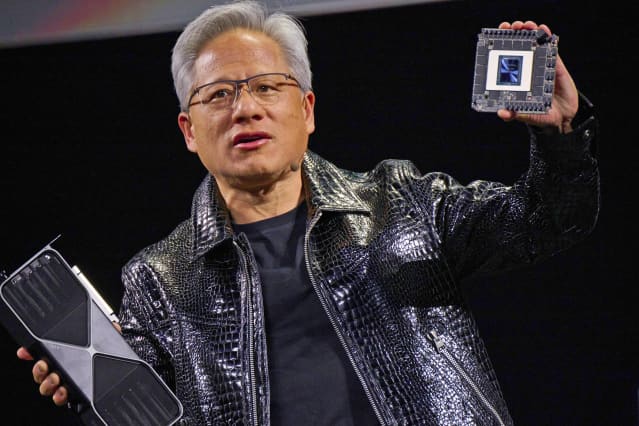
TECH – For nearly three decades, Nvidia built its reputation on powering the world’s gaming rigs, but 2026 is shaping up to be an unusual year. According to a report carried by Vietnam.vn, the company is expected to go an entire year without releasing a new mainstream gaming GPU, marking the first such pause since the 1990s. The shift reflects a deeper change inside the tech giant, one driven less by graphics innovation and more by the economics of artificial intelligence.
The report, citing industry sources, says Nvidia has temporarily shelved its plans for new mainstream gaming graphics cards. The decision was not caused by technical limitations, but by a broader shortage of DRAM and graphics memory across the semiconductor sector. With supply constrained, the company has chosen to divert precious memory resources toward AI chips, which currently deliver far higher financial returns than gaming hardware.
Read More: Unitree G1 Humanoid Sets Record Snow Walk in Extreme Cold
One casualty of this strategy is a project known internally as “Kicker,” an updated version of the RTX 50 series. Although the design was reportedly completed, it has been postponed indefinitely because the cost of memory makes mass production less viable. At the same time, manufacturing of the existing RTX 50 lineup has been reduced, a move that is pushing up prices and making gaming cards harder to find at official retail levels.
The slowdown may stretch even further. Sources suggest that the next generation of GPUs, code-named Rubin or RTX 60, could be delayed until late 2027. If that happens, it would create the longest gap between gaming GPU generations in the company’s history.
Financial data underscores the transformation. Nvidia’s data center division has generated more than US$51 billion in revenue, while gaming now accounts for less than 8 percent of the company’s total earnings. In effect, the firm that once thrived on gamers is evolving into what observers describe as an “AI empire,” where gaming is no longer the main engine but a legacy segment.