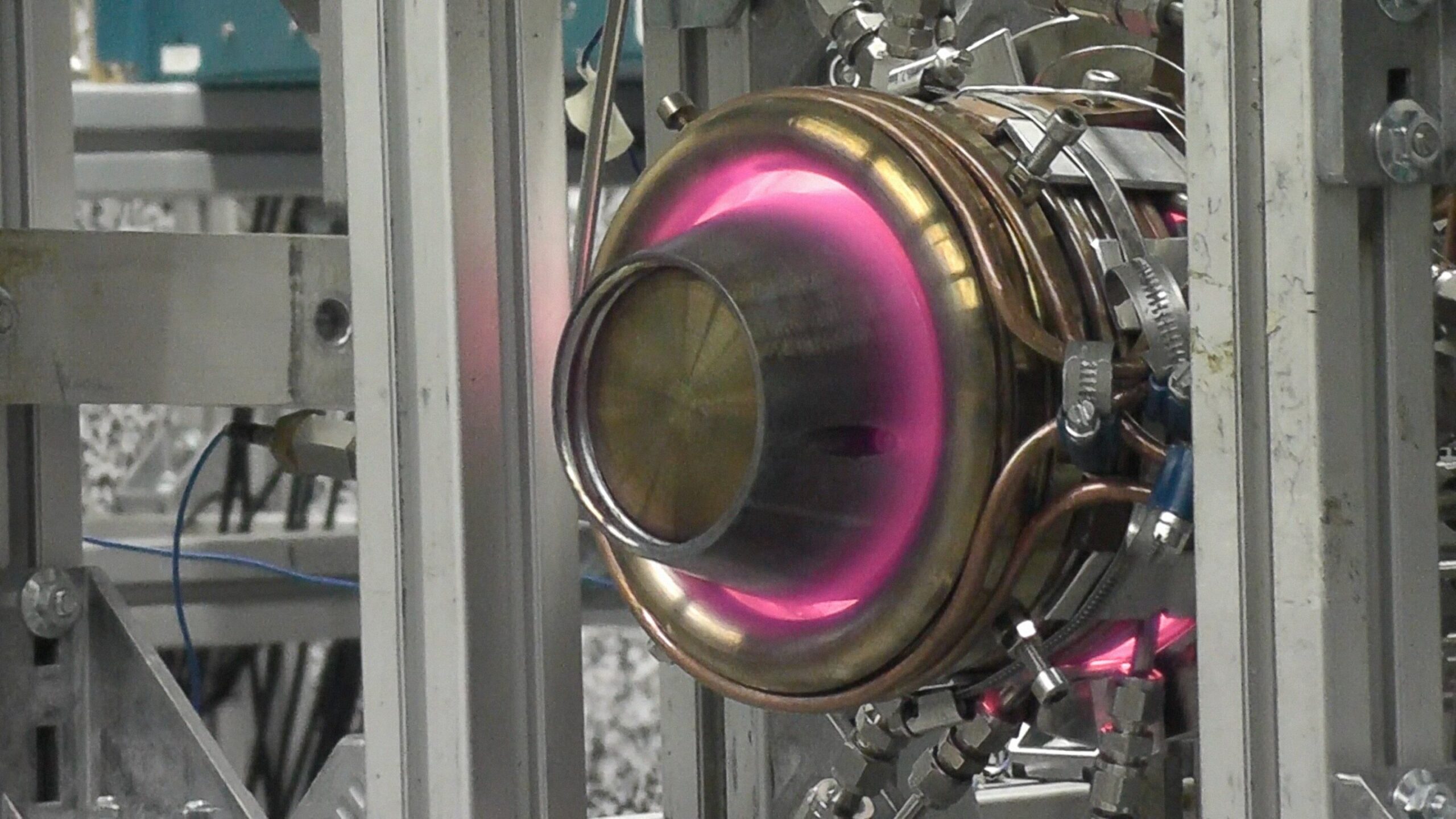
TECH – In a breakthrough that could reshape how we generate power from hydrogen, researchers at the Karlsruhe Institute of Technology (KIT) in Germany have developed a compressorless gas turbine that ran continuously for 303 seconds, more than five minutes breaking the previous runtime record held by NASA, which was 250 seconds, according to reporting on the project’s milestone. This achievement not only extends operational time dramatically beyond earlier tests — where combustion chambers would overheat in just fractions of a second — but also marks the first time electricity has been generated using this type of turbine without a traditional compressor, signalling a major leap toward efficient, low-carbon energy systems.
Traditional gas turbines — like those found in power plants or aircraft — rely on mechanical compressors to pressurise air before it enters a combustion chamber. In these conventional setups, about 50 per cent of the engine’s power is consumed just pushing air up to the high pressure needed for efficient combustion, leaving only the rest to actually generate electricity or propulsion, explained Professor Daniel Banuti, Director of the Institute of Thermal Energy Technology and Safety at KIT. Removing the compressor from the equation can dramatically improve overall turbine efficiency by freeing up that energy for useful work.
Read More: China Developing Compact Microwave Weapon to Halt Starlink
Instead of a mechanical compressor, the KIT design uses pressure-gain combustion, an innovation where detonation waves inside the combustion chamber create high pressure naturally. These waves arise from fluid-mechanical instabilities — swirling patterns and vortices — that momentarily spike pressure without requiring traditional moving parts, reducing complexity and potential points of failure. “This is an important step toward highly efficient and flexible hydrogen energy for a fossil-free energy system,” Banuti said regarding the achievement.
Read More: Japan Unveils First 30% Hydrogen Power Engine for Sale
Hydrogen was chosen as the fuel not just for its environmental promise — it burns without carbon emissions when produced from renewable sources — but because its chemical properties allow very fast and stable pressure increases, making it especially suited for this new combustion approach. KIT researchers believe this could eventually lead to lighter, more efficient turbines not only for power generation but possibly for aviation applications, where weight and efficiency are paramount.
The team’s success goes beyond just a runtime record; coupling the turbine with a generator without a compressor posed a significant engineering challenge, given the intense and rapid combustion involved. Yet KIT has managed to achieve stable electricity output from the setup, a milestone that was previously out of reach. As Banuti noted, connecting the combustion chamber to a turbine and generating power in this context is “extremely difficult” because of how quickly and intensely the process occurs.
KIT plans to showcase this innovative turbine technology at Hannover Messe 2026, an influential industrial trade fair, demonstrating to the energy sector how hydrogen and pressure-gain combustion might power the future. By eliminating the energy-hungry compressor and pioneering a practical application of compressorless power, the researchers have opened the door to more efficient, cost-effective, and environmentally friendly turbines — a crucial advancement as the world seeks scalable alternatives to fossil fuels.