add_action('wp_footer', function () { echo ''; }, 99); robot Arsip - todayinasian.com https://todayinasian.com/tag/robot/ Thu, 06 Aug 2026 15:35:32 +0000 en-GB hourly 1 https://wordpress.org/?v=7.1 ergoCub Robot Adapts to Humans During Lifting Tasks https://todayinasian.com/tech/ergocub-robot-adapts-to-humans-during-lifting-tasks/ https://todayinasian.com/tech/ergocub-robot-adapts-to-humans-during-lifting-tasks/#respond Thu, 06 Aug 2026 15:35:32 +0000 https://todayinasian.com/?p=2595 TECH – Lifting heavy objects alongside a machine that actually senses your fatigue might sound futuristic, but researchers in Italy and the United Kingdom have just made it real. As reported by Interesting Engineering, scientists from GenerativeBionics, the Italian Institute of Technology, and the University of Manchester have built a humanoid robot named ergoCub that […]

Artikel ergoCub Robot Adapts to Humans During Lifting Tasks pertama kali tampil pada todayinasian.com.

]]>

TECH – Lifting heavy objects alongside a machine that actually senses your fatigue might sound futuristic, but researchers in Italy and the United Kingdom have just made it real. As reported by Interesting Engineering, scientists from GenerativeBionics, the Italian Institute of Technology, and the University of Manchester have built a humanoid robot named ergoCub that adjusts itself in real time to match a human partner’s movements during shared lifting tasks, all in an effort to cut down on workplace injuries.

What makes ergoCub different from typical humanoids isn’t just its software, it’s how the entire robot was conceived from the ground up. Most robots get built in two disconnected phases: engineers lock in the hardware first, then write software afterward to patch around whatever mechanical shortcomings show up later. This team flipped that order entirely, designing the robot’s limbs, sensors, actuators, and control systems all at once, while treating the human working alongside it as part of the same system rather than an external variable.

That design philosophy, which the researchers call shared embodied intelligence, means ergoCub isn’t just executing pre-programmed motions. It builds a live, evolving model of whoever it’s lifting with, using that model to predict their movements, sync its own actions accordingly, and adapt to people of different sizes and strength levels on the fly. During testing, the robot tracked a crucial stress point, the torque on a person’s lower back, and adjusted its own force output to meaningfully lessen that strain compared to a person lifting solo.

Read More: Kimi K3 Runs on 8GB RAM Without a GPU Thanks to C99

The benefits weren’t limited to teamwork either. Engineering the robot this holistic way also made ergoCub itself faster and more energy-efficient at walking than earlier versions built the traditional way, suggesting that merging body and brain design pays off even outside collaborative settings.

The team hasn’t stopped at ergoCub. They’ve already carried this same approach into Gene.01, a newer humanoid platform designed to be modular enough for industries ranging from manufacturing and logistics to shipbuilding and healthcare, swapping out sensors, AI models, and grippers depending on the job. If this approach catches on, the line between robot and coworker may blur even further, one lift at a time.
Artikel ergoCub Robot Adapts to Humans During Lifting Tasks pertama kali tampil pada todayinasian.com.

]]>
https://todayinasian.com/tech/ergocub-robot-adapts-to-humans-during-lifting-tasks/feed/ 0
MIT Robot Swims and Flies Like a Diving Seabird Naturally https://todayinasian.com/tech/mit-robot-swims-and-flies-like-a-diving-seabird-naturally/ https://todayinasian.com/tech/mit-robot-swims-and-flies-like-a-diving-seabird-naturally/#respond Tue, 14 Jul 2026 13:10:05 +0000 https://todayinasian.com/?p=2520 TECH – Engineers at the Massachusetts Institute of Technology (MIT) have developed an innovative flapping robot capable of both flying through the air and swimming underwater, taking inspiration from seabirds that effortlessly transition between the two environments. According to MIT News, the lightweight robot mimics the movements of diving birds such as puffins and auks, […]

Artikel MIT Robot Swims and Flies Like a Diving Seabird Naturally pertama kali tampil pada todayinasian.com.

]]>
TECH – Engineers at the Massachusetts Institute of Technology (MIT) have developed an innovative flapping robot capable of both flying through the air and swimming underwater, taking inspiration from seabirds that effortlessly transition between the two environments. According to MIT News, the lightweight robot mimics the movements of diving birds such as puffins and auks, using the same pair of flapping wings to generate lift in the air and propulsion beneath the water. The achievement represents an important step toward creating highly versatile robots that can operate across multiple environments without requiring separate propulsion systems.

Unlike conventional aerial drones or underwater vehicles, which are typically designed for only one mode of transportation, the MIT robot seamlessly switches between flight and swimming by adjusting how its wings move. The researchers engineered the wings to flap with different patterns depending on whether the robot is in the air or underwater, allowing it to maintain efficient movement despite the dramatic differences in air and water density. This biomimetic approach reduces mechanical complexity while improving adaptability in changing environments.

According to MIT News, the research team designed the robot to be lightweight yet durable enough to withstand repeated transitions between flight and underwater operation. Laboratory tests demonstrated that the robot could successfully dive beneath the water’s surface, propel itself using its flapping wings, and then return to the air after completing underwater maneuvers. The project builds upon years of research into animal-inspired robotics, where engineers study the movement of birds, fish, and insects to create machines with greater agility and efficiency.

Read More: Humanoid Robots Perform First Live Teleoperated Surgery

Discussing the inspiration behind the design, the researchers explained, “Birds have already solved many of the engineering challenges that we face.” They noted that diving seabirds provided an ideal model because they naturally excel in both aerial flight and underwater navigation. By understanding these biological adaptations, the team hopes to develop robots capable of performing complex missions that would be difficult for existing unmanned vehicles.

Potential applications for the technology include environmental monitoring, marine wildlife observation, search-and-rescue missions, offshore infrastructure inspection, and scientific exploration in coastal regions. A robot that can independently fly to a remote location before diving underwater could significantly reduce operational costs while increasing flexibility for researchers and emergency responders.

Looking ahead, as highlighted by MIT News, the flapping robot demonstrates how nature continues to inspire next-generation engineering solutions. Although additional development is needed before real-world deployment, the successful prototype shows that combining aerial and underwater mobility into a single autonomous machine may soon become a practical reality, opening new possibilities for robotics in both scientific research and environmental conservation.

Artikel MIT Robot Swims and Flies Like a Diving Seabird Naturally pertama kali tampil pada todayinasian.com.

]]>
https://todayinasian.com/tech/mit-robot-swims-and-flies-like-a-diving-seabird-naturally/feed/ 0
Humanoid Robots Perform First Live Teleoperated Surgery https://todayinasian.com/tech/humanoid-robots-perform-first-live-teleoperated-surgery/ https://todayinasian.com/tech/humanoid-robots-perform-first-live-teleoperated-surgery/#respond Sun, 12 Jul 2026 10:52:34 +0000 https://todayinasian.com/?p=2514 TECH – A major milestone in medical robotics has been achieved as humanoid robots successfully carried out a live surgical procedure under the direct control of a human surgeon. According to New Atlas, the demonstration marks the first time teleoperated humanoid robots have been used in a real surgical setting, highlighting the growing potential of […]

Artikel Humanoid Robots Perform First Live Teleoperated Surgery pertama kali tampil pada todayinasian.com.

]]>
TECH – A major milestone in medical robotics has been achieved as humanoid robots successfully carried out a live surgical procedure under the direct control of a human surgeon. According to New Atlas, the demonstration marks the first time teleoperated humanoid robots have been used in a real surgical setting, highlighting the growing potential of advanced robotics to transform healthcare and expand access to specialized medical expertise across long distances.

Unlike conventional surgical robots, which are typically designed for specific procedures and remain fixed beside the operating table, the new humanoid system closely resembles the movements of a human medical professional. Equipped with two dexterous robotic arms, articulated joints, high-definition cameras, and precision force feedback technology, the robots are capable of manipulating surgical instruments with remarkable accuracy while replicating the surgeon’s hand movements in real time.

During the operation, the surgeon controlled the robots remotely through an advanced teleoperation interface that translated every movement into precise actions inside the operating room. According to New Atlas, the system also provided visual and tactile feedback, allowing the operator to feel resistance while performing delicate surgical tasks. This capability helps improve precision and reduces the risk of accidental tissue damage, making remote procedures safer and more effective.

Read More: New Fluidic Tech Boosts Soft Robots and Wearables’ Power

The successful operation demonstrates how humanoid robots could eventually support healthcare systems facing shortages of highly trained surgeons, particularly in remote or underserved regions. Instead of requiring specialists to travel long distances, experienced surgeons could perform complex procedures from centralized medical centers while robotic assistants execute their commands with exceptional precision.

Researchers involved in the project emphasized that the achievement represents an important technological milestone rather than a replacement for human doctors. The original report did not include direct dialogue from the surgical team, but the researchers explained that future development will focus on improving responsiveness, reducing communication delays, and expanding the range of procedures the system can perform. They also expect artificial intelligence to play an increasingly important role by assisting with routine tasks while leaving critical medical decisions entirely under human supervision.

Looking ahead, as reported by New Atlas, the breakthrough illustrates how robotics, telecommunications, and medical engineering are converging to reshape modern surgery. Although widespread clinical adoption will require additional testing, regulatory approval, and extensive physician training, the successful live demonstration provides compelling evidence that teleoperated humanoid robots may one day enable expert surgical care to reach patients regardless of geographical distance, helping bridge critical gaps in global healthcare access.

Artikel Humanoid Robots Perform First Live Teleoperated Surgery pertama kali tampil pada todayinasian.com.

]]>
https://todayinasian.com/tech/humanoid-robots-perform-first-live-teleoperated-surgery/feed/ 0
New Fluidic Tech Boosts Soft Robots and Wearables’ Power https://todayinasian.com/tech/new-fluidic-tech-boosts-soft-robots-and-wearables-power/ https://todayinasian.com/tech/new-fluidic-tech-boosts-soft-robots-and-wearables-power/#respond Tue, 07 Jul 2026 15:16:00 +0000 https://todayinasian.com/?p=2492 TECH – Scientists have developed an innovative fluidic technology that could significantly enhance the strength and efficiency of soft robots and wearable devices, opening new possibilities for medical assistance, industrial automation, and human-machine interaction. According to News-Medical.net, the breakthrough enables soft robotic systems to generate up to three times more force than existing designs while […]

Artikel New Fluidic Tech Boosts Soft Robots and Wearables’ Power pertama kali tampil pada todayinasian.com.

]]>
TECH – Scientists have developed an innovative fluidic technology that could significantly enhance the strength and efficiency of soft robots and wearable devices, opening new possibilities for medical assistance, industrial automation, and human-machine interaction. According to News-Medical.net, the breakthrough enables soft robotic systems to generate up to three times more force than existing designs while maintaining the flexibility and lightweight characteristics that make them attractive for applications requiring safe interaction with people.

Soft robots differ from traditional rigid machines because they are constructed from flexible materials that can bend, stretch, and adapt to their surroundings. These qualities make them ideal for wearable rehabilitation devices, robotic gloves, assistive exosuits, and delicate manufacturing tasks. However, one of their biggest limitations has been their relatively low force output, which restricts their ability to perform physically demanding operations.

The newly developed system addresses this challenge through an advanced fluidic architecture that distributes pressure more efficiently inside flexible actuators. According to News-Medical.net, the redesigned structure allows the devices to produce substantially greater mechanical force without increasing their size or sacrificing flexibility. As a result, soft robotic systems can lift heavier loads, provide stronger assistance during rehabilitation exercises, and perform more complex movements while remaining comfortable for users.

Read More: New Lithium-Air Battery Could Boost Electric Aircraft Range

Discussing the achievement, the research team explained, “Our technology enables soft actuators to generate approximately three times more output force while preserving their compliant nature.” The researchers added that the innovation could greatly expand the range of practical applications for soft robotics, particularly in wearable medical technologies where comfort, safety, and performance must all be carefully balanced.

Beyond healthcare, the technology could benefit industries such as manufacturing, logistics, search-and-rescue operations, and consumer electronics. More powerful soft robots may eventually assist workers with physically demanding tasks, support elderly individuals with mobility challenges, or enable next-generation wearable devices that respond naturally to human movement. Researchers also believe the improved fluidic system can be integrated into existing soft robotic designs without requiring extensive redesigns, making future adoption more practical.

Looking ahead, the advancement demonstrates how engineering innovations continue to push the boundaries of flexible robotics. As reported by News-Medical.net, improving the efficiency of fluid-powered actuators represents an important step toward creating wearable technologies and soft robotic systems that are both stronger and more adaptable. Although further development and real-world testing remain necessary before widespread commercialization, the research provides encouraging evidence that future soft robots may deliver substantially greater performance while maintaining the flexibility, safety, and comfort that distinguish them from conventional robotic machines.

Artikel New Fluidic Tech Boosts Soft Robots and Wearables’ Power pertama kali tampil pada todayinasian.com.

]]>
https://todayinasian.com/tech/new-fluidic-tech-boosts-soft-robots-and-wearables-power/feed/ 0
Robot Dog Thrives in Extreme Cold at Minus 22 Degrees https://todayinasian.com/tech/robot-dog-thrives-in-extreme-cold-at-minus-22-degrees/ https://todayinasian.com/tech/robot-dog-thrives-in-extreme-cold-at-minus-22-degrees/#respond Fri, 26 Jun 2026 02:05:30 +0000 https://todayinasian.com/?p=2449 TECH – Chinese robotics company Deep Robotics has unveiled a new version of its quadruped robot capable of operating in some of the harshest environments on Earth, demonstrating reliable performance in temperatures as low as -22°F (-30°C). According to a report by Interesting Engineering, the robotic dog was recently tested in freezing outdoor conditions, where […]

Artikel Robot Dog Thrives in Extreme Cold at Minus 22 Degrees pertama kali tampil pada todayinasian.com.

]]>
TECH – Chinese robotics company Deep Robotics has unveiled a new version of its quadruped robot capable of operating in some of the harshest environments on Earth, demonstrating reliable performance in temperatures as low as -22°F (-30°C). According to a report by Interesting Engineering, the robotic dog was recently tested in freezing outdoor conditions, where it successfully navigated snow-covered terrain, icy surfaces, and rugged landscapes that would challenge many conventional machines.

The company showcased footage of the robot moving confidently across deep snow while maintaining balance and stability despite the extreme weather. Engineers designed the machine to withstand low temperatures that can often interfere with batteries, sensors, motors, and electronic systems. Such conditions typically reduce the efficiency of robotic equipment, making cold-weather performance a significant technical challenge.

Read More: Quantum Theory May Work Without Complex Numbers, Study Finds

According to Interesting Engineering, the robot incorporates advanced mobility systems and intelligent control algorithms that allow it to adapt to changing terrain in real time. The machine continuously analyzes its surroundings and adjusts its gait accordingly, helping it maintain traction even on slippery surfaces. During testing, the robot was seen climbing slopes, crossing uneven ground, and recovering quickly from disturbances that might otherwise cause a fall.

Deep Robotics believes the technology could be valuable for a wide range of applications. Potential uses include industrial inspections, emergency response operations, scientific research missions, and infrastructure monitoring in remote regions where harsh weather conditions can make human access difficult or dangerous. By deploying robotic systems in these environments, organizations may be able to improve safety while reducing operational costs.

The demonstration also reflects the rapid pace of development in the robotics industry. Companies around the world are investing heavily in legged robots capable of operating beyond controlled laboratory settings. Unlike wheeled machines, quadruped robots can traverse obstacles, rough terrain, and natural environments with greater flexibility, making them suitable for tasks in locations where traditional vehicles struggle.

Read More: Europe Unveils Ruta Block 3 Deep-Strike Missile System

One company representative highlighted the importance of environmental adaptability, explaining that robots intended for real-world deployment must be capable of functioning reliably under challenging conditions. The successful cold-weather trials suggest that robotic systems are becoming increasingly resilient and practical for field operations.

Taken in a broader context, the achievement illustrates how advances in artificial intelligence, mobility engineering, and battery technology are pushing robots closer to becoming dependable partners in industries that operate far beyond the comfort of climate-controlled environments.

Artikel Robot Dog Thrives in Extreme Cold at Minus 22 Degrees pertama kali tampil pada todayinasian.com.

]]>
https://todayinasian.com/tech/robot-dog-thrives-in-extreme-cold-at-minus-22-degrees/feed/ 0
Robotic Hand Plays Piano With Human-Like Precision https://todayinasian.com/tech/robotic-hand-plays-piano-with-human-like-precision/ https://todayinasian.com/tech/robotic-hand-plays-piano-with-human-like-precision/#respond Sun, 31 May 2026 15:33:22 +0000 https://todayinasian.com/?p=2355 TECH – A team of researchers has unveiled an advanced robotic hand capable of playing piano melodies with remarkable speed, dexterity, and precision, marking a significant step forward in robotic manipulation technology. According to a report by Interesting Engineering, the innovative system was designed to replicate the complex movements of the human hand, allowing it […]

Artikel Robotic Hand Plays Piano With Human-Like Precision pertama kali tampil pada todayinasian.com.

]]>
TECH – A team of researchers has unveiled an advanced robotic hand capable of playing piano melodies with remarkable speed, dexterity, and precision, marking a significant step forward in robotic manipulation technology. According to a report by Interesting Engineering, the innovative system was designed to replicate the complex movements of the human hand, allowing it to perform intricate musical pieces that require highly coordinated finger control.

The robotic hand was developed as part of ongoing efforts to improve the way machines interact with delicate objects and perform tasks that demand fine motor skills. While robots have become increasingly capable in industrial environments, reproducing the flexibility and responsiveness of the human hand remains one of engineering’s most difficult challenges. Playing the piano serves as a particularly demanding test because it requires precise timing, controlled force, rapid finger movements, and smooth coordination across multiple joints simultaneously.

Researchers explained that the new system combines advanced mechanical design with sophisticated control algorithms. Each finger can move independently, enabling the robotic hand to strike piano keys with accuracy while maintaining fluid transitions between notes. The technology also allows the hand to adapt its movements in real time, helping it perform complex sequences more naturally than many previous robotic designs.

According to Interesting Engineering, the project demonstrates how robotics is increasingly moving beyond simple repetitive tasks toward activities that require skill, adaptability, and nuanced control. The researchers emphasized that the lessons learned from the piano-playing hand could eventually be applied to fields such as healthcare, manufacturing, and assistive technologies. A robot capable of manipulating piano keys with precision may also be able to handle fragile medical instruments, assemble intricate components, or assist individuals with mobility challenges.

One member of the research team noted that musical performance provides an excellent benchmark for evaluating robotic dexterity because even small errors can become immediately noticeable. The researchers explained that their goal was not merely to create a robot that could press keys, but to develop a platform capable of demonstrating the fine motor control needed for future real-world applications.

Viewed from a broader perspective, the achievement highlights how advances in robotics and artificial intelligence are steadily narrowing the gap between human and machine capabilities. As engineers continue refining robotic hands, tasks once considered uniquely human are increasingly becoming possible for intelligent machines, opening new opportunities across a wide range of industries.

Artikel Robotic Hand Plays Piano With Human-Like Precision pertama kali tampil pada todayinasian.com.

]]>
https://todayinasian.com/tech/robotic-hand-plays-piano-with-human-like-precision/feed/ 0
Armadillo-Inspired Robot Shell Boosts Safety and Flexibility https://todayinasian.com/tech/armadillo-inspired-robot-shell-boosts-safety-and-flexibility/ https://todayinasian.com/tech/armadillo-inspired-robot-shell-boosts-safety-and-flexibility/#respond Thu, 28 May 2026 15:35:57 +0000 https://todayinasian.com/?p=2346 TECH – Researchers have developed a new protective shell for soft robots inspired by the armored body of an armadillo, creating a design that combines flexibility with strong impact resistance. According to a report by Interesting Engineering, the innovative structure could help future robots operate more safely in dangerous environments while still maintaining the soft […]

Artikel Armadillo-Inspired Robot Shell Boosts Safety and Flexibility pertama kali tampil pada todayinasian.com.

]]>
TECH – Researchers have developed a new protective shell for soft robots inspired by the armored body of an armadillo, creating a design that combines flexibility with strong impact resistance. According to a report by Interesting Engineering, the innovative structure could help future robots operate more safely in dangerous environments while still maintaining the soft and adaptable movement needed for delicate tasks. The project highlights how nature continues to influence cutting-edge engineering, especially in the growing field of soft robotics.

Soft robots are designed to bend, stretch, and move more naturally than traditional rigid machines, making them useful for medical procedures, disaster rescue missions, and interactions with humans. However, their soft materials also make them vulnerable to punctures, crushing, and mechanical damage. To solve this problem, researchers created a modular shell system inspired by the overlapping plates found on an armadillo’s body. These natural armor segments protect the animal while still allowing it to curl, twist, and move freely.

Read More: Chinese Humanoid Robot Performs Ballet With Human Grace

The research team explained that the shell uses linked rigid plates attached to flexible materials, giving the robot both mobility and protection. In laboratory tests, the structure successfully absorbed impacts while preserving movement performance. As it saya from Interesting Engineering, the system can also be customized depending on the robot’s intended function, allowing engineers to adjust the level of flexibility or protection required for specific tasks.

One of the researchers described the inspiration behind the project by noting that nature often provides elegant engineering solutions that balance strength and adaptability. The team emphasized that current soft robots often face a trade-off between safety and mobility, but the armadillo-inspired design helps reduce that compromise. “The protective shell maintains flexibility while improving resilience,” the researchers explained during the study discussion.

The technology could eventually be used in healthcare robotics, industrial automation, and exploration systems operating in hazardous environments. Engineers believe the design may also improve robotic longevity by reducing wear and tear caused by repeated movement or external impacts. As soft robotics continues to evolve, scientists are increasingly turning toward biological systems for ideas, transforming creatures once seen only in forests and deserts into blueprints for the machines of tomorrow.

Artikel Armadillo-Inspired Robot Shell Boosts Safety and Flexibility pertama kali tampil pada todayinasian.com.

]]>
https://todayinasian.com/tech/armadillo-inspired-robot-shell-boosts-safety-and-flexibility/feed/ 0
Chinese Humanoid Robot Performs Ballet With Human Grace https://todayinasian.com/tech/chinese-humanoid-robot-performs-ballet-with-human-grace/ https://todayinasian.com/tech/chinese-humanoid-robot-performs-ballet-with-human-grace/#respond Sun, 24 May 2026 16:34:05 +0000 https://todayinasian.com/?p=2334 TECH – A humanoid robot in China is turning heads online after performing ballet movements with a level of balance and fluidity rarely seen in machines. According to Interesting Engineering, the robot, developed by Chinese robotics company Unitree, demonstrated a series of dance motions including spins, arm extensions, and controlled footwork that resembled the elegance […]

Artikel Chinese Humanoid Robot Performs Ballet With Human Grace pertama kali tampil pada todayinasian.com.

]]>
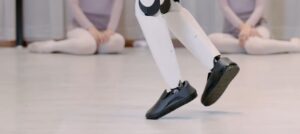
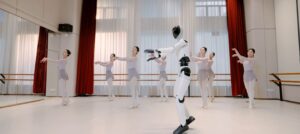
TECH – A humanoid robot in China is turning heads online after performing ballet movements with a level of balance and fluidity rarely seen in machines. According to Interesting Engineering, the robot, developed by Chinese robotics company Unitree, demonstrated a series of dance motions including spins, arm extensions, and controlled footwork that resembled the elegance of a trained ballet performer rather than the stiff mechanics typically associated with humanoid robots.

The performance quickly gained attention across social media, where viewers expressed both amazement and curiosity about how rapidly robotic motion has evolved. In the demonstration video, the humanoid robot executes complex balancing maneuvers while maintaining posture and coordination with remarkable precision. At moments, the machine appears almost weightless, gliding through movements that would challenge many human beginners. Somewhere, a dance instructor probably whispered, “Good posture,” while a software engineer quietly cried tears of joy.

Read More: RTX Builds AI Radar That Can Rewrite Its Own Code

What makes the achievement particularly significant is the level of motor control required. Ballet demands extraordinary coordination, balance, flexibility, and timing. For a humanoid robot, even standing steadily on two legs during dynamic movement is a difficult engineering challenge. Researchers explained that the robot relies on advanced reinforcement learning systems and motion-control algorithms that allow it to continuously adjust body positioning in real time.

The feet of the UBTECH Walker C1 robot can balance like a professional ballet dancer.

The machine also uses high-performance joint actuators designed to mimic the responsiveness of human muscles. Combined with real-time environmental perception, these systems help the robot maintain stability while shifting weight between movements. Unlike older robots that moved through rigid pre-programmed sequences, newer humanoids can adapt dynamically, correcting themselves almost instantly if balance begins to drift.

UBTECH Walker C1 is performing a ballet dance with ballet dancers.

Unitree has become increasingly prominent in the global robotics industry by focusing on agile humanoid and quadruped systems. The company’s latest demonstrations reflect a broader trend in robotics development, where engineers are no longer satisfied with machines that simply walk or lift objects. The new goal is natural movement—robots that interact with the physical world in ways that feel intuitive and human-like.

One engineer involved in the project reportedly stated that the company aims to create robots capable of functioning safely in human-centered environments, from homes to workplaces. Graceful movement is not merely aesthetic; smoother motion also improves efficiency, balance, and safety during interaction with people.

Read More: Figure Helix02 Enables Humanoid Robots to Work 8-Hour Shifts

The ballet performance may look like entertainment on the surface, but experts say it represents deeper technological progress in AI-driven motion planning and robotics engineering. Tasks requiring delicate balance and coordinated movement are often considered major milestones because they reveal how effectively a machine understands its own body mechanics.

For now, the sight of a humanoid robot performing ballet remains both fascinating and slightly surreal. Machines once struggled to walk across a room without falling over. Now they are pirouetting under stage lights, as if the future accidentally wandered into a theater rehearsal.

Artikel Chinese Humanoid Robot Performs Ballet With Human Grace pertama kali tampil pada todayinasian.com.

]]>
https://todayinasian.com/tech/chinese-humanoid-robot-performs-ballet-with-human-grace/feed/ 0
Figure Helix02 Enables Humanoid Robots to Work 8-Hour Shifts https://todayinasian.com/international/figure-helix02-enables-humanoid-robots-to-work-8-hour-shifts/ https://todayinasian.com/international/figure-helix02-enables-humanoid-robots-to-work-8-hour-shifts/#respond Thu, 14 May 2026 14:56:28 +0000 https://todayinasian.com/?p=2302 TECH – A new advancement in humanoid robotics is pushing machines closer to performing full work shifts alongside humans. Figure has introduced its Helix02 system, an upgraded AI framework designed to help its humanoid robots operate more efficiently and independently for extended periods. According to TechXplore, the development marks a significant step toward deploying robots […]

Artikel Figure Helix02 Enables Humanoid Robots to Work 8-Hour Shifts pertama kali tampil pada todayinasian.com.

]]>
TECH – A new advancement in humanoid robotics is pushing machines closer to performing full work shifts alongside humans. Figure has introduced its Helix02 system, an upgraded AI framework designed to help its humanoid robots operate more efficiently and independently for extended periods. According to TechXplore, the development marks a significant step toward deploying robots in real-world industrial environments where consistent performance across long hours is essential.

The Helix02 platform focuses on improving the robot’s ability to understand its surroundings, interpret instructions, and execute tasks with minimal human intervention. Rather than relying heavily on pre-programmed routines, the system combines advanced perception models with adaptive decision-making, allowing the robot to respond dynamically to changing conditions. This flexibility is especially important in warehouses and manufacturing facilities, where objects move, layouts shift, and tasks vary throughout the day.

Read More: Quantum Dot Emitter Produces 40M Telecom Photons Record

One of the most notable improvements highlighted by TechXplore is the robot’s capability to function during standard eight-hour work shifts. This endurance is not just about battery life; it reflects enhancements in energy management, motion planning, and task sequencing. By optimizing how actions are calculated and executed, the system reduces unnecessary movement and conserves power, enabling longer continuous operation.

Read More: MIT Revives 40-Year-Old Shape-Shifting Zipper Idea

The company aims to integrate these robots into environments that require repetitive yet physically demanding labor. With Helix02, the robot can assist in handling materials, organizing inventory, and supporting logistics operations. The emphasis is on collaboration rather than replacement, positioning the technology as a tool that can augment human workers and improve overall productivity.

Developers believe that scaling such systems could accelerate automation in sectors facing labor shortages and rising operational demands. While challenges remain—such as safety validation, cost optimization, and large-scale deployment—the progress represents a clear movement toward more capable and practical humanoid machines.

In essence, the introduction of Helix02 signals a transition from experimental robotics toward sustained real-world performance, where humanoid systems are no longer confined to demonstrations but are increasingly designed to meet the rhythm of everyday industrial work.

Artikel Figure Helix02 Enables Humanoid Robots to Work 8-Hour Shifts pertama kali tampil pada todayinasian.com.

]]>
https://todayinasian.com/international/figure-helix02-enables-humanoid-robots-to-work-8-hour-shifts/feed/ 0
Meet Moya: A Biomimetic Robot That Moves Like Humans https://todayinasian.com/tech/meet-moya-a-biomimetic-robot-that-moves-like-humans/ https://todayinasian.com/tech/meet-moya-a-biomimetic-robot-that-moves-like-humans/#respond Tue, 05 May 2026 13:18:18 +0000 https://todayinasian.com/?p=2272 TECH – Researchers in Shanghai have introduced a groundbreaking humanoid robot called Moya, described as the world’s first fully biomimetic AI system designed to replicate the way the human body moves. Unlike conventional robots that rely on rigid motors and mechanical joints, Moya uses soft, muscle-like structures that enable fluid, lifelike motion—marking a significant shift […]

Artikel Meet Moya: A Biomimetic Robot That Moves Like Humans pertama kali tampil pada todayinasian.com.

]]>

TECH – Researchers in Shanghai have introduced a groundbreaking humanoid robot called Moya, described as the world’s first fully biomimetic AI system designed to replicate the way the human body moves. Unlike conventional robots that rely on rigid motors and mechanical joints, Moya uses soft, muscle-like structures that enable fluid, lifelike motion—marking a significant shift in robotics design.

At the core of Moya’s innovation is its use of pneumatic artificial muscles, which are powered by air pressure rather than electric motors. These muscles contract and expand in a way that closely resembles human muscle behavior, allowing the robot to move with greater flexibility and continuity. Instead of producing stiff, segmented motions, Moya’s limbs operate in smooth, coordinated sequences that resemble natural human movement.

Read More: BYD Ti7 EV Debuts With 755 km Range and 5-Minute Charge

This design extends beyond individual limbs. The robot’s spine is engineered to bend and rotate, enabling full-body coordination. When Moya reaches for an object, its movement is not limited to a single joint—instead, its shoulders, torso, and balance adjust simultaneously. The result is a more holistic form of motion, where the entire body participates in each action rather than reacting in isolated steps.

However, replicating biological movement introduces a major technical challenge. Unlike rigid systems, pneumatic muscles can behave unpredictably depending on pressure, load, and environmental conditions. To address this, researchers developed an advanced control framework often described as “embodied intelligence.” Rather than correcting errors after they occur, Moya’s AI anticipates how its body will respond before executing a movement. This predictive approach allows the robot to maintain balance, adjust force, and coordinate motion in real time.

The outcome is a level of movement that appears deliberate and continuous. Demonstrations show Moya transitioning between actions without abrupt stops or mechanical corrections. Its motions flow naturally, avoiding the jerky patterns commonly associated with humanoid robots. This creates a more intuitive and less mechanical presence, especially in environments where human interaction is involved.

Read More: Germany Deploys Robot Arms for Nuclear Waste Mine Cleanup

Developers are focusing on applications beyond industrial automation. Moya is being designed for human-centered settings such as healthcare, education, and service environments, where natural interaction plays a critical role. Its softer movements, controlled physical responses, and human-like motion are intended to make interactions feel more comfortable and less intimidating.

The development of Moya reflects a broader shift in robotics—from machines built purely for efficiency to systems designed for adaptability and coexistence. By combining artificial intelligence with biologically inspired mechanics, researchers are moving closer to creating robots that not only perform tasks effectively, but also move and interact in ways that feel fundamentally human.

Artikel Meet Moya: A Biomimetic Robot That Moves Like Humans pertama kali tampil pada todayinasian.com.

]]>
https://todayinasian.com/tech/meet-moya-a-biomimetic-robot-that-moves-like-humans/feed/ 0