SINGAPORE – In Budget 2026, Singapore shifted its artificial intelligence strategy from broad ambition to targeted execution, launching mission-driven AI programs across four core sectors: advanced manufacturing, connectivity, finance, and healthcare. Prime Minister Lawrence Wong announced the creation of a National AI Council to coordinate policy, investment, regulation, and research — ensuring AI deployment delivers measurable economic and productivity gains rather than remaining a long-term aspiration.
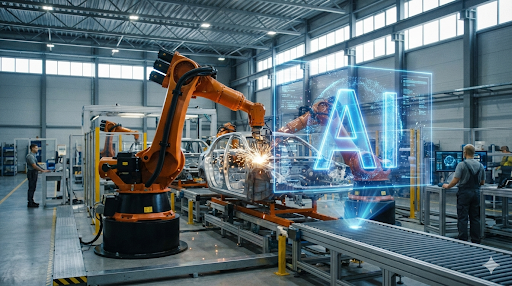
The four priority sectors reflect areas where AI can quickly transform operations. In advanced manufacturing, AI-powered inspection systems and predictive maintenance tools are expected to reduce downtime and improve production efficiency. In connectivity including ports, logistics networks, and digital infrastructure, AI can optimize routing, strengthen cybersecurity, and enhance real-time system management. Financial services are set to benefit from automated fraud detection, faster credit risk assessment, and advanced market analytics. Meanwhile, healthcare applications will focus on faster diagnostics, telehealth expansion, and personalized treatment planning to support Singapore’s ageing population.
A key feature of the strategy is its direct link to workforce transformation. Rather than framing AI purely as automation, the government positions it as a catalyst for job evolution. Routine and repetitive tasks are expected to decline, particularly in administrative, inspection, and data-processing roles. At the same time, demand is projected to rise for AI specialists, data analysts, system integrators, and digitally skilled technicians across industries. New hybrid roles — combining domain expertise with AI oversight — are also anticipated.
Read More: Singapore Draws S$14.2B Investments, 15,700 Jobs Projected
To support this transition, Singapore is expanding incentives for businesses and workers. The enhanced Enterprise Innovation Scheme offers substantial tax deductions for AI adoption, particularly benefiting small and medium-sized enterprises. Alongside corporate incentives, national investments in research, skills training, and workforce reskilling aim to help employees adapt rather than be displaced by technological change.
Analysts say the success of the initiative will depend on how effectively companies redesign workflows and equip workers with practical digital capabilities. If implemented successfully, the mission-driven approach could strengthen Singapore’s position as a regional AI hub while fostering inclusive growth — where productivity gains translate into higher-value jobs rather than workforce contraction.
Ultimately, Budget 2026 frames AI not only as a technological upgrade but as a structural transformation of the economy — one that reshapes how industries operate and how people work in an increasingly automated world.