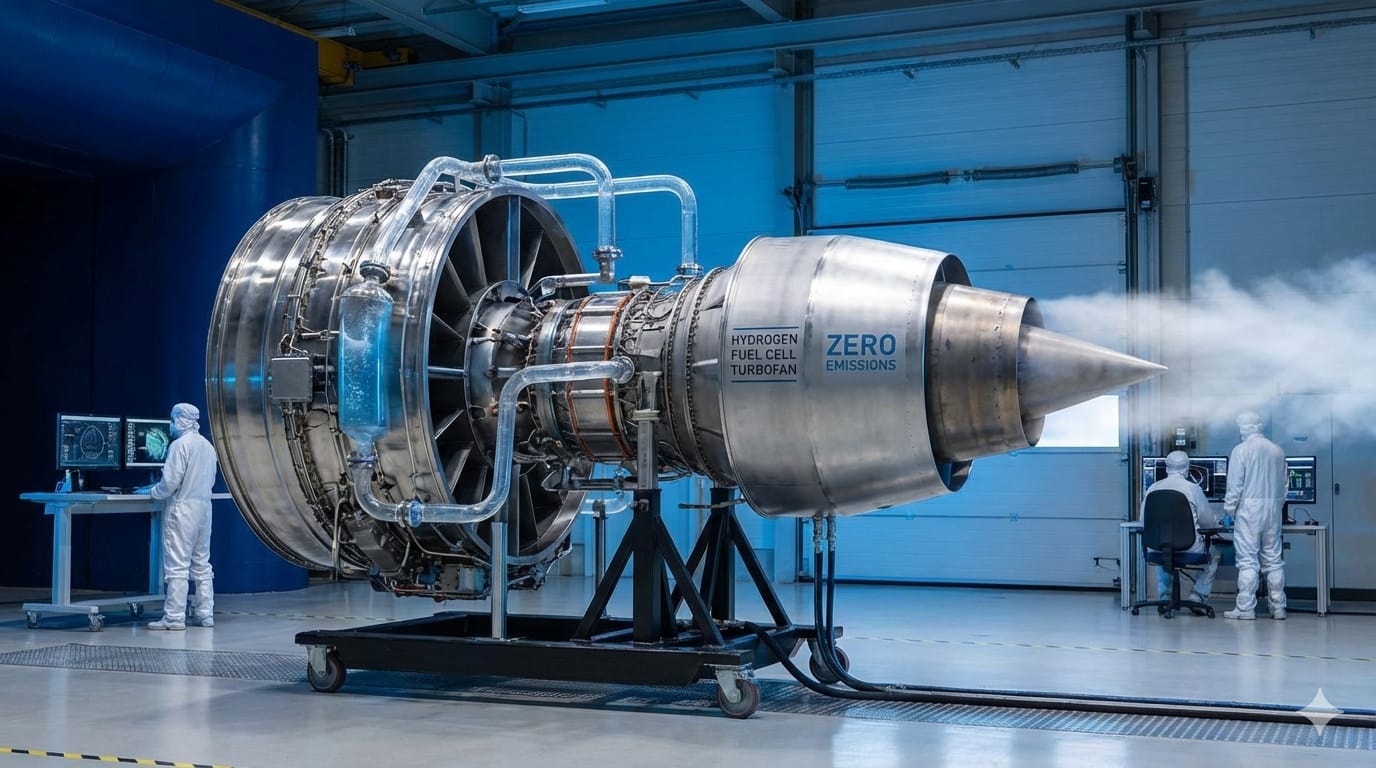
TECH – Japan has taken a meaningful step forward in its energy transition with the world’s first commercial engine capable of generating electricity using a fuel mix that includes up to 30 % hydrogen, a development now available for purchase and backed by a manufacturer’s warranty, according to DailyGalaxy.com. Japan’s Kawasaki Heavy Industries began accepting orders for its new KG series hydrogen co-firing engine in late 2025, following nearly a year of rigorous verification tests at its Kobe facility. This new generator doesn’t run solely on hydrogen; instead, it burns a blend of hydrogen and natural gas, which allows it to operate on cleaner fuel while still using existing infrastructure such as pipelines with only minor adjustments — a pragmatic bridge toward decarbonised power that avoids the need to rebuild entire energy systems from scratch.
The significance of this hybrid approach is that owners of older natural gas facilities — plants that may have been built a decade ago — can retrofit existing engines to burn this hydrogen-enriched mix. Kawasaki’s KG platform has been refined over more than ten years, and earlier versions have already drawn demand, with over 240 orders since 2011; the new hydrogen-capable variation aims to extend the useful life of those assets while gradually reducing carbon emissions.
Read More: China Developing Compact Microwave Weapon to Halt Starlink
Despite this breakthrough, challenges remain. Hydrogen production at the scale needed for widespread use is still in its infancy, and Japan currently imports most of its energy. Creating a commercial-scale hydrogen supply chain — from production to storage and distribution — will require years of build-out and substantial investment before hydrogen becomes a readily accessible fuel across industries.
Parallel efforts across the Japanese economy underscore this commitment. Construction has begun on the Kawasaki LH₂ Terminal in Ogishima, planned as the country’s first large-scale liquid hydrogen import and storage hub, complete with a cryogenic tank that could become the largest of its kind. This infrastructure — expected to begin operating by 2030 — is designed to support both land- and marine-based hydrogen users, complementing engines like the KG series and encouraging broader adoption of hydrogen in power generation and shipping.
Read More: Singapore’s Budget 2026 Pushes AI Missions in Key Industries
Beyond stationary power, hydrogen engine development is also gaining traction in maritime applications. Collaborative tests between Kawasaki, Yanmar, and Japan Engine Corporation have already demonstrated stable combustion in land-based marine hydrogen engines, and companies are planning further production and testing.
The engine’s appearance on the commercial market — complete with a warranty and service plan — signals that hydrogen isn’t just a futuristic concept but a practical transitional technology. By enabling existing natural gas plants to run on a cleaner fuel blend, Japan is positioning itself at the forefront of pragmatic energy innovation, reducing emissions incrementally while building the supply chains needed for a future powered more substantially by hydrogen.