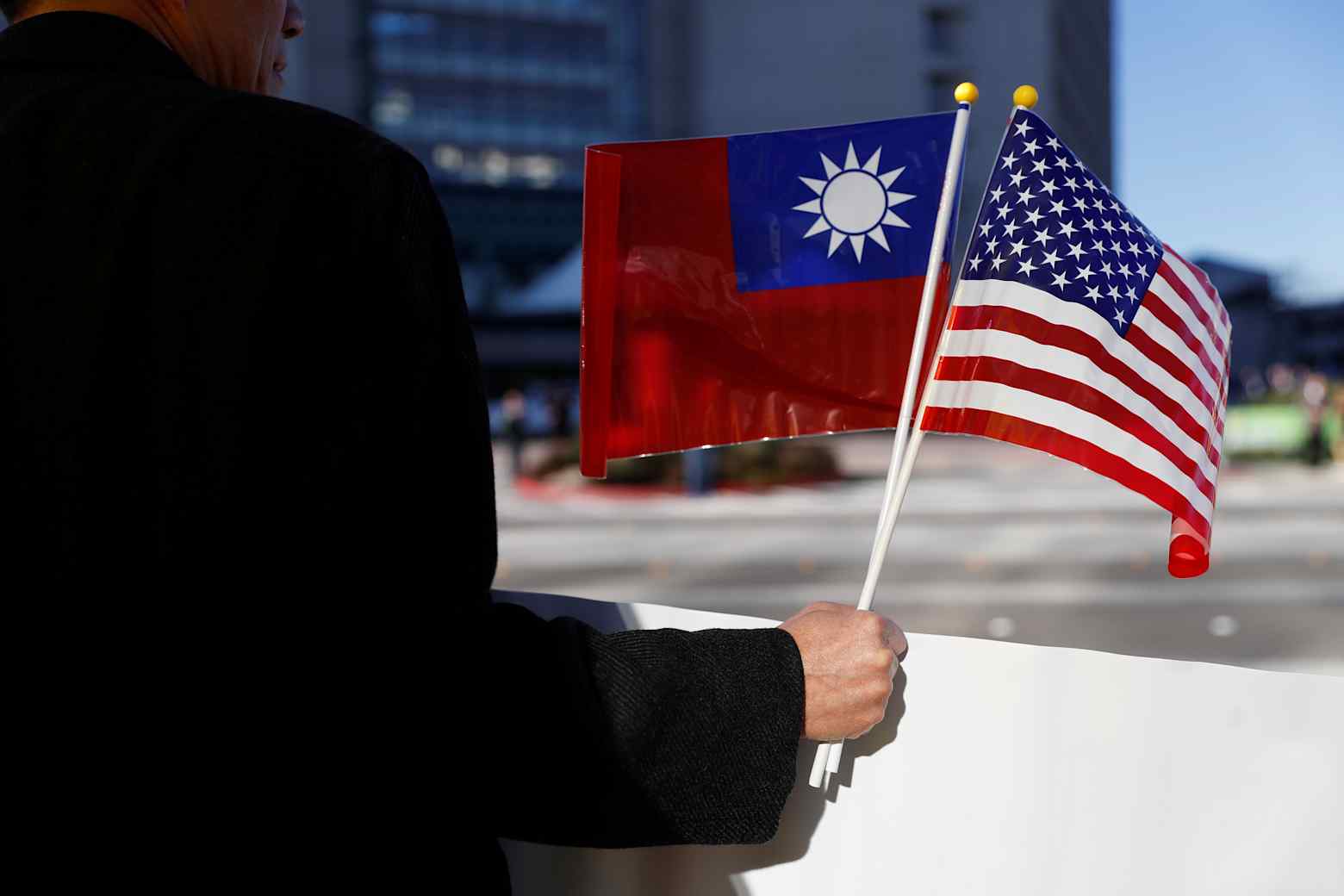
BUSINESS – The United States and Taiwan have officially signed a landmark reciprocal trade agreement that recalibrates decades-old tariff policies and strengthens economic ties between the two partners, as confirmed by multiple news reports including Reuters and national sources. Under the pact, Washington will cap tariffs on Taiwanese imports at 15 per cent, down from the roughly 20 per cent reciprocal rate set under previous U.S. tariff regimes, aligning Taiwan’s access on par with other key partners like Japan and South Korea and signalling deeper commercial cooperation amid intensifying global competition.
The agreement, finalized in Washington, D.C. on 12 February 2026, sets out more than just tariff cuts — it also commits Taiwan to progressively reduce or eliminate tariffs on almost all U.S. goods, opening doors for American exports in sectors including automobiles, industrial machinery, agricultural products, and chemicals. Taipei has agreed to import tens of billions of dollars’ worth of U.S. energy resources, aircraft, and power equipment between 2025 and 2029, with figures such as US$44.4 billion in liquefied natural gas and crude oil and US$15.2 billion in civil aircraft and engines on the schedule, according to the U.S. Trade Representative’s office.
Read More: Singapore Draws S$14.2B Investments, 15,700 Jobs Projected
Taipei will also exempt more than 2,000 Taiwanese products from reciprocal tariffs, many of which — like tea, orchids, tapioca starch, and fruit juices — are subject only to standard Most-Favoured-Nation (MFN) rates once imported into the U.S., boosting competitive access for Taiwanese exporters.
Beyond tariffs, the pact reinforces cooperation on high-technology supply chains and aims to enhance industrial resilience by deepening strategic integration across sectors such as semiconductors, artificial intelligence, and advanced electronics. Taiwan’s negotiating team, led by Vice Premier Cheng Li-chiun, described the agreement as a “milestone” that secures preferential tariff treatment while protecting key domestic industries and maintaining Taiwan’s competitiveness alongside major economies like the European Union.
Officials said that the deal builds on a previous January framework, where Taiwanese tech and chip firms pledged large-scale investments — including at least US$250 billion in U.S. semiconductor production capacity, backed by credit guarantees — in exchange for lower import duties, a move aimed at reshoring high-value manufacturing and supply chains.
Read More: Nvidia Halts New Gaming GPUs as It Doubles Down on AI
U.S. Trade Representative Jamieson Greer called the agreement “a boost for export opportunities for U.S. farmers, ranchers, fishermen, workers, and manufacturers,” and highlighted how it strengthens bilateral trade relations while enhancing global supply chain resilience.
While the pact still requires legislative approval in Taiwan, its implementation marks a major turning point in Taiwan-U.S. economic ties, underscoring shared interests in trade liberalization, technology collaboration and market integration in an era of geopolitical economic competition.