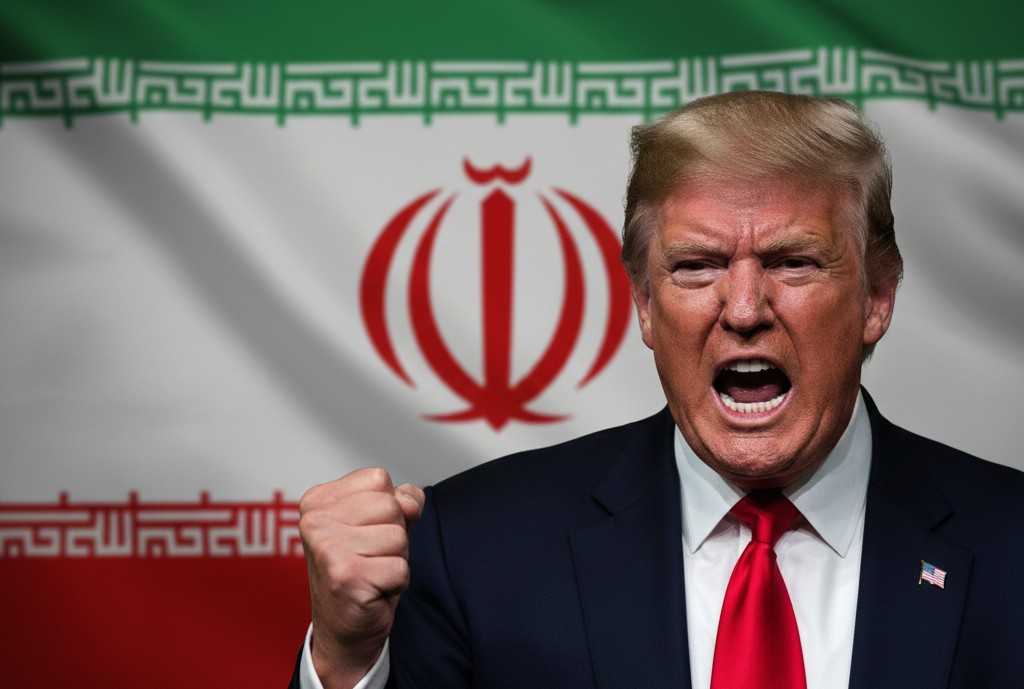
BUSINESS – U.S. President Donald Trump has sent ripples through global markets by saying that a decision on whether to launch a military strike against Iran will likely be made within the next 10 days, a statement that has amplified geopolitical uncertainty and pushed oil prices to levels not seen in months, according to CNBC and confirmed by reports from Reuters, Business Standard and others. Trump delivered this timeline while speaking at the inaugural meeting of his newly formed Board of Peace in Washington, where he warned that Iran must agree to a meaningful deal on its nuclear programme — or face “bad things” — hinting strongly that military action is one of the options on the table if diplomacy doesn’t succeed.
The president made it clear the window for clarity was tight, saying that negotiations may be productive or may not, but “you’re going to be finding out over the next probably 10 days” what direction U.S.–Iran relations take. While Trump did not explicitly outline what form military action might take, the stern language and the deployment of major U.S. military assets — including aircraft carriers and additional warplanes already in the Middle East — have fuelled speculation that Washington is preparing for a broader offensive beyond earlier limited strikes.
Financial markets reacted swiftly to the mounting tension. Crude oil prices jumped to six-month highs, with Brent crude climbing toward US$72 per barrel and West Texas Intermediate (WTI) touching the mid-$60s as traders priced in the risks of supply disruption linked to a potential conflict. The Strait of Hormuz — a chokepoint for nearly 20 % of global oil exports — looms large in investor calculations; any Iranian action to impede shipping there could have far-reaching implications for global energy.
Read More: US–Taiwan Trade Pact Cuts Tariffs to 15%, Boosts Market Access
Market analysts have noted that inventory data — such as a significant drop in U.S. crude stockpiles — has already put upwards pressure on prices, compounding the geopolitical premium tied to the next few days of U.S.–Iran diplomacy. Wall Street indices also felt the strain, with major benchmarks sliding as risk sentiment soured amid fears of conflict escalation.
Iran’s response to Washington’s ultimatum has been defiant, with Tehran insisting it will not bow to unilateral pressure on its nuclear activities and signalling that any external military action would be met with force. Regional powers, including Russia, have voiced concern about what they describe as “unprecedented escalation,” and naval drills involving Iranian units have underscored Tehran’s preparedness.
While both sides continue some form of indirect talks, key issues remain unresolved. Trump’s dual approach — mixing diplomacy with a clear deadline backed by visible military readiness — has left capitals and markets alike bracing for a pivotal week ahead that could redraw security and energy dynamics across the Middle East.