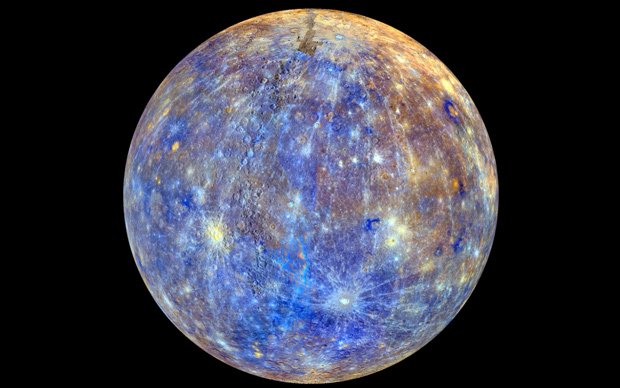
TECH,- The European and Japanese BepiColombo spacecraft has reached orbit around Mercury after a journey lasting more than eight years, bringing scientists closer to a detailed study of the Solar System’s innermost planet. The orbit-insertion manoeuvre on 21 November was complicated by a propulsion anomaly that caused a thruster burn to end earlier than planned. Mission managers say the spacecraft is safe, but engineers are reviewing the event before the next critical steps.
The European Space Agency’s mission update explains that the spacecraft completed the essential manoeuvre to become captured by Mercury’s gravity. A successful capture is important, but it does not mean all the scientific instruments are already conducting their full mission or that every planned orbital adjustment has been completed.
Why getting to Mercury is difficult
Mercury is close to the Sun, but travelling there is not as simple as falling inward. A spacecraft leaving Earth carries considerable orbital momentum, and reaching Mercury requires slowing and reshaping its path while managing intense solar heat. BepiColombo used planetary flybys and electric propulsion to adjust its trajectory over several years.
The mission is a collaboration between ESA and Japan’s space agency JAXA. It carries two scientific orbiters, one designed to examine Mercury’s surface and interior and the other focused on the planet’s magnetic field and surrounding space environment. Together they can investigate questions that a single instrument set would struggle to answer.
What happened during the insertion manoeuvre?
The planned engine operation ended earlier than expected because of a software-related anomaly, according to mission updates and Reuters’ account. Engineers are studying how it affects the following adjustments. Publicly available information does not support describing the entire mission as lost, nor would it be accurate to claim the issue has been fully resolved.
An orbital insertion is a demanding phase because the spacecraft must achieve a path that can be maintained around its destination. Controllers monitor navigation, propulsion and communications while dealing with limited opportunities to intervene immediately. After capture, further operations may be needed to establish the desired scientific orbits.
What will the two probes study?
Mercury’s surface has been shaped by impacts, volcanic processes and billions of years of exposure to space. Scientists want to understand how its unusually large metallic core formed and why it has a magnetic field despite its small size. Studying its thin exosphere and interaction with the solar wind may reveal more about planetary evolution.
NASA’s earlier MESSENGER mission provided valuable observations, but BepiColombo carries different instruments and a two-orbiter design intended to build on that evidence. Its scientific value will depend on the quality and duration of observations, not only the achievement of arrival.
What happens next?
The agencies plan to separate the orbiters in December, with their full science phase expected to begin in 2027 after commissioning and orbital adjustments. Those timings remain subject to the outcome of the propulsion review. ESA’s published timeline describes the intended sequence, but the situation should be monitored for updates.
For the wider space industry, the mission shows the precision and patience required for complex international exploration. Reaching Mercury is a major milestone. The next measure of success is whether engineers can manage the anomaly and place both spacecraft in the conditions needed to answer their scientific questions.