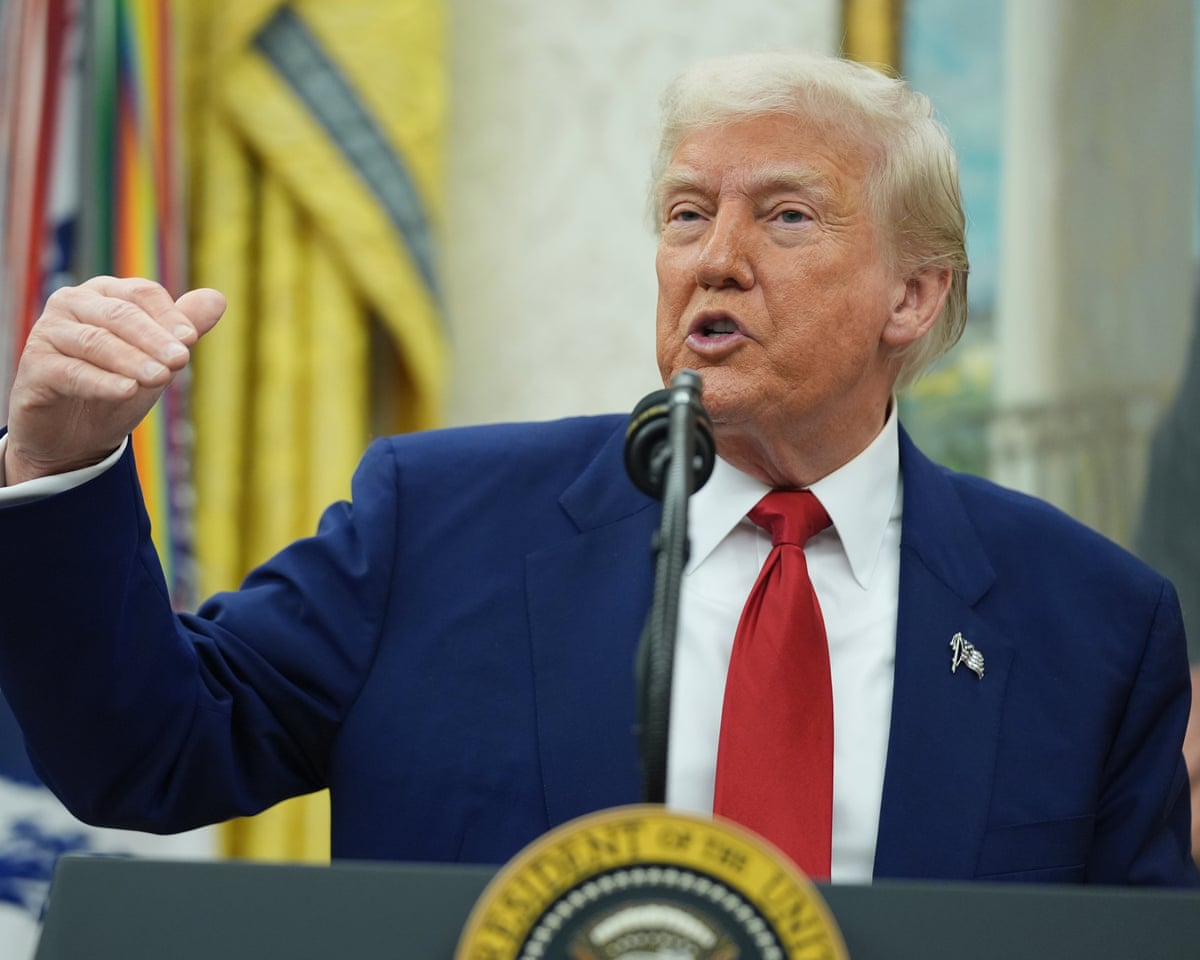
BUSINESS – Global markets tumbled on Friday after U.S. President Donald Trump announced plans to escalate tariffs on Chinese goods to 100 percent, triggering fears of renewed trade escalation and sparking a wave of investor repositioning. The stock selloff was sharp: the S&P 500 and Nasdaq Composite suffered their heftiest single-day percentage declines since April. Meanwhile, U.S. Treasury yields fell and the U.S. dollar weakened.
Trump’s move was framed as retaliation against China’s proposed export controls on rare earth minerals, which are crucial for technology and semiconductor industries. In his announcement, Trump also signalled intentions to impose stricter export rules on “critical software” as part of the broader trade confrontation.
Technology stocks led the decline, as investors grew wary of the potential fallout from a deepening U.S.–China standoff. The S&P 500 tech index dropped about 4 percent, while semiconductors as a sector plunged nearly 6.3 percent. Chinese listings on U.S. exchanges were also caught in the rout: Alibaba fell 8.4 percent and JD.com declined 6.2 percent.
On the bond front, investors sought safety. The benchmark 10-year Treasury yield slid to its lowest point in over a month, as demand for U.S. government securities increased amidst the risk aversion.
Read More: Asian Currencies Slide in Early October, Rupiah Among Weakest
In currency markets, the dollar lost ground. Its index fell about 0.4 percent following the tariff pronouncement. Meanwhile, the euro and yen gained modestly as traders rebalanced toward non-U.S. assets.
Commodities also reacted: oil prices dropped over US$2 per barrel, reflecting concerns about global demand in light of trade tension. Conversely, gold rallied, rising past the US$4,000 per ounce mark, driven by its status as a safe-haven asset.
Across regions, global equity indices also felt the pressure. The MSCI global index dipped about 2.11 percent, while European shares fell over 1 percent. The STOXX 600 erased earlier weekly gains in the final session.
Analysts noted that Trump’s surprise tariff escalation came at a delicate moment: markets were already balancing optimism about AI-driven growth and expectations for future U.S. interest rate cuts. The sudden shift injected uncertainty into risk assets and tested whether investors’ confidence can withstand geopolitical shocks.
In effect, the market move reinforced the idea that beyond fundamentals, trade policy and political developments remain potent drivers of volatility in global financial markets.